Get Full Government Meeting Transcripts, Videos, & Alerts Forever!
Get email alerts on the Student Basic Needs Benefits Navigators topic
No spam. Unsubscribe anytime.
Benefits navigators at Oregon colleges have served 39,000 students; state funding not included in governor's 2025–27 recommendation
Summary
Donna LaWelling, director of the Office of Community Colleges and Workforce Development, told the Education Subcommittee that campus‑based benefits navigators have helped more than 39,000 students statewide in three years and made more than 21,000 referrals to services that address basic needs.
Donna LaWelling, director of the Office of Community Colleges and Workforce Development, told the Education Subcommittee that campus‑based benefits navigators have helped more than 39,000 students statewide in three years and made more than 21,000 referrals to services that address basic needs.
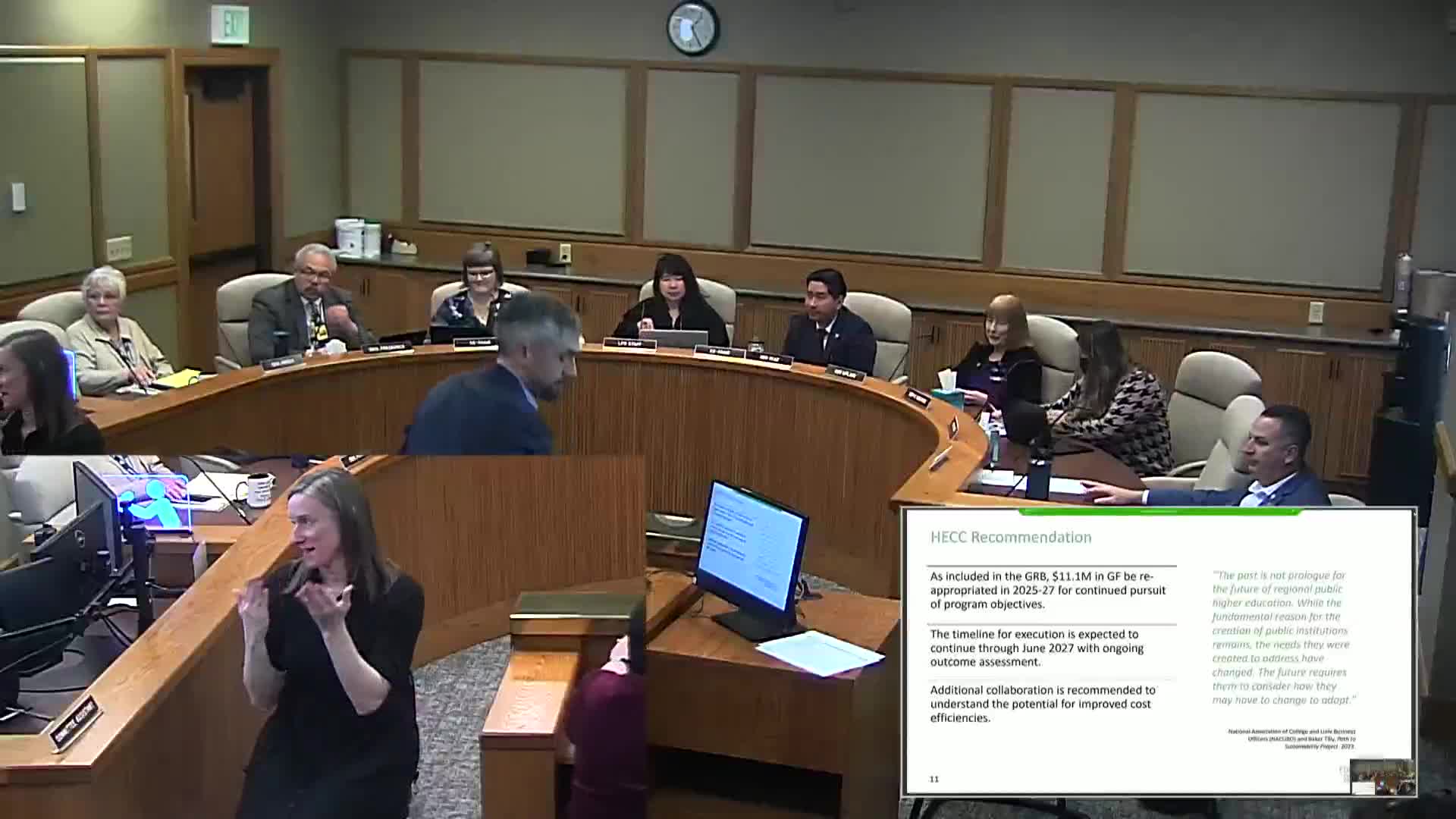
"These are benefits navigators that are housed at the higher education institutions," LaWelling said, describing the program established under House Bill 2835 (2021). She noted the program is not included in the Governor’s recommended 2025–27 budget, though the statutory mandate for the institutions to provide the services remains in place.
LaWelling said the Legislature granted $5 million for benefits navigators in the 2021–23 biennium; the bulk went directly to institutions and a portion was held back to support a statewide consortium and reporting. Colleges use the funds to hire navigators who meet with students, create individualized plans, help complete benefit applications and provide warm handoffs to campus and community services.
Agency figures presented to the committee show a growing caseload: about 8,000 students served in 2022, more than 13,000 in 2023 and over 18,000 in 2024, totaling more than 39,000 unique students in the first three years. LaWelling said navigators recorded roughly 14,000 internal campus referrals, 3,600 referrals to community partners, 2,600 referrals to the Oregon 1 portal (the state online application for SNAP, TANF and Oregon Health Plan) and over 2,000 referrals to other government agencies.
LaWelling highlighted basic‑needs indicators reported at Oregon community colleges: about 47 percent of students reported food insecurity, 45 percent reported housing insecurity and 16 percent reported homelessness; she contrasted those rates with a statewide food‑insecurity rate of about 12.6 percent for the general population.
Committee members praised the program. Senator Weber said, "When I visit our community colleges, I hear nothing but positive about the services that have been able to be provided for students." Representative Pam McLean and others urged the Legislature to compare costs and outcomes before expanding new programs, and Representative Mike Feige urged lawmakers to consider strengthening the existing navigator network rather than creating duplicate programs.
LaWelling cited campus examples: Portland Community College helped students navigate housing assistance applications; Eastern Oregon University expanded food pantry locations with local donations; Portland State assisted a student fleeing an abusive situation and found immediate housing; Lane Community College cultivated partnerships for low‑cost laptops and free eyeglasses.
(Ending) LaWelling said the state coordinators and navigators participate in a community of practice to share promising practices, and the agency will continue to administer contracts and collect reporting data to provide updates to the Legislature.