Get Full Government Meeting Transcripts, Videos, & Alerts Forever!
Get email alerts on the Emergency Response topic
No spam. Unsubscribe anytime.
Commission hears shelter gaps after record snow as public works outlines multi‑day response
Summary
Public commenters said volunteers scrambled to shelter people during the Jan. 4 blizzard and urged stronger city coordination with Riley County; city staff described a multi‑department snow response that cleared hundreds of lane miles and hauled thousands of tons of snow.
Public comment and staff briefings at the Manhattan City Commission meeting on Jan. 14 centered on gaps in emergency daytime shelter during the historic Jan. 4 winter storm and a city public works update on the multi‑day snow response.
Speakers from the volunteer Center of Hope Ministry and First Congregational Church said the community’s volunteers kept people safe after daytime facilities closed, and urged the city to coordinate more formally with Riley County Emergency Management and local nonprofits to avoid future gaps.
Jeremy Harmon, community relations director for the Center of Hope Ministry, said the nonprofit opened a shelter at about 3 p.m. on Jan. 4 after other daytime options closed and that volunteers and a host church sustained shelter operations for 41 hours. "We were able to open the shelter at 3PM. While we were able to accomplish that, it created an hour long gap where at least 6 of our regular guests were not aware that we were able to open and spent the night fending for themselves," Harmon said.
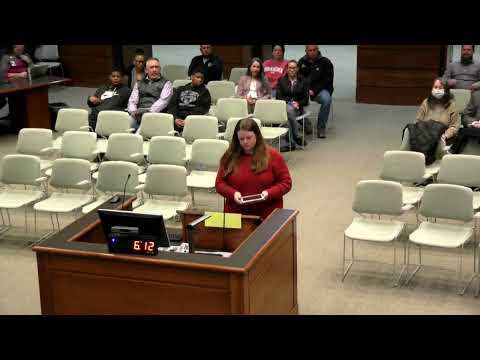
Pastor Kayla Simmons Wood of First Congregational Church said volunteers and the church extended operations to keep people safe and asked the city to invest more staff capacity in emergency management. "What we are asking of volunteers and nonprofits is simply too much," she said, adding that if the Center of Hope had not stayed open, "there almost certainly would have been deaths in our community on Sunday, January" during the storm.
Interim Director of Public Works Wyatt Thompson presented the city's operational response. Thompson said the city mobilized 31 public works staff, supplemented by about 40 additional employees from other departments and contractor partners, and ran 21 pieces of equipment around the clock from midday Jan. 4 through midday Jan. 9. He said crews plowed roughly 500 lane miles by Jan. 9 and that contractor partners hauled 500 truckloads of snow out of downtown Aggieville; by Jan. 13 the city had hauled "over 2,000 tons of snow out of our major roadways." Thompson described daily "snowball" coordination meetings among city departments and community partners and credited social media updates for high public engagement during the response.
Speakers representing the shelter response supplied counts and short‑term usage figures. Harmon said that in the 10 nights after Jan. 4 the Center of Hope averaged 17 guests per night, that the shelter's lowest night in that period was 12 people, and that the shelter had welcomed 51 people who had stayed at least one night in the initial six weeks of operation; he said the shelter had also served 11 new individuals, including a mother and child. Harmon and Simmons Wood asked the commission to strengthen city staffing and joint planning with the county for future extreme‑weather events.
Commissioners thanked staff and volunteers for the operational response and said they would revisit emergency management coordination and planning in light of the concerns raised.
No formal commission action (motions or votes) on new policy or funding was recorded in the transcript for this item; public commenters asked the commission to explore improved coordination and to meet with stakeholders to identify longer‑term solutions.