Get Full Government Meeting Transcripts, Videos, & Alerts Forever!
Get email alerts on the Elder Financial Scams topic
No spam. Unsubscribe anytime.
Legislators hear calls for task force to combat elder financial scams after victims’ stories
Summary
A judge and lawmakers urged creation of a task force to identify law-enforcement tools and prevention strategies for financial crimes that prey on older Oregonians. Banks, AARP Oregon and others told the House Commerce and Consumer Protection Committee that coordination and new tools are needed.
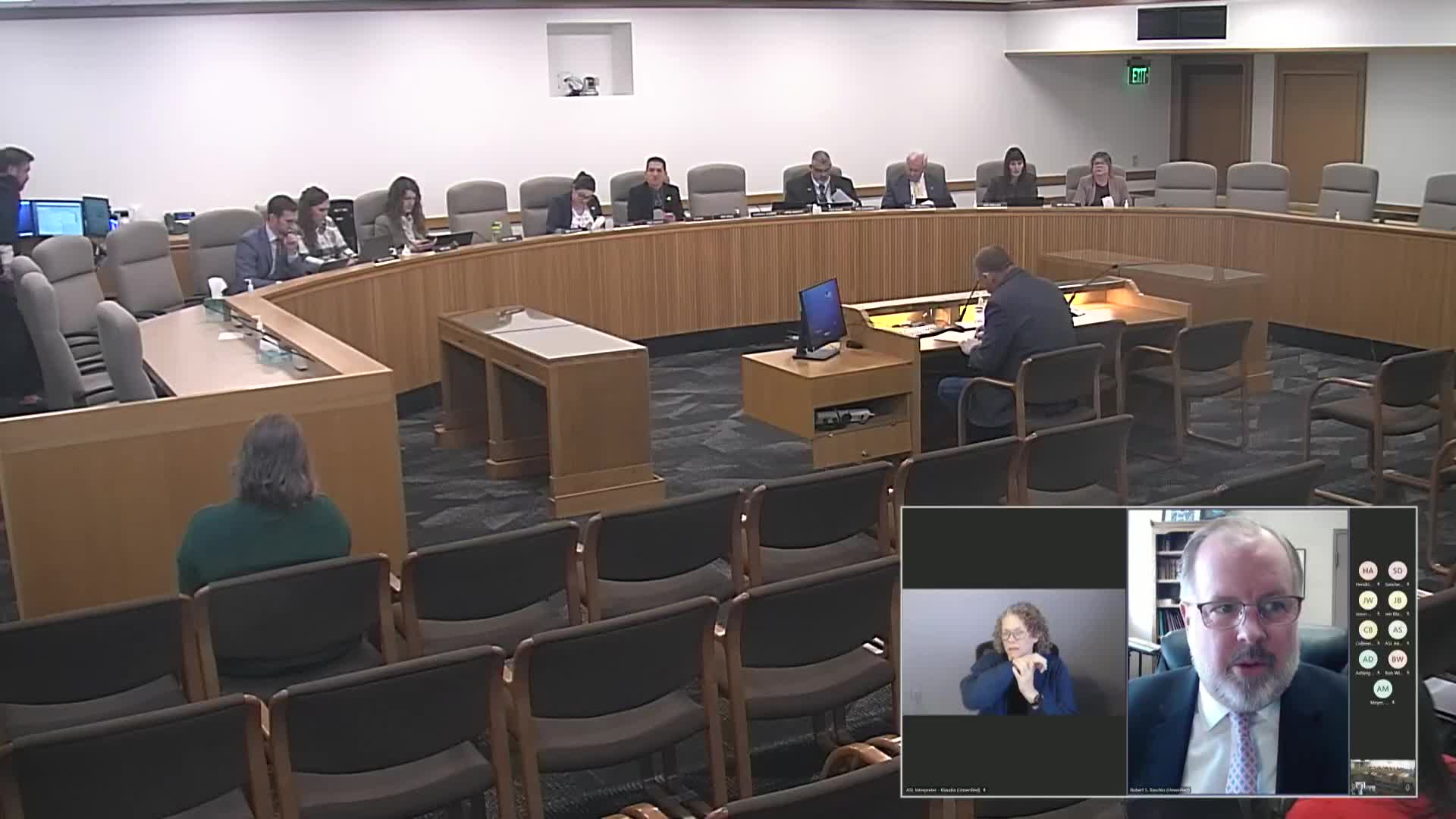
Judge Robert Raschio testified in his personal capacity about two family incidents that illustrate how scammers exploit emotional vulnerability and gaps in investigative tools. He described a case in which his mother-in-law was convinced to transfer $80,000 after a caller falsely claimed to be an Amazon employee; the funds were converted to cryptocurrency and could not be traced. He recounted a separate call to his mother falsely claiming his son had been arrested and needed bail, a scam that nearly persuaded his 83-year-old mother to withdraw funds.
“After our local law enforcement struck out … the FBI was contacted, but they have financial threshold requirements … and $80,000 doesn't trigger federal law enforcement involvement,” Raschio said. He said local and state investigators lacked technological capacity to trace the funds and asked the legislature for help.
Representative Mark Owens, sponsor of House Bill 2,330, told the committee a task force is needed to identify tools law enforcement lacks and to recommend techniques for investigating and preventing scams that target older Oregonians. “This one's a problem looking for a solution,” Owens said. He said the panel would bring “smart people in the room” to develop recommendations for new authority, resources or legislative changes.
Kevin Christiansen of the Oregon Bankers Association expressed support and described local multidisciplinary groups that include prosecutors and banks. He noted a 2017 law (House Bill 2622) that allows frontline bank staff to place holds on accounts when elder exploitation is suspected, and said resource limits constrain law enforcement responses.
Andrea Meyer, director of government relations at AARP Oregon, told the committee that older adults lose billions yearly to fraud and urged the task force’s scope be broad enough to protect people of all ages while still giving attention to older Oregonians. She suggested the task force name and membership be broadened to include representation for Oregonians 50 and over and for veterans, and recommended including romance scams and cryptocurrency-related fraud among issues to address.
Committee members asked about federal thresholds for FBI involvement; Raschio said he did not know the precise threshold but that $80,000 was below what the FBI would prioritize. Representative Owens said the task force should identify threshold questions and return recommendations.
No vote was taken; proponents asked the committee to create the work group to evaluate investigative tools, prevention strategies and public education approaches.