Get Full Government Meeting Transcripts, Videos, & Alerts Forever!
Get email alerts on the Veterans Education Waivers topic
No spam. Unsubscribe anytime.
Committee takes public testimony on bill expanding tuition waivers for families of Purple Heart and disabled service members
Summary
Senate Bill 668 would expand higher‑education tuition waivers to children, spouses and unmarried surviving spouses of Purple Heart recipients and certain disabled or killed service members, extend eligibility to community colleges and vocational programs, and prevent reductions to the waived amount from other aid.
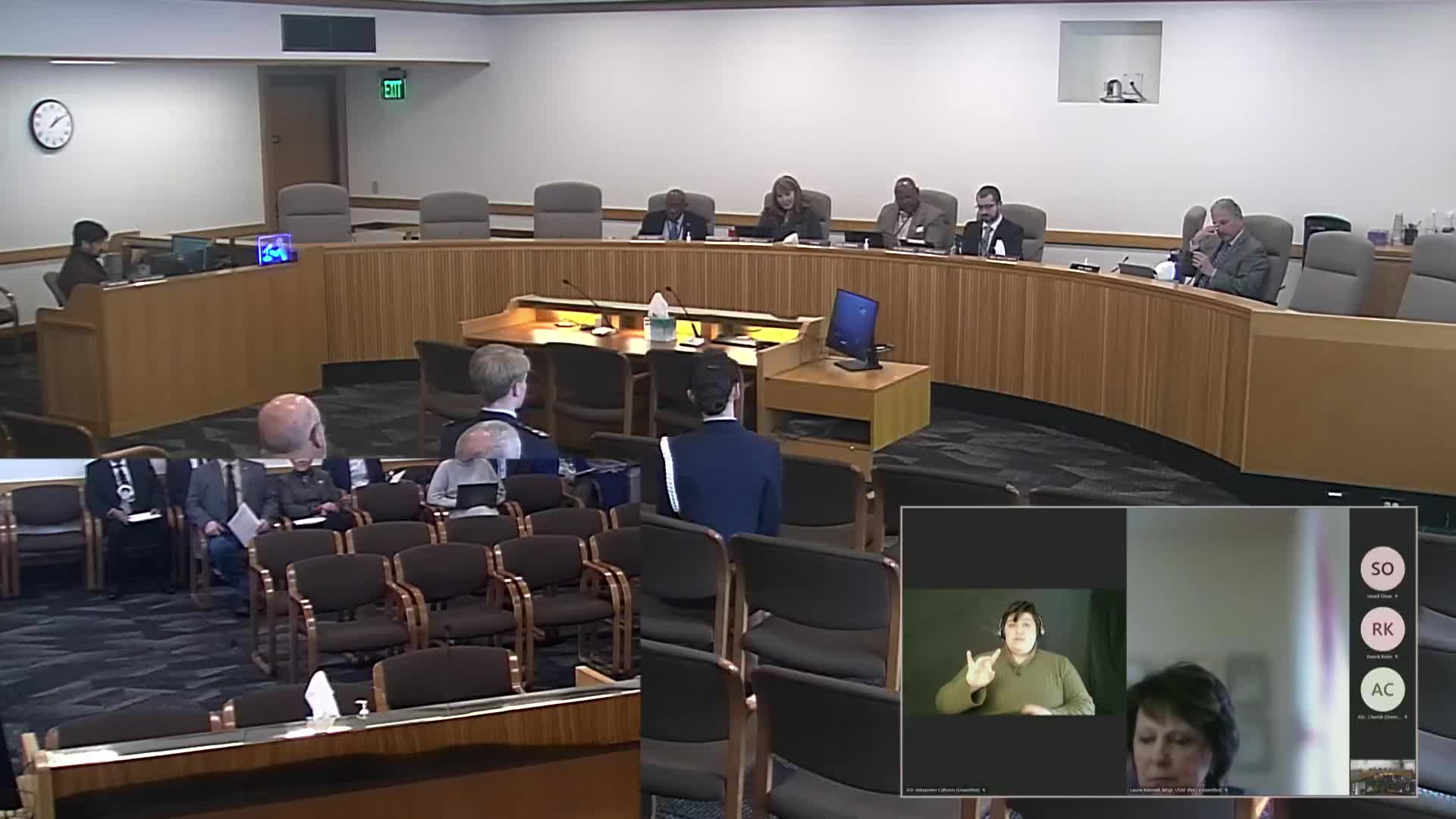
The Senate Committee on Veterans, Emergency Management, Federal and World Affairs opened public testimony Feb. 6 on Senate Bill 668, a proposal to broaden higher education tuition waivers for families of Purple Heart recipients and disabled or killed service members.
In a staff overview, the committee was told the measure would expand eligibility to children, spouses and unmarried surviving spouses of Purple Heart recipients and of disabled and killed service members, add eligibility for service members with disability ratings of 80 to 100 and extend the waiver’s use to community colleges, vocational programs and associate degrees. The summary stated the bill would prohibit reducing the waived tuition amount by specified aid, awards, grants and scholarships, and the bill declares an emergency to be effective on passage.
Senator Noah Robinson, who testified in support, said the bill was brought to him by a veteran and that it would help a "very small population." He said about 465 children used the current program last year and argued that extending eligibility to 80% disability rating would help additional families. Retired Master Sergeant Laurie Kimmel also testified in support and asked whether a dollar cap was attached to the waiver; staff and members said fiscal analysis by Ways and Means would determine cost and whether federal funds might be used.
Committee members did not take a vote at the hearing; proponents said the bill may require further work and a fiscal referral to Ways and Means to define costs and funding sources.