Get Full Government Meeting Transcripts, Videos, & Alerts Forever!
Get email alerts on the Human Relations Commission Organization topic
No spam. Unsubscribe anytime.
Lawrence Human Relations Commission holds organizational meeting; hears public complaint and discusses complaint process, outreach and budget engagement
Summary
The City of Lawrence Human Relations Commission convened its January meeting to introduce commissioners, hear a public comment from a city commission candidate alleging mistreatment by local institutions and media, and to discuss how the commission will handle complaints, engage the public and participate in the city's budget "balancing act" process.
The City of Lawrence Human Relations Commission convened its January meeting to introduce commissioners, hear a public comment from a city commission candidate alleging mistreatment by local institutions and media, and to discuss how the commission will handle complaints, engage the public and participate in the city's budget "balancing act" process.
Chair Irving Ku called the meeting to order and opened with introductions of the newly seated commissioners. "For those of you who don't know who I am ... I'm Irving Ku," he said, identifying himself as the commission chair. Members who spoke included Matthew Benordan, a clinically licensed social worker; Dr. Dallas Doan, a faculty member specializing in equity in education; and Joseph (Joe) Masters Mooney, a law professor who formerly served as general counsel for the Kansas Human Rights Commission. Renata Guevara, the commission's vice/associate chair, was not present.
The commission listened to a public comment from Eric B. Hyde, who identified himself as a City of Lawrence commission candidate and a member of the Kansas Brain Injury Advisory Board. Hyde read a prepared statement alleging that the Lawrence Journal-World and the Lawrence Times had "silenced" him and that local institutions, including a named community organization, had mistreated him. He asked the commission to "look up the laws, the federal laws" and "look into institutions in town that receive federal grants and try to bind them to the federal laws that they're supposed to obey," and urged the commission to pursue accountability. "I demand public apologies from all of these institutions for their mistreatment," he said.
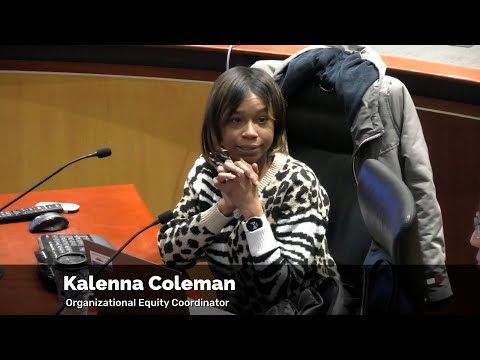
A central portion of the meeting addressed the commission's role and how it will interface with city staff and the city attorney's human relations division. Farris, the staff liaison and assistant city attorney, explained that the city attorney's office functions as the human relations director for the city and that complaints alleging discrimination in employment, housing or public accommodation are routed through that division. "The city attorney will be considered the director as she oversees all parts of the ... legal department, which there is a human relations division component to," Farris said, describing intake and investigative roles and noting that investigators and attorneys sometimes attend meetings to provide updates.
Commissioners discussed the need for clarity in Chapter 10 of the Lawrence City Code, which defines the commission's duties. Farris said previous efforts to revise Chapter 10 were paused pending broader advisory-board restructuring and identified examples of items that had been considered for code updates, including the Crown Act and changes related to gender equity (referenced in the meeting as "SB 180" by staff). Commissioners agreed that reviewing Chapter 10 and recommending clarifications to the city attorney's office could be an early priority.
Members asked for a clear flowchart or guide to the complaint intake and investigation process. Farris said staff would provide materials and that, if the commission receives a complaint for review, "they would send us the information that they have prior to the meeting so that we would be able to review it." Commissioners emphasized the importance of receiving complaint materials in advance so they can prepare rather than review items on the meeting floor.
The commission also discussed public outreach and educational programming as a primary function. Joe Masters Mooney pointed to "know your rights" and other targeted education (for example, materials for high-school students and renters) as possible services the commission could provide. Commissioners discussed drafting an op-ed or otherwise using local media to publicize the commission's existence and the services it can provide, and agreed staff should help coordinate public notice.
On administrative matters, the commission discussed meeting cadence and room availability and signaled a preference for a recurring meeting on a fourth-Wednesday schedule with an evening start time (members discussed both a 6 p.m. and a 6:30 p.m. start). Staff agreed to reserve room slots and confirm dates by email; commissioners proposed holding meetings in March and April and asked staff to circulate confirmed dates. Chair Ku said minutes and meeting suggestions would be circulated to all members.
Farris described an upcoming citywide budget engagement using a "Balancing Act" tool and encouraged commission members to participate to inform city budget priorities. The tool is intended to gather community input on strategic-plan priorities and service-level tradeoffs; Farris said communications staff would send invitations to advisory-board members.
Formal actions taken during the meeting were limited. Commissioners moved, seconded and approved minutes from the commission's Oct. 28 meeting by voice vote. At the meeting's end, a motion to adjourn was moved, seconded and approved by voice vote.
The commission requested that staff circulate (1) a complaint-intake flowchart and related materials, (2) a finalized meeting schedule and room reservation information, and (3) details about the Balancing Act budgeting engagement ahead of the next meeting.
The commission set follow-up steps rather than issuing any enforcement decisions at this meeting; commissioners and staff said they expect future meetings to include invited staff from the city attorney's office to explain intake and investigative procedures and to discuss possible amendments or clarifications to Chapter 10 of the City Code.