Get Full Government Meeting Transcripts, Videos, & Alerts Forever!
Get email alerts on the Salmon Habitat Restoration topic
No spam. Unsubscribe anytime.
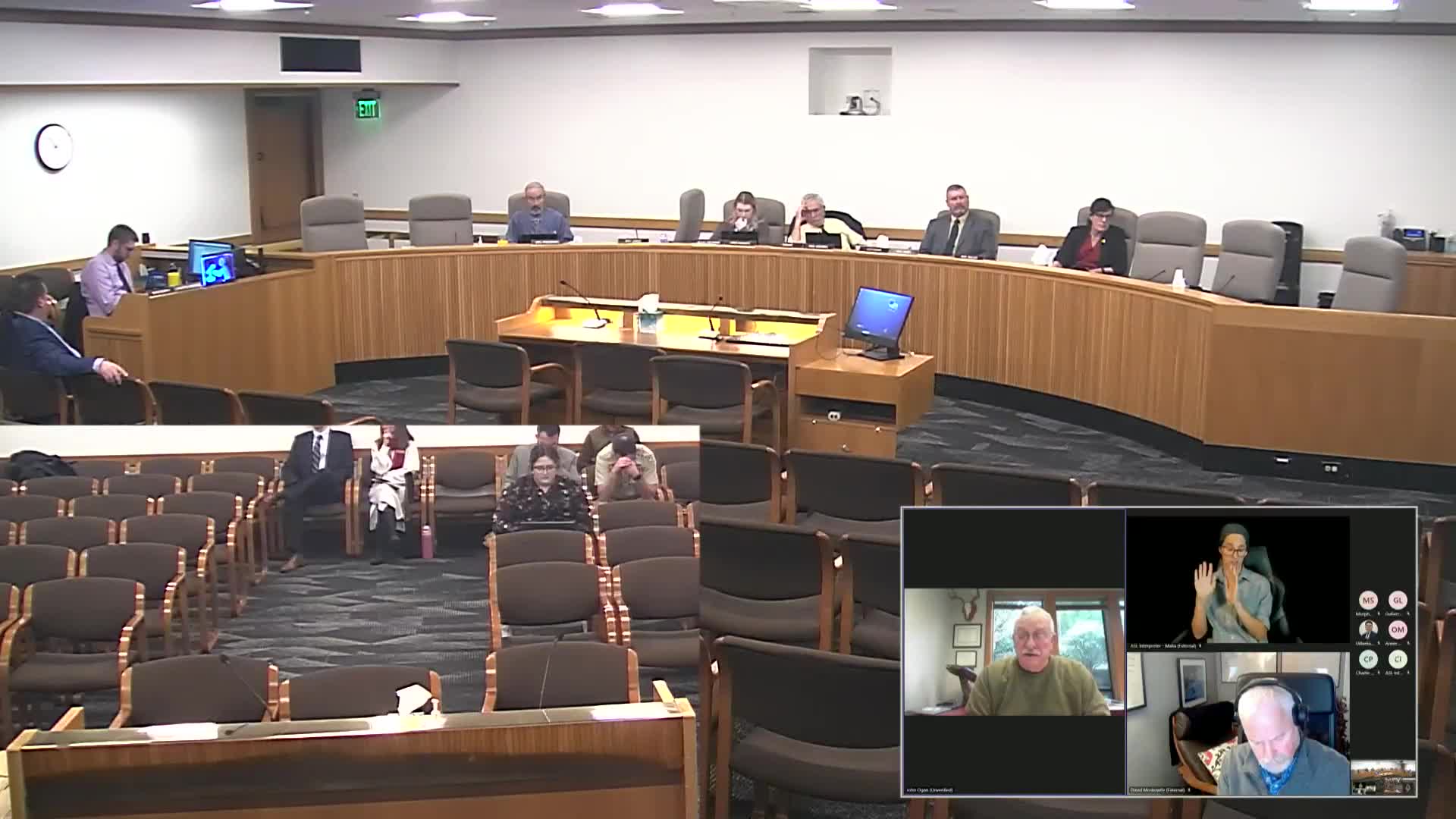
Senate hearing spotlights ‘salmon credit’ pilot to pay landowners for habitat restoration in Coos and Coquille
Summary
Supporters say a market-style Salmon Credit pilot would create permanent payments to private landowners and a trust fund to accelerate salmon habitat restoration in two southwest Oregon basins; conservation groups and state staff raised concerns about offsets, federal approvals and whether the program would produce net habitat gains.
Senator David Brock Smith, sponsor of Senate Bill 511, told the Senate Committee on Natural Resources and Wildfire that the bill would create a voluntary Salmon Credit program, initially limited to the Coos and Coquille river basins, that would let developers purchase credits in lieu of conducting on-site mitigation.
The senator said the credits would cost twice the estimated restoration expense so half would pay for the restoration work and half would seed a permanent state Salmon Trust Fund to pay an annual “dividend” to the participating landowner. "If it costs a hundred thousand to restore a required mitigation acre to salmon habitat, a salmon credit would cost 200,000, with $100,000 paying for the restoration and the other 100,000 going into a permanent state of Oregon salmon trust fund," said Senator David Brock Smith, sponsor of SB 511.
The program, proponents said, is intended to remove barriers that keep private landowners from allowing restoration on working lands. Cam Perry, who identified himself as a private landowner and long‑time restoration practitioner, told the committee the Salmon Credit “is a completely voluntary program for both landowners and developers” and framed it as a simpler alternative to the current, time‑consuming mitigation process.
John Ogan, executive director of the Natural Resources Office for the Coquille Indian Tribe, testified in support and emphasized local urgency. "Coho salmon remain federally listed under the Endangered Species Act in both systems," Ogan said, and he described Chinook numbers in the Coquille as having fallen from “tens of thousands to hundreds.” He said the tribe, which has a co‑management agreement with the state, supports tools that can attract private landowner participation where "the low hanging fruit has been picked" over the past two decades.
Several conservation organizations urged the committee to oppose SB 511 or to proceed with caution. James Fraser, Oregon policy director for Trout Unlimited, said the bill is not just a restoration program but a mitigation and offset system that would pair restoration projects with impairments elsewhere. "The salmon credit program would be akin to those efforts, but pair each restoration project with development or impairments elsewhere," Fraser said, adding that pairing risks producing net habitat loss if matches are not carefully controlled.
Jennifer Fairbrother, legislative and policy director at Native Fish Society, echoed concerns that not all habitats are equivalent and that preserved, functional habitat often yields the greatest conservation return. She also raised uncertainty about federal approvals, saying the program "faces significant hurdles" in obtaining necessary federal regulatory clearance.
Department of State Lands staff stated a neutral position in a written letter and in brief answers to the committee; DSL staff told the panel they were coordinating internally and would provide follow‑up clarification. "The department's position is neutral," said Ali Fornes, government relations manager at the Department of State Lands.
Sponsor David Brock Smith and restoration practitioners described a one‑year work group that refined the concept and narrowed it to the two contiguous pilot basins. Cam Perry said the work group ranked potential projects and pre‑screened candidates to reduce permitting complexity and speed implementation.
Opponents pointed to forthcoming state funding sources as an alternative. James Fraser noted the SB 1561 (Monsanto settlement) endowment, which he said could yield substantial biennial interest for restoration projects and cautioned against diverting or duplicating that funding.
The committee took public testimony but did not take a final vote on SB 511 during the Feb. 6 hearing.
Ending: Proponents framed the Salmon Credit as a marketable way to bring private landowners into restoration by creating an ongoing payment stream; opponents asked the committee to preserve existing mitigation safeguards and to resolve federal permitting questions and whether the program would produce net habitat gains before authorizing the pilot.