Get Full Government Meeting Transcripts, Videos, & Alerts Forever!
Get email alerts on the Undersea Cable Easements topic
No spam. Unsubscribe anytime.
State lands agency seeks authority to charge fees for undersea cable easements in Oregon territorial sea
Summary
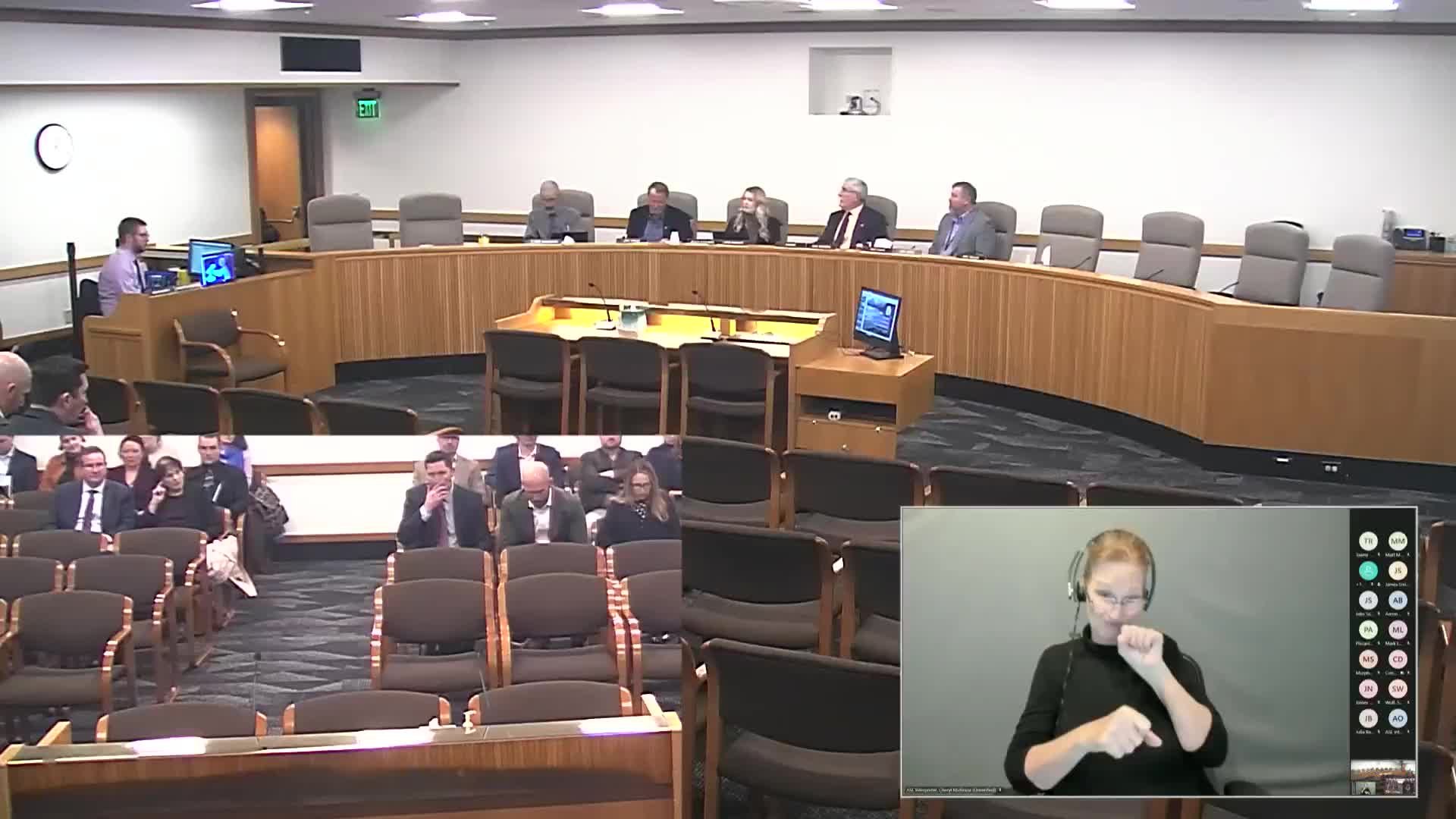
The Department of State Lands asked the Senate Committee on Natural Resources and Wildfire on Jan. 30 to give it authority to set fees and compensation rates by administrative rule for easements to construct, maintain and decommission undersea cables in Oregon’s territorial sea.
The Department of State Lands asked the Senate Committee on Natural Resources and Wildfire on Jan. 30 to give it authority to set fees and compensation rates by administrative rule for easements to construct, maintain and decommission undersea cables in Oregon’s territorial sea.
The change in Senate Bill 793’s Dash-1 amendment would let the agency establish application and renewal fees and compensation rates for telecommunication service lines on state-owned seabed within three nautical miles of shore, and declares the measure an emergency effective on passage. Department officials said current law prevents the state from requiring payment for use of the territorial sea.
Why it matters: Department leaders said the state now collects little or nothing from companies that install fiber-optic and other undersea cables despite bearing the costs of review, permitting and long-term oversight. Without fee authority, staff warned, general fund or common school fund resources could be tapped to cover administrative costs.
Director Vicki Walker, Department of State Lands, told the committee the Land Board — the Treasurer, Secretary of State and Governor — previously found the state could not require easement payments in the territorial sea. "The state currently cannot require payment for easements in the territorial sea. You all told us we couldn't do that many, many years ago," Walker said, urging legislative change so "the people of Oregon do receive compensation for use of a resource that belongs to them." (Director Vicki Walker, Department of State Lands.)
Deputy Director Bill Ryan, DSL's Aquatic Resource Management program, described the program’s costs since the Legislature tightened cable-placement rules in 2021 under HB 2603. Ryan said DSL can now charge only a one-time application fee of $5,000, a level that "has not been sufficient to cover administrative costs." He told senators the Dash-1 amendment would let DSL set payment rates, application fees and renewal fees through rulemaking. (Bill Ryan, Deputy Director, Department of State Lands.)
Committee members pressed DSL on the choice to set fees by rule rather than by specific statutory amounts. DSL staff said rulemaking offers more flexibility, a longer public engagement process and periodic review: "There's more time when you're doing rulemaking than when you're doing legislation," one staff member said, describing the agency's rule advisory committee process and five-year review cycle. (Analyst; Natalia Stromatka and DSL staff explained rulemaking process and outreach.)
Committee questions also touched on coordination with federal permitting and neighboring states. Natalia Stromatka, the agency’s admiralty cable analyst, said California and Washington charge for cable easements and use different formulas (e.g., administrative-hour fees, environmental-damage fees, annual rent or linear-foot/diameter metrics) and that DSL will survey coastal states as part of rule development. "They also include separate environmental damages fee and they also have annual rent, which we don't have," Stromatka said. (Natalia Stromatka, Admiralty Cable Analyst, Department of State Lands.)
No public testimony was recorded in opposition during the hearing; the committee closed the public hearing after DSL’s presentation and questions. DSL told the committee it limited this session’s bill to undersea telecommunication cable easements (the Dash-1 amendment) and will address other provisions in later legislation.
Looking ahead: DSL said it will undertake rulemaking to develop fee methodologies and will provide additional information on federal overlaps and neighbor-state practices if the committee advances the bill.
Sources: Public hearing, Senate Committee on Natural Resources and Wildfire, Jan. 30, 2025; testimony of Vicki Walker, Bill Ryan and Natalia Stromatka, Department of State Lands.