Get Full Government Meeting Transcripts, Videos, & Alerts Forever!
Get email alerts on the Public Utility Commission Fee topic
No spam. Unsubscribe anytime.
PUC seeks higher fee cap to sustain staffing and oversight, agency says
Summary
The House Committee on Climate, Energy, and Environment heard testimony on House Bill 2370, which would raise the maximum annual assessment the Oregon Public Utility Commission can charge utilities from 0.45% to 0.55% of gross operating revenues to cover expanding workloads and preserve regulatory staff and programs.
PUC asks Legislature to raise utility assessment cap to fund staffing, oversight
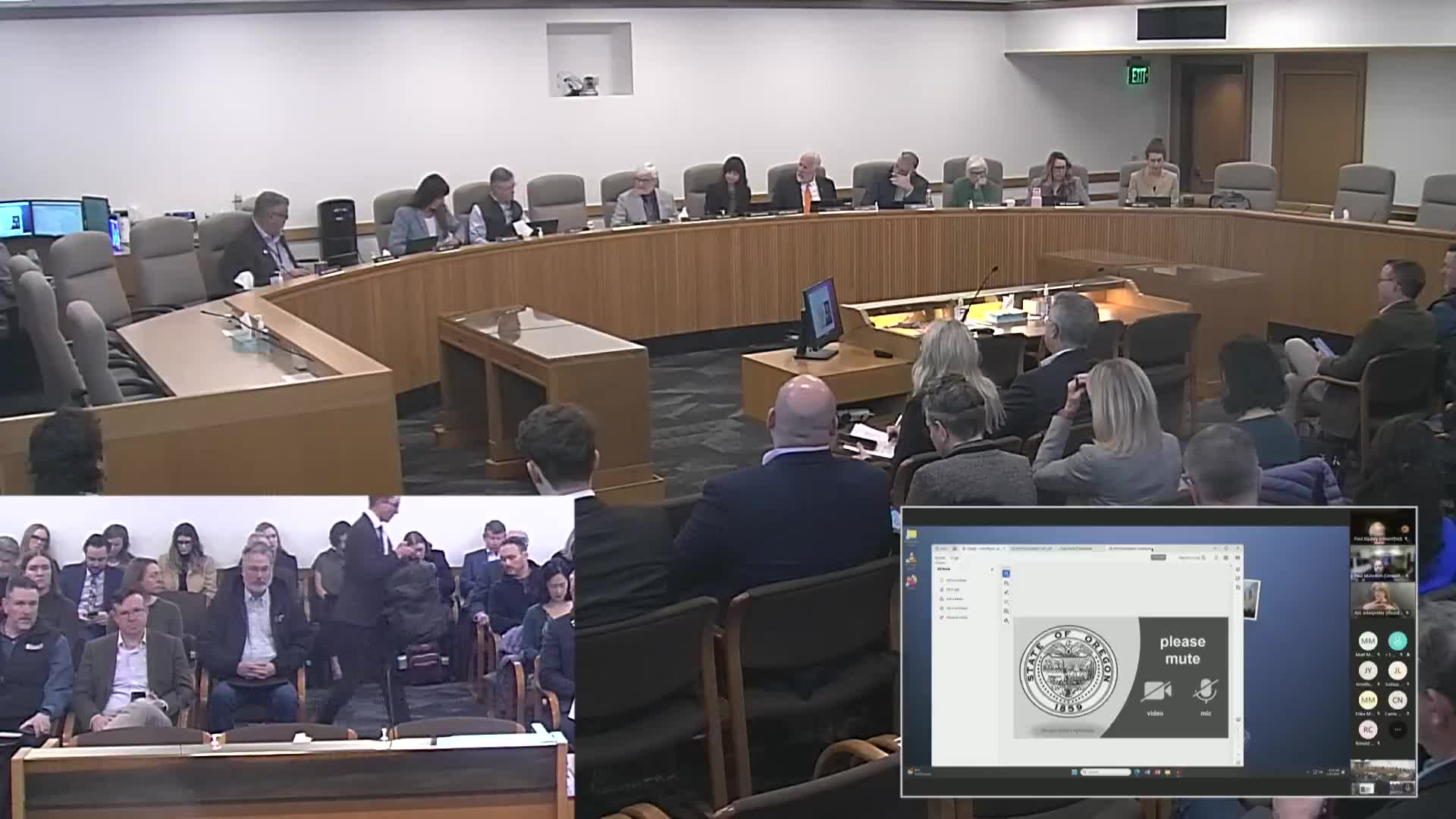
The House Committee on Climate, Energy, and Environment on Thursday heard testimony on House Bill 2,370, which would raise the maximum annual fee the Oregon Public Utility Commission may assess on utilities from 0.45% to 0.55% of utilities’ gross operating revenues. PUC officials told the committee the change is needed to maintain staff and regulatory functions as the agency’s workload grows.
The measure matters because the PUC receives no general or lottery funds and is funded by assessments on the gross operating revenues of the utilities it regulates; agency officials said current revenue projections would not sustain present staffing and oversight levels without the higher statutory cap.
Mike Grant, former executive director at the Oregon Public Utility Commission, and Mandy Standiford, the commission’s chief operating officer, testified in support of the bill. “Let me remind you that the PUC receives no general funds or lottery funds,” Grant said, explaining why the commission relies on the statutory assessment. Standiford told the committee the proposed higher cap is a maximum only — the commission would not necessarily set the fee at the cap but would use it as authority to match revenue to expenses.
Standiford described the drivers of higher costs: the agency’s expanding docket work, safety and wildfire mitigation planning, implementation of new energy policies, and increased oversight tied to decarbonization efforts and changing industry technology. She said the commission forecasts a budget shortfall under the current cap, citing an estimated shortfall of about $1.2 million in 2027 and as much as $8 million by the end of 2029 if the cap is not changed. Standiford projected that, if the commission assessed the full 0.55% cap, the change would amount to roughly an additional $0.17 per month for electric customers and about $0.13 per month for gas customers; in committee summary remarks later, the commission also referenced an $0.08-per-month figure for gas customers.
PUC witnesses outlined core functions they said the additional revenue would support: continued review of rates and utility costs, oversight of wildfire mitigation plans and inspections, vegetation management and pole-attachment reviews, and staff capacity to scrutinize procurement and grid planning as utilities respond to growing demand from data centers and other load sources.
The agency noted steps it has taken to limit costs, including streamlining filing procedures, reusing vacancy savings, postponing some IT purchases while moving to a modern docketing platform, and reassignment of existing staff to high-priority work. Standiford also said the PUC plans internal audits and risk assessments in the next biennium.
Consumer advocates and industry commenters also appeared. Jennifer Hillhart, policy and program director at the Oregon Citizens Utility Board, told the committee the CUB supports the bill because the commission’s staff helps produce thorough records that protect customers; she cited wildfire mitigation review and field inspections as examples of functions that benefit from PUC resources. Jacob (Jake) Stevens, identified as a CEO of a regional clean energy developer, supported the request for more PUC staff but urged the committee to use the opportunity to examine whether the commission is meeting statutory clean-energy mandates and to consider reforms and additional expertise in competition and power procurement oversight.
Committee members asked whether the requested authority would fund added responsibilities, such as additional wildfire mitigation work or the implementation of HB 2021. PUC witnesses said the cap increase could be used to fund policy option packages the commission includes in its budget requests, including additional wildfire-mitigation support and staffing for implementation work.
No formal action or vote on House Bill 2,370 was recorded during the hearing. The committee chair encouraged people who were not heard in person to submit written testimony online within 48 hours of the hearing start time; members said they would collect questions in writing and follow up after reviewing the online record.
Ending
The committee took public testimony and closed the hearing without a vote. Lawmakers said they will gather written testimony and submit questions to staff for further review before deciding next steps.