Get Full Government Meeting Transcripts, Videos, & Alerts Forever!
Get email alerts on the Public Safety Pensions topic
No spam. Unsubscribe anytime.
Committee hears emotional testimony on SB 588 to recognize PTSD as occupational injury for police, firefighters; hearing continued
Summary
The Senate Committee on Labor and Business heard emotional testimony Jan. 30 on SB 588, a bill that would classify PTSD suffered by police officers and firefighters as a compensable PERS occupational injury and set deadlines for contested-case hearings; the committee will continue the hearing to receive PERS input and additional witnesses.
The Senate Committee on Labor and Business held a public hearing Jan. 30 on Senate Bill 588, which would recognize post-traumatic stress disorder as an injury or occupational disease sustained in the actual performance of duties by police officers and firefighters for purposes of specified benefits under the Public Employees Retirement System (PERS), and would require expedited contested-case hearings in certain circumstances.
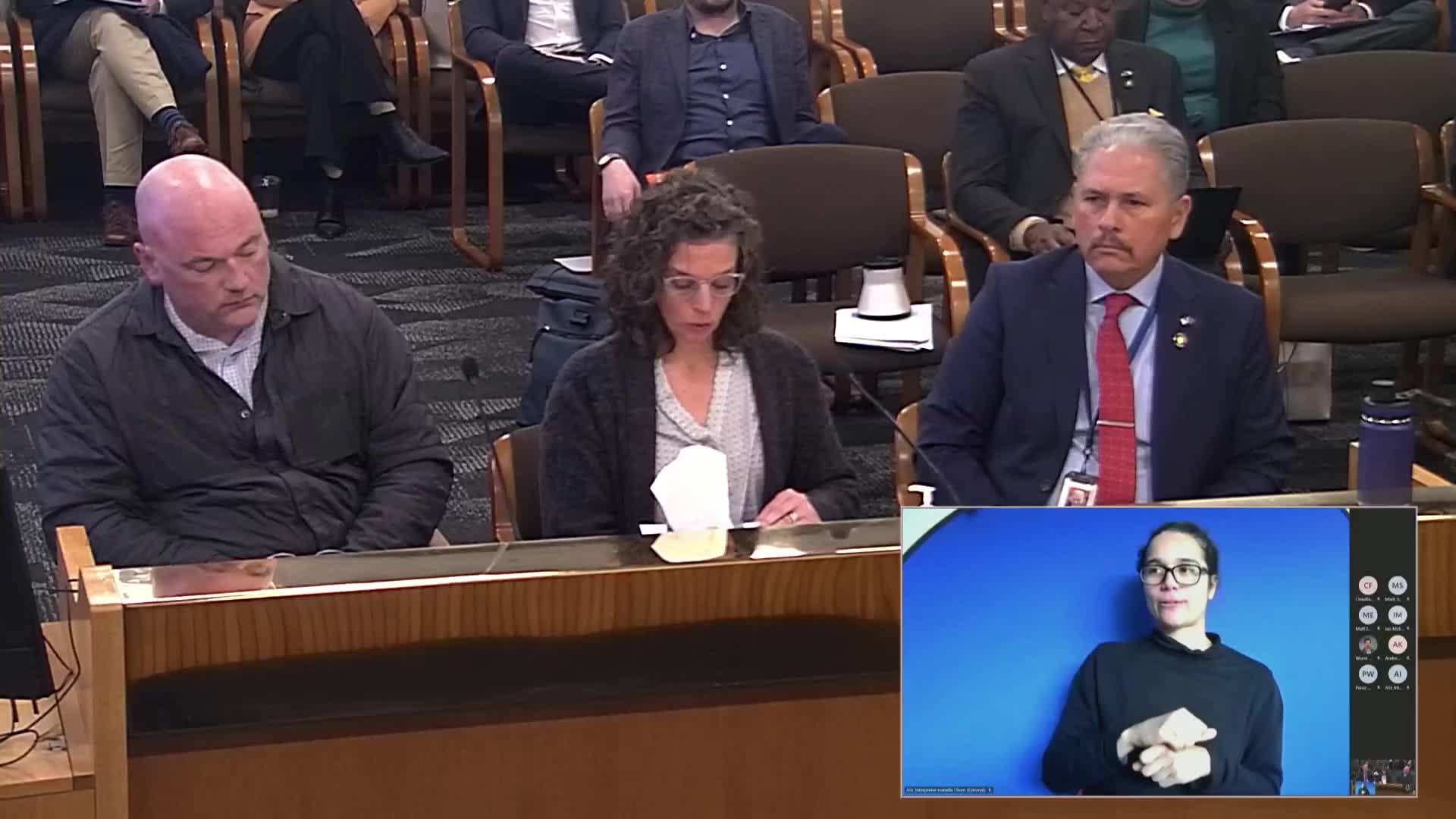
Multiple witnesses described personal and family consequences from lengthy delays and denials in PERS disability processing for PTSD. Sean Ellis, a former police officer from Clackamas County, testified that he was diagnosed with PTSD after a 2013 incident and a later 2020 critical call in which a reserve officer riding with him was fatally shot. Ellis said he filed a PERS disability application in March 2021; it was denied in December 2021, and an appeal filed by counsel remains unresolved three years later. His Social Security disability claim was approved quickly while PERS proceedings remained unresolved, he told the committee.
Karen Ellis, Sean Ellis's wife, described the family's financial strain, attorneys' fees, repeated delay notices from PERS and the emotional toll on their sons. Senator Mark Meek, a chief sponsor, urged passage of SB 588, saying the bill would establish clear timelines for hearings (90 days, or 180 days for good cause) and would require PERS to address backlog cases within 180 days of the bill's effective date. The bill also declares an emergency and would be effective on passage.
Supporters included the Oregon State Firefighters (Carl Kennig, president) and the Oregon Coalition of Police and Sheriffs (Aaron Schmalz, president). Kennig said the firefighters' organization helped secure a workers'compensation presumption for PTSD and supports reforms to PERS procedures so first responders receive timely consideration. Aaron Schmalz (identified as with the Portland Police Association and Oregon Coalition of Police and Sheriffs) said critical-incident injuries can take time to appear and urged that PERS keep claims windows open and provide timely adjudication.
Committee members expressed sympathy for witnesses and said they planned additional hearings with PERS staff and other stakeholders to explore administrative timelines and case-processing details. Chair Taylor said the committee would continue the public hearing at a future meeting and specifically asked members to prepare questions for PERS.
No committee vote was taken on Jan. 30; the chair closed the hearing but announced the committee will reconvene to consider SB 588 further and to hear additional witnesses including a sheriff who had signed up to testify.