Get Full Government Meeting Transcripts, Videos, & Alerts Forever!
Get email alerts on the Higher Education topic
No spam. Unsubscribe anytime.
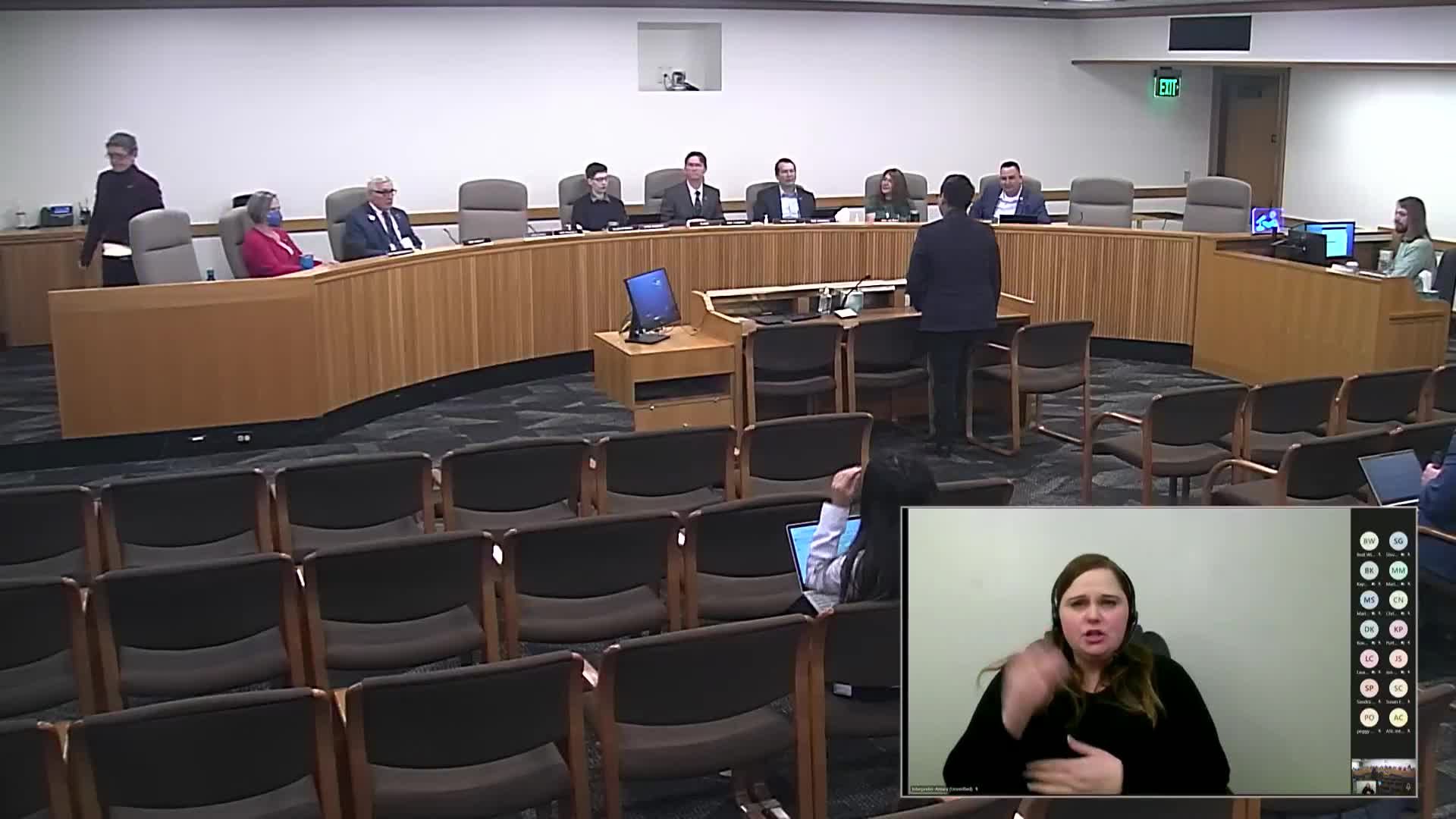
Extensive testimony for and against pay parity bill for community college part-time faculty at House hearing
Summary
Sponsors and dozens of witnesses testified Feb. 6 on House Bill 2669, which would require community colleges to pay part‑time faculty the same per‑hour rate as full‑time faculty for comparable teaching work and provide implementation funding through the Higher Education Coordinating Commission.
House sponsors and numerous witnesses from labor organizations, community colleges and part‑time faculty presented competing views Feb. 6 on House Bill 2669, a bill that would require Oregon community colleges to compensate part‑time faculty at the same per‑hour rate as full‑time faculty for comparable teaching work and provide funding through the Higher Education Coordinating Commission to implement the change.
Primary sponsors Representative Ricky Ruiz (HD 50) and Representative Lisa Bridal framed HB 2669 as a remedy for longstanding pay inequity. Ruiz said community colleges rely heavily on part‑time instructors and described the bill as a step toward fair compensation for work such as classroom instruction, preparation, grading and office hours. Bridal, who previously served as a Lane Community College trustee, said part‑time instructors routinely perform the same duties and qualifications as full‑time faculty and presented survey statistics she said show disparities in compensation and economic hardship among part‑time faculty.
Supporters who testified included representatives of the Oregon Education Association and American Federation of Teachers Oregon, and numerous current part‑time faculty who described long service, multiple jobs to make ends meet, and barriers to student support caused by precarious employment. Kevin Sullivan (OEA) told the committee that part‑time faculty in 2023–24 earned on average 58% of what full‑time faculty earned; other witnesses cited similar figures. Testimony from part‑time faculty described teaching full loads by combining assignments across colleges, last‑minute cancellations without adequate pay, reliance on public assistance by some instructors, and examples of instructors leaving Oregon for higher pay in neighboring states.
Opponents, including the Oregon Community College Association and presidents and administrators from multiple colleges, warned of unintended consequences. John Wyckoff of the Oregon Community College Association and several college presidents and administrators said full‑time and part‑time roles differ in scope: full‑time faculty perform additional nonteaching duties such as curriculum development, advising, program review, committee service and accreditation work. They argued a uniform parity requirement for per‑hour teaching rates could either (a) require colleges to pay part‑time teachers more for fewer responsibilities, creating inequities, or (b) require colleges to require part‑time faculty to take on additional duties to justify parity, potentially driving away industry professionals who teach as part‑time CTE instructors.
College administrators described workforce and budget constraints, the role of collective bargaining agreements in defining full‑ and part‑time status and duties, and the operational flexibility community colleges need to respond to enrollment changes shortly before term start. Several administrators said local collective bargaining and budgeting are the appropriate venues to address compensation and workload differences.
Committee members asked technical questions about cost, collective bargaining implications, and how colleges define and manage workloads. Sponsors said implementation details and cost estimates would be worked through with budget committees; Representative Ruiz offered to provide exact cost figures to members. College representatives suggested alternative approaches such as targeted salary pools or local discretion tied to demonstrated workload parity.
No committee vote was taken on HB 2669 at the Feb. 6 hearing. The record includes substantial testimony on both sides, fiscal questions that sponsors acknowledged would be addressed in budget and ways-and-means processes, and requests from college representatives for solutions that preserve local flexibility while addressing pay inequity.
Votes or formal actions: none taken during this hearing.
Selected facts and testimony recorded in committee: - Sponsor Representative Ricky Ruiz urged support, noting community-college economic impact examples and the role of part‑time faculty in delivering instruction. - Sponsor Representative Lisa Bridal cited a 2018 census finding that only 29% of faculty positions in Oregon community colleges were full time versus a 51% national average, and contended part‑time faculty earn on average 58% of a full‑time faculty salary (figures cited in testimony). - Union representatives and many part‑time faculty testified in support, describing reliance on multiple jobs, cancelled classes with limited compensation, and examples of faculty leaving Oregon for higher pay in Washington. - College administrators and the Oregon Community College Association testified in opposition or caution, citing workload differences, collective bargaining and potential negative impacts on career-technical education staffing.
The committee closed the HB 2669 public hearing after more than a dozen individuals provided testimony; members asked staff to provide fiscal details and other follow-up information as the bill proceeds through committee processes.