Get Full Government Meeting Transcripts, Videos, & Alerts Forever!
Get email alerts on the Youth Entrepreneurship topic
No spam. Unsubscribe anytime.
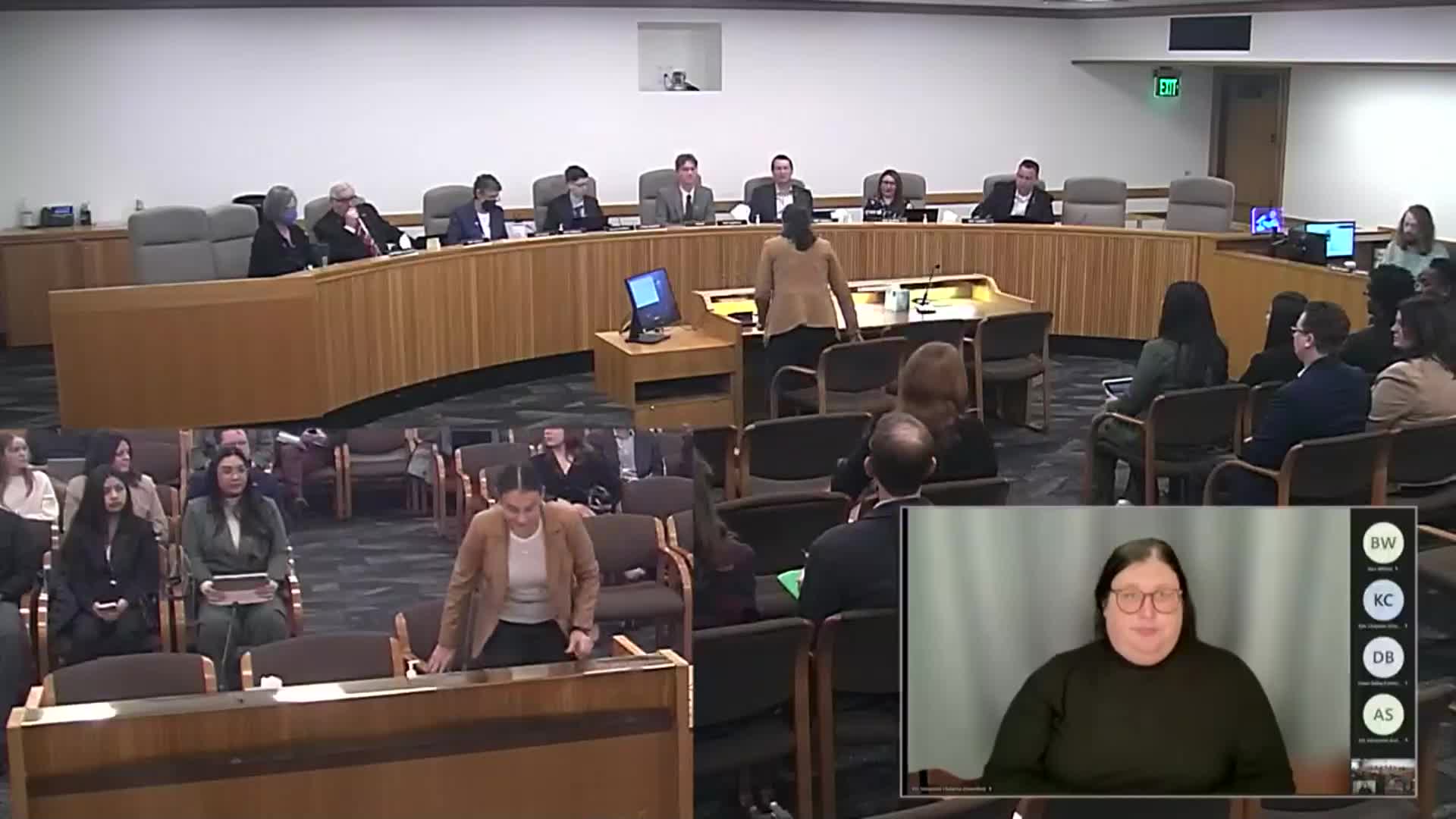
House hearing: REAP asks $1.3 million to expand Youth Entrepreneurship Program
Summary
Representatives, REAP staff and youth told the House Higher Education Committee that REAP’s Young Entrepreneurs Program (YEP) serves hundreds of students and that HB 2546 requests $1.3 million to expand capacity statewide, particularly for Black, Latinx and Indigenous youth.
Representative Andrea Valderrama opened a public hearing on House Bill 2546 on Jan. 30, asking the committee to move the bill to Ways and Means. She said the bill requests $1.3 million to expand the Young Entrepreneurs Program (YEP) run by REAP in East Multnomah County and emphasized YEP’s focus on students of color.
Mark Jackson, executive director of REAP, told the committee the organization serves more than 800 students annually across dozens of schools and that YEP helps students develop entrepreneurship, mentorship and career skills. Jackson said the program connects students with business leaders and civic events. “The program really speaks to the inequities in the actual opportunity gap,” he said.
Nut graf: REAP asked the committee for increased state funding to scale a youth entrepreneurship program that REAP and its backers say produces internships, business concepts and real‑world opportunities for students who otherwise lack access to entrepreneurship training.
Program details and outcomes REAP staff presented program operations and outcomes from prior state funding. Testimony to the committee referenced the legislature’s prior appropriation (section 303 of SB 5506, 2023) of about $500,000 and quarterly reporting that showed 17 student business concepts, six internships secured, and $400 in total student‑generated revenue in the reporting period cited. Tari (Tade) Muntefa and Kayla Nohalani Damel described daily programming, mentorship, and a mix of in‑person and e‑learning plans intended to expand capacity.
Students’ perspectives Two current participants, Nathan Yosef and Corlea Chavez, described their progression from students to mentors and interns and said YEP provided marketing, public‑speaking, networking and business registration support. “This cycle and mentorship has been key to YEP’s impact,” Yosef said. Chavez said YEP helped her form an LLC and build a website, and she credited the program with accelerating her business plans.
Budget and capacity questions Committee members asked about selection, outcomes and funding sources. REAP staff said the $1.3 million ask would roughly double prior state funding for the biennium and would be used primarily to add staff capacity to serve more students — current cohort capacity was described as about 22–30 students with plans to scale. Jackson said REAP currently relies on a mix of prior state funding, local foundations and corporate sponsors.
Committee process No vote occurred; the item was heard as a public hearing and the committee may schedule a work session and fiscal review before a vote.
Ending The hearing closed and the committee moved on to the next bill; supporters left committee materials and student testimony on file.