Get Full Government Meeting Transcripts, Videos, & Alerts Forever!
Get email alerts on the Idd Case Management Ratio topic
No spam. Unsubscribe anytime.
Self-advocates and families back 30:1 staffing ratio for IDD service coordinators and personal agents
Summary
Senate Bill 725 would require a 30-to-1 maximum caseload for service coordinators or personal agents serving people with intellectual and developmental disabilities; self-advocates described harms from high caseloads and turnover, while the Office of Developmental Disability Services said the proposal would have significant fiscal implications.
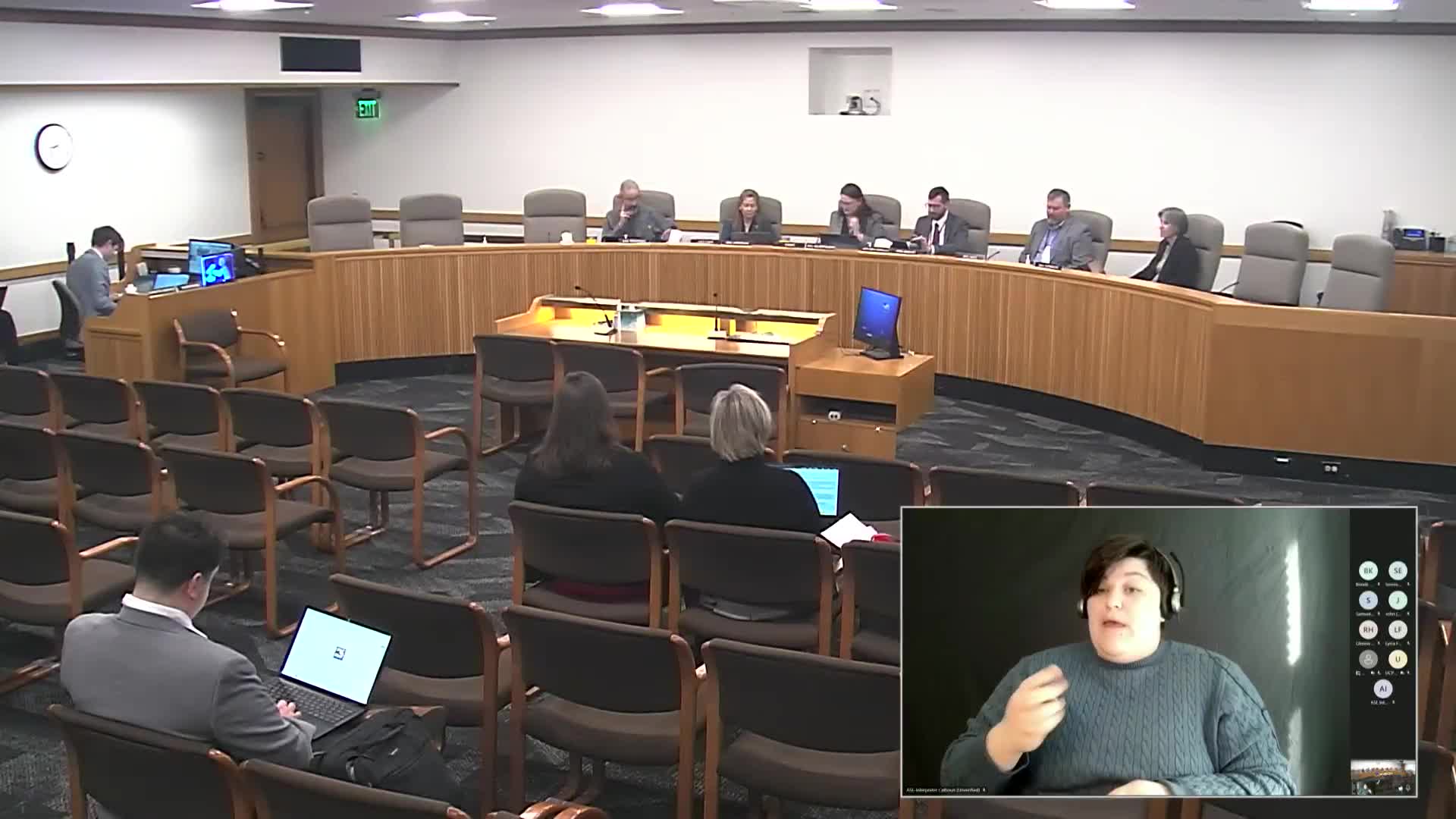
Senate Bill 725, presented Jan. 30 to the Oregon Senate Committee on Human Services, would direct the Oregon Department of Human Services (ODHS) to adopt rules requiring community developmental disability programs and support services brokerages to maintain a maximum 30-to-1 staffing ratio of service coordinators or personal agents to individuals served. The bill would become operative Jan. 1, 2026, and sunset Jan. 2, 2027; ODHS would be allowed to take necessary actions prior to the operative date.
Self-advocates, family members and advocates testified in strong support, giving personal accounts of service gaps caused by high caseloads and turnover. Yuan Feng Shen, a self-advocate with Self Advocates Taking Action, said high turnover left people “basically in limbo” and forced them to repeatedly retell histories to new caseworkers. Lyra Fox described a traumatic episode in which a caseworker called off-hours and made threats; she said she reported the incident and later learned the state did not follow up as she expected. John Griffiths and Ruth Geisinger described problems getting timely help with housing, legal protections and crisis supports when case managers are overburdened.
The interim director of the Office of Developmental Disability Services (ODDS), Dana Hittle, testified the department is neutral on SB 725 and described existing variability in caseload ratios under the current workload model. Hittle said the workload model assigns different assumed caseloads by age and setting (for example, a case manager is assumed to be able to serve 38 adults in 24-hour residential settings but only 20 children in home settings) and that actual caseloads in Oregon currently range “from as few as 25 to as many as 82.” Hittle said a 1-to-30 requirement “would, based on our current funding and case loads, have a significant fiscal impact” and that the department could estimate costs if the committee requested a fiscal impact statement.
Advocates urged lawmakers to codify a lower maximum ratio as a patient-safety and quality measure; disability-rights groups and some providers also expressed support. Senators and staff discussed the workload model, the range of current caseloads, and whether the department could supply a breakdown of ratios and funding implications before any final action. Several self-advocates and advocacy organizations committed to submitting additional written testimony and documentation.
The public hearing on SB 725 closed after testimony; the committee did not record a committee vote during this session.