Get Full Government Meeting Transcripts, Videos, & Alerts Forever!
Get email alerts on the Newborn Safety Devices topic
No spam. Unsubscribe anytime.
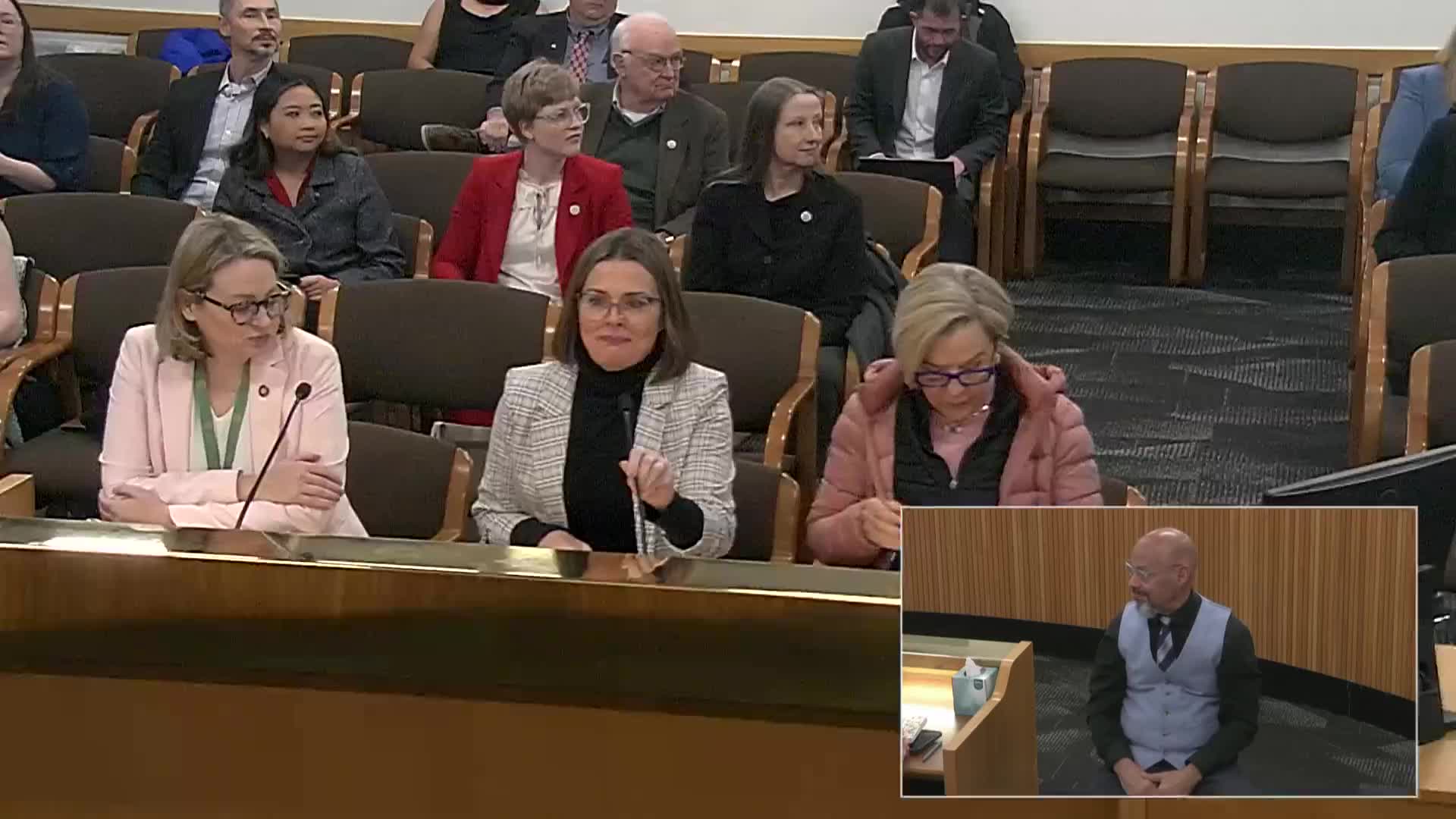
Committee hears bill to allow optional ‘newborn safety devices’ at staffed facilities
Summary
State lawmakers on the House Committee on Early Childhood and Human Services on Thursday held a public hearing on House Bill 2901, which would authorize counties and authorized facilities to install climate‑controlled, dual‑alarmed, locking newborn safety devices as an optional anonymous way for a parent in crisis to surrender an infant.
State lawmakers on the House Committee on Early Childhood and Human Services on Thursday held a public hearing on House Bill 2901, which would authorize counties and authorized facilities to install climate‑controlled, dual‑alarmed, locking newborn safety devices as an optional anonymous way for a parent in crisis to surrender an infant.
The bill’s sponsor, State Representative Emily McIntyre, said HB 2901 “is a bill for parents in crisis. This is not a bill for everyone, and in fact we hope that no one has the need to use it.” She told the committee the device would add a confidential option distinct from existing safe‑haven procedures and that the measure is drafted as permissive: counties and facilities could choose whether to contract for and host the devices.
Supporters told the committee they see the devices as a life‑saving supplement to Oregon’s current safe‑surrender law. Polk County Sheriff Mark Garten testified on behalf of the Oregon State Sheriffs Association and the Oregon Association of Chiefs of Police, saying the devices provide “an additional anonymous option to strengthen a child’s safety without fear or judgment.” Carl Koenig, president of the Oregon State Firefighters, said fire stations are logical locations because they are staffed 24 hours and often serve as trusted local access points. Travis Mavison, director of government affairs for the Hospital Association of Oregon, said hospitals already are authorized surrender locations and that HB 2901 would give hospitals an additional optional tool if they choose to install a device.
Supporters described technical and oversight features written into the bill: authorized facilities must have 24‑hour medical staffing on site when a device is in place; devices must include dual alarm systems and be regularly tested and inspected; counties would contract with third parties to acquire and install units in locations chosen for community need. Representative Bobby Levy and Representative Emerson Levy both emphasized rural access, saying fire stations and local hospitals can extend anonymous surrender options in areas with long travel distances to larger hospitals.
Not all testimony was supportive. Marty Greiner, identifying themself as an adoptee and leader of an adoptee‑rights organization, said baby boxes create a “secretive shadow child‑welfare system” that can erase identifying information, and they called out vendor practices and public costs in other jurisdictions. Greiner noted concerns about anonymity for infants older than the immediate newborn period and warned of lifelong impacts on adopted people.
Monica Kelsey, founder and CEO of Safe Haven Baby Boxes, described her work placing devices and operating a national hotline. Kelsey said the boxes provide anonymity that can prevent unsafe abandonments; she told the committee her organization received 30 hotline calls from Oregon in the prior year from people seeking a baby box location. County Commissioner Colleen Roberts and other local leaders described community discussions and local interest in voluntary adoption of the devices.
The committee did not take a vote on HB 2901 during the hearing. Chair Hartman closed public testimony and indicated further committee conversation could occur in a potential work session, where members may request follow‑up information from sponsors and stakeholders.
Why this matters: proponents said the devices offer an anonymous, potentially life‑saving option for desperate parents and expand safe‑surrender access in rural areas; opponents urged the committee to consider impacts on adoptees, transparency of records, vendor roles, and long‑term costs if jurisdictions pay for installations.