Get Full Government Meeting Transcripts, Videos, & Alerts Forever!
Get email alerts on the Education School Choice topic
No spam. Unsubscribe anytime.
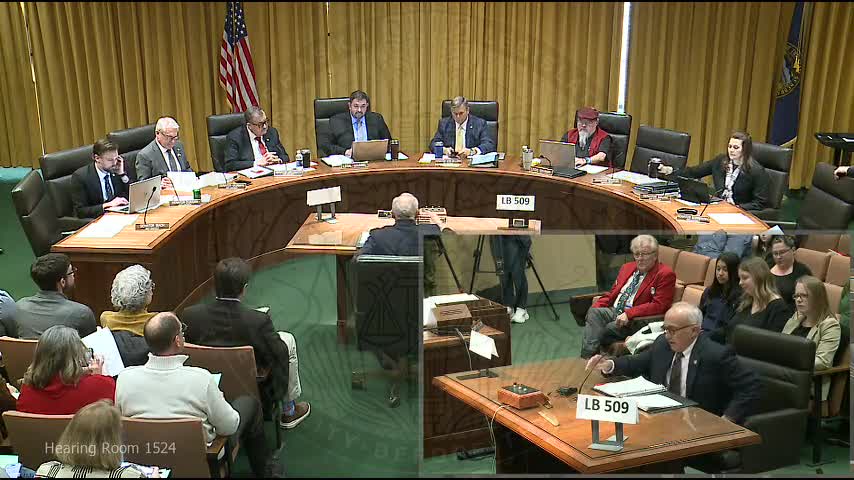
Revenue Committee Hears Hours of Testimony on LB509 Scholarship Tax Credit; No Vote Taken
Summary
At a public hearing before the Nebraska Legislature’s Revenue Committee, senators heard more than three hours of testimony for and against LB509, a bill that would create a state income tax credit for contributions to scholarship‑granting organizations that fund student scholarships to approved nonpublic schools.
At a public hearing before the Nebraska Legislature’s Revenue Committee, senators heard more than three hours of testimony for and against LB509, a bill that would create a state income tax credit for contributions to scholarship-granting organizations (SGOs) that fund student scholarships to approved nonpublic schools.
The bill’s introducer, Sen. Tony Sorrentino, opened by saying the measure is aimed at “the children of the state of Nebraska” and described LB509’s mechanics: a tax credit capped initially at $25 million, priority tiers for low‑income and other eligible students, certification and reporting requirements for SGOs, a 10% administrative cap on SGOs’ overhead, and limits on how much a taxpayer may claim in a single year.
Why it matters: LB509 would formally authorize a tax-credit route to private‑school scholarships after two prior, related measures drew sustained public attention and litigation. Supporters said the program restores options for families who already used temporary scholarships; opponents said the measure would divert revenue, lacks adequate nondiscrimination and accountability safeguards for recipient schools, and would run counter to voter referenda last year.
Supporters’ testimony focused on individual families and school leaders. Several parents and students described how earlier scholarship programs helped them afford a school that met a child’s academic, social or faith needs. “When I first heard about the Opportunity Scholarship … I felt like I could breathe a little more freely,” said parent Katie Zach, describing relief after her family received a scholarship. Student Rylee Rivera, one of several young witnesses, told senators, “Please don’t take that away from me,” describing academic and social gains at her private school.
SGOs and other proponents emphasized program controls in the draft: certification by the Department of Revenue, a 60‑day certification process for credits, a statutory definition of eligible students, a priority distribution tier that favors lower‑income households, and annual reporting to the governor and legislature. Brenna Grasz, an attorney who addressed constitutionality, said during her testimony that “private donations are not appropriations of public funds,” and argued prior Nebraska Supreme Court precedent supports tax‑credit scholarship programs because the constitutional ban is read to bar direct appropriations to nonpublic schools, not indirect benefits to students.
Opponents — including teachers’ unions, many school districts, public‑education advocates and disability‑rights groups — urged the committee not to advance the bill. Tim Royers, president of the Nebraska State Education Association, told senators the union opposes the bill and plans to again pursue a referendum if the Legislature moves forward: “We will get the signatures again, and we will repeal this bill.” Opponents raised three recurring concerns:
- Budget and fiscal effect: The bill’s $25 million credit cap is built into the fiscal note; opponents and some testifiers warned that credits would reduce state revenue and could, depending on pupil movement, reduce public K‑12 funding in practice. The fiscal note also modeled scenarios in which student transfers could affect local school funding formulas.
- Accountability and nondiscrimination: Public‑education groups said private schools eligible for scholarships under LB509 would not face the same transparency and civil‑rights obligations as public schools. Several testifiers urged adding nondiscrimination language for recipient schools and requiring compliance with federal civil‑rights and IDEA standards.
- Voter and democratic context: Multiple opponents noted that Nebraskans voted in a referendum this year to repeal a related appropriation approach, and argued returning to a tax‑credit approach would ignore that vote.
Committee members asked detailed technical questions about eligibility rules, priority tiers and whether the program would primarily benefit students who already had scholarships. Sen. George Dungan and others asked whether scholarship recipients with special‑education needs would continue to receive services; several private‑school principals said they partner with local public districts to provide some services but that statutory obligations differ.
What was not decided: Committee members did not take a vote during the hearing. Chair Sen. Brad Von Gillen closed the hearing after testimony concluded. The committee clerk recorded 235 proponents and 548 opponents submitted in writing to the committee record.
What comes next: No committee action or amendment was announced on the floor at the close of testimony. The hearing record includes the testimony and written exhibits; senators may call the bill back for committee work, amendment or a vote at a later date.