Get Full Government Meeting Transcripts, Videos, & Alerts Forever!
Get email alerts on the Social Media Age Verification topic
No spam. Unsubscribe anytime.
Senate committee weighs LB383, a parental‑consent and age‑verification bill for social media
Summary
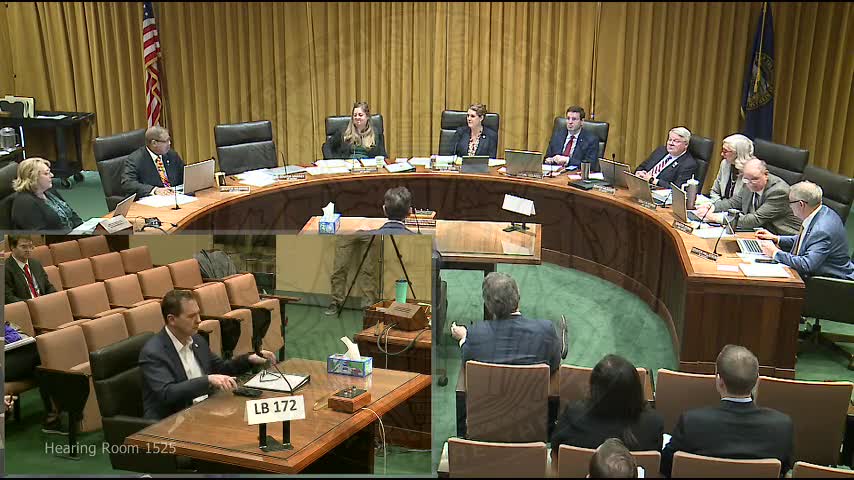
Lincoln — The Judiciary Committee heard LB383, introduced by Sen. Tanya Storer, which would require social media platforms to verify a user's age before allowing a person under 18 to open an account and to obtain parental consent for minors.
Lincoln — The Judiciary Committee heard LB383, introduced by Sen. Tanya Storer, which would require social media platforms to verify a user's age before allowing a person under 18 to open an account and to obtain parental consent for minors. Storer framed the bill as restoring parental authority over children's social media access and described age verification methods that do not require retention of personal identifying information.
Storer opened by saying, "The impact of social media on youth mental health and safety is no longer up for debate," and urged lawmakers to provide parents tools to manage their children's online interactions. She described technological options such as zero‑knowledge proofs and biometric age‑estimation techniques that proponents said can verify age while limiting data retention.
Attorney General Mike Hilgers testified in strong support and cited the state’s pending consumer‑protection litigation against major platforms. "There is no doubt that children under age 18 are seeing utterly inappropriate content," he said, describing undercover tests in which investigators set up young accounts that were shown objectionable material within minutes. DHHS and pediatricians also testified in favor, linking social media exposure to mental‑health harms and suicide risk for teens.
Supporters argued the bill is content‑neutral and analogous to other age‑gated consumer protections; they said many parents cannot practically monitor dozens of apps and that corporate parental‑control tools are insufficient. Jared Hayden (Institute for Family Studies) and public‑health witnesses emphasized feasibility of privacy‑protecting verification technologies.
Opponents included TechNet and Chamber Progress, which argued the bill would increase sensitive data collection, create liability via a private right of action and face near‑certain constitutional challenges. Ruthie Barco for TechNet urged alternative approaches such as children's data privacy laws and industry standards. The ACLU warned LB383 would "burden access to protected speech" and stressed existing parental controls, carrier and device tools.
Committee members questioned privacy risks, how age verification would work in practice, whether the bill would disadvantage people who lack IDs, and whether parental control could be weaponized in abusive households. Witnesses discussed technical options (hand‑scan age estimates, encrypted tokens) and the sponsor said the bill forbids retention of age‑verification data and allows civil remedies for improper retention.
No vote was taken. The sponsor asked the committee to advance the bill so further technical drafting and legal review can occur.
Ending: LB383 sparked a broad debate balancing child safety, privacy and free‑speech questions. Supporters urged lawmakers to act to counter mental‑health harms; opponents said the bill risks constitutional and privacy pitfalls and urged other legislative approaches such as children’s data privacy measures.