Get Full Government Meeting Transcripts, Videos, & Alerts Forever!
Get email alerts on the Artificial Intelligence topic
No spam. Unsubscribe anytime.
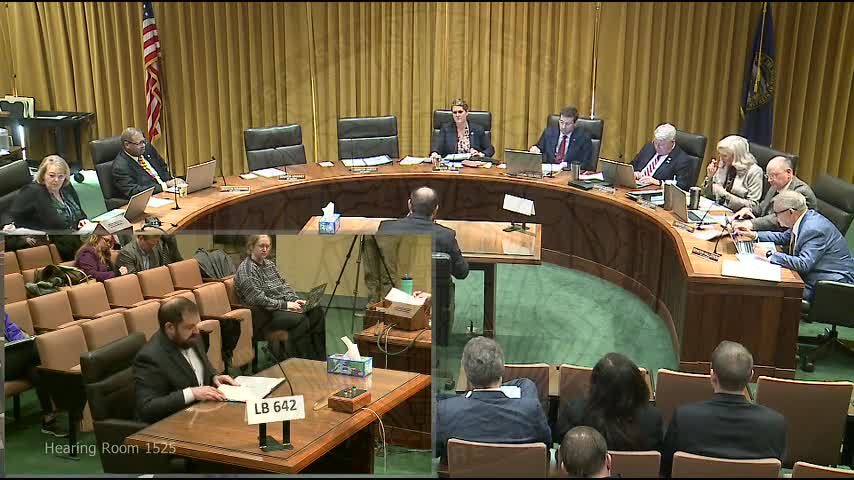
Nebraska Judiciary Committee hears debate on AI consumer protection bill LB642
Summary
Sen. Eliot Bostar introduced LB642 to require risk management, impact assessments and transparency for high‑risk AI systems. Supporters urged consumer safeguards; tech industry groups warned the bill could overreach and harm innovation. Committee received mixed feedback and the sponsor said amendments were forthcoming.
Lincoln — The Judiciary Committee heard public testimony on LB642, the Artificial Intelligence Consumer Protection Act, on a bill introduced by Sen. Eliot Bostar that would require developers and deployers of so‑called high‑risk AI systems to perform risk management, impact assessments and disclosures.
The bill, the sponsor said, "establishes clear requirements for developers and deployers of high risk AI systems to proactively identify, mitigate, and prevent algorithmic discrimination." Bostar told the committee the measure aims to protect Nebraskans from algorithmic harms while supporting innovation.
Supporters at the hearing said LB642 creates needed consumer protections. Diane Plock, who testified in a mixed‑support capacity, said she supports regulation "with amendments" and raised concerns about disclosure, accuracy correction and penalties. Law enforcement and consumer advocates said the bill's rights for appeals and transparency could help people contest consequential automated decisions.
Industry and business groups were the most numerous opponents at the hearing. Laurel Atkin, executive director of TechNebraska, told the panel that "the bill's broad definitions for requirements could stifle innovation within Nebraska's growing tech sector," and urged more tailored exemptions for small businesses and further alignment with other states. Hope Ledford of Chamber Progress warned the committee that the bill's impact‑assessment and audit regime "contemplates an expensive and burdensome auditing regime" that could chill investment.
Other opponents urged limiting obligations to deployers rather than developers, excluding open‑model developers, and clarifying the definition of AI so that basic software is not swept in. Several witnesses noted similar bills in other states (including Colorado), and some urged continued drafting in consultation with industry.
Senators on the panel asked about small‑business exemptions, whether the bill followed model language from other states and whether a patchwork of state rules would hurt Nebraska firms. Bostar told the committee he and staff were assembling amendments in response to feedback but that a drafting system outage delayed distribution; he pledged to circulate amendments when available.
No formal action or votes were recorded at the hearing. The committee heard a mix of proponent, opponent and neutral testimony and did not take immediate floor action. The sponsor indicated he would work with stakeholders on edits before the bill returns to the committee.
Ending: The hearing laid out the competing priorities of consumer protection and economic competitiveness as Nebraska lawmakers consider an AI regulatory framework. Committee staff and the sponsor will circulate proposed amendments before the next step.