Get Full Government Meeting Transcripts, Videos, & Alerts Forever!
Get email alerts on the Life Skills Transition Center topic
No spam. Unsubscribe anytime.
Senate committee advances bill to let Life Skills and Transition Center serve some non‑DD eligible youth
Summary
The Senate Appropriations Committee on Monday approved a due-pass recommendation for Senate Bill 2112, which would let the Life Skills and Transition Center provide short-term stabilization to some people who are not formally DD eligible.
The Senate Appropriations Committee on Monday voted to advance Senate Bill 2112, a policy change that would allow the Life Skills and Transition Center (LSTC) to serve individuals who are not formally determined DD eligible but who otherwise meet admission criteria for a short-term stabilization stay.
Jessica Thomason, executive director for the Human Services Division at the Department of Health and Human Services (HHS), told the committee the department proposed the change to fill a gap for certain youth — often late adolescents who have not been well served by other settings — and to allow LSTC to provide short-term stabilization while teams find a more suitable long-term placement.
Thomason said the fiscal note assumes a conservative estimate: one youth per biennium for up to 180 days and that the entire incremental cost would be general fund, producing a fiscal impact roughly in the $87,000 range. She said the department chose a conservative assumption because funding sources for individual cases might vary, including Medicaid or other HHS budget sources.
Committee members pressed for safeguards to avoid recreating institutional, long‑term placements for youth. Thomason and other HHS staff emphasized that the intent is stabilization and transition, not permanent placement, and described work to expand family-based options such as host homes and therapeutic foster care as next steps for youth who need longer-term placement.
Senator Mather asked whether the center’s services would resemble institutional care; department staff said LSTC uses a crisis‑stabilization approach and that the proposed change is aimed at rare cases where other community options have been exhausted. Senator Cleary and others expressed concern about signaling a long-term policy shift away from community-based supports.
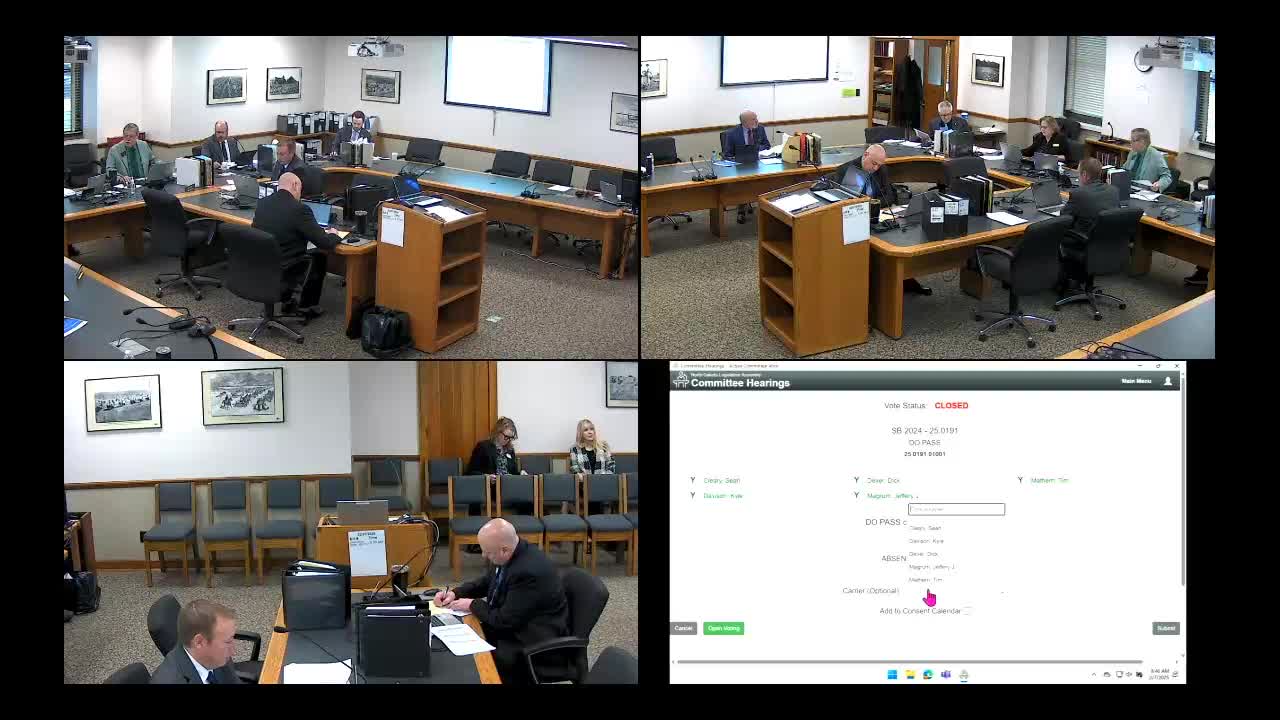
Senator Davison moved to advance the bill; the motion passed on a roll call with Senators Davidson (aye), Deaver (aye) and Magrum (yes) voting in favor and Senators Clary and Mather (no) voting against. The committee recorded differing views but concluded the bill should move to the House for further policy consideration.