Get Full Government Meeting Transcripts, Videos, & Alerts Forever!
Get email alerts on the Economic Development Industrial Incentives topic
No spam. Unsubscribe anytime.
Lexington County Council approves fee-in-lieu agreements and sale of county land for two industrial projects
Summary
Council approved three measures to authorize fee-in-lieu agreements and the sale of county-owned land for projects identified as Project Mirror (Cardiff Products USA) and Project Aqua, citing South Carolina Code provisions; one council member abstained on the Project Mirror vote.
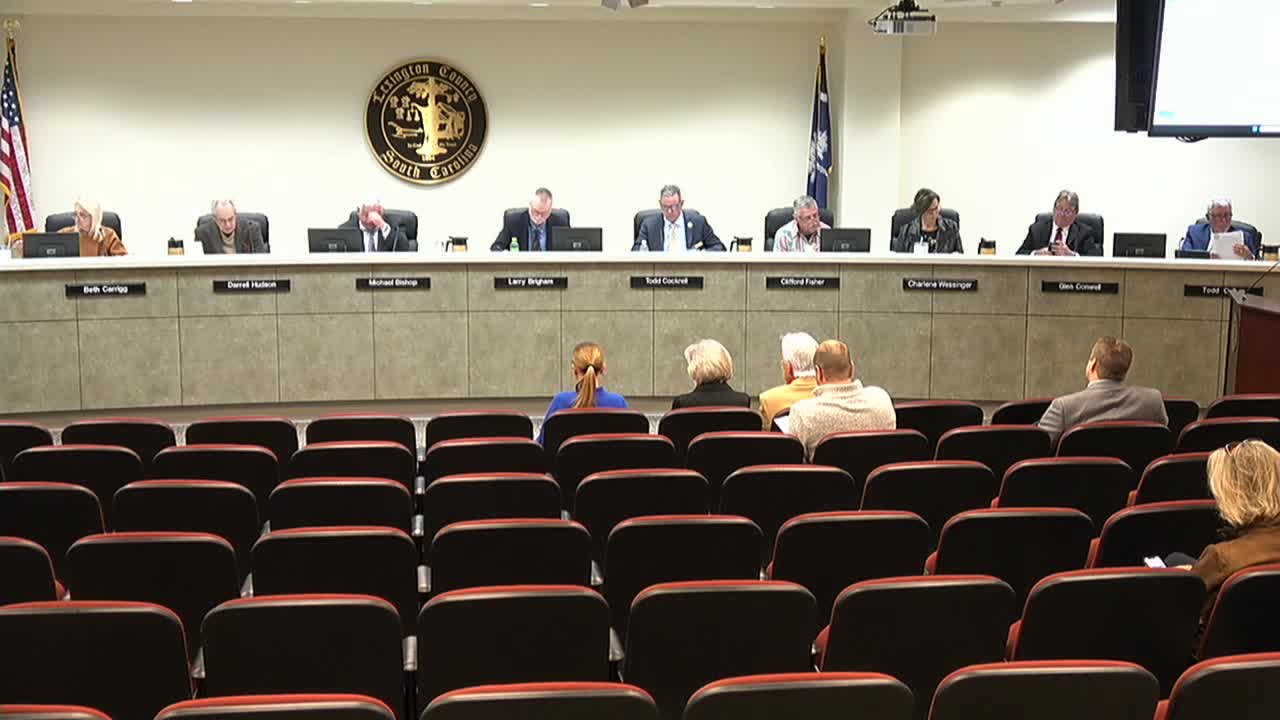
Lexington County Council on Jan. 14 approved a package of measures to make special tax incentives and county property available for two industrial projects, including a third-and-final reading of an ordinance for Cardiff Products USA (Project Mirror) and an inducement resolution and fee-in-lieu ordinance for Project Aqua.
Vice Chair Daryl Hudson introduced the items, saying the measures authorize execution of fee-in-lieu of tax agreements under state law and approve related plats and property sale terms. The actions cite Chapter 44 of Title 12 and Chapter 1 of Title 4 of the South Carolina Code of Laws, as amended, as the statutory basis for fee-in-lieu agreements.
Why it matters: fee-in-lieu agreements and industrial property sales are standard tools counties use to attract investment and to allow projects to qualify for special source revenue credits tied to multi-county industrial benefit parks. The council authorized sale of a county parcel identified in the record as Lot 9 of the Saksoth Industrial Park as part of the Project Aqua package.
Council votes on the three items were recorded separately. The ordinance for Cardiff Products USA passed on third and final reading; Councilman Bishop recorded an abstention on that vote. The inducement resolution for Project Aqua and the ordinance authorizing the Project Aqua fee-in-lieu agreement and sale were approved in later roll calls with affirmative votes from those present.
The measures as approved require staff and the project proponents to complete agreement execution and any administrative steps specified by state statute; no text in the meeting record showed additional contractual terms beyond those summarized by staff and read into the record.
Council took no other public action on project-specific incentives during the meeting.