Get Full Government Meeting Transcripts, Videos, & Alerts Forever!
Environment and Transportation Committee clears package of bills on solar rules, housing, water reuse, waste and more
Summary
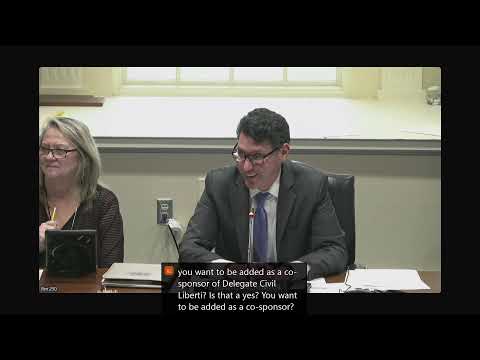
House Environment and Transportation Committee Chair opened a Feb. 7 voting session and the committee advanced a group of bills across housing, environment, transportation and natural resources policy.
House Environment and Transportation Committee Chair opened a Feb. 7 voting session and the committee advanced a group of bills across housing, environment, transportation and natural resources policy. The session included voice votes and a small number of recorded oppositions on a fee increase for senior fishing licenses.
Why this matters: The package touches several issues of local policy and implementation — homeowner association limits on solar installations, consumer protections in real‑estate wholesaling, expansion of a water reuse pilot, limits on late‑rental fees, and standards for how state-collected yard waste is stored and handled. Taken together, the measures reflect an emphasis on clarifying regulatory limits and expanding program authority while addressing practical implementation issues.
Top actions and outcomes HB4 (Solar restrictions; homeowner associations): The committee moved and approved HB4, which revises statutory provisions that prohibit unreasonable restrictions on land use related to the installation of solar collector systems. The bill sets objective thresholds for when a restriction is “unreasonable” for a particular proposal: if the restriction would increase the installation cost of the system by at least 5% over the projected initial cost, or would reduce the system’s projected energy generation by at least 10%. The committee recorded the motion to move HB4 and the bill passed by voice vote.
HB124 (Wholesaling disclosures; owner‑occupied contracts): The committee approved HB124 with two amendments (a technical amendment and one that adjusts terminology to match current practice). The bill requires a wholesale buyer to disclose to the property owner that the buyer may assign the contract of sale, and requires the wholesale seller to disclose to a prospective assignee that the seller may not be able to convey title; if required disclosure is not provided, the non‑disclosing party’s contract may be rescinded before closing. The sponsor explained that “wholesaler” refers to a person who purchases or acquires a contract rather than necessarily the property…
Already have an account? Log in
Subscribe to keep reading
Unlock the rest of this article — and every article on Citizen Portal.
- Unlimited articles
- AI-powered breakdowns of topics, speakers, decisions, and budgets
- Instant alerts when your location has a new meeting
- Follow topics and more locations
- 1,000 AI Insights / month, plus AI Chat