Get Full Government Meeting Transcripts, Videos, & Alerts Forever!
Get email alerts on the Pesticide‑policy topic
No spam. Unsubscribe anytime.
Portland committee delays vote on allowing Acelepryn for grub control after Cheverus presentation
Summary
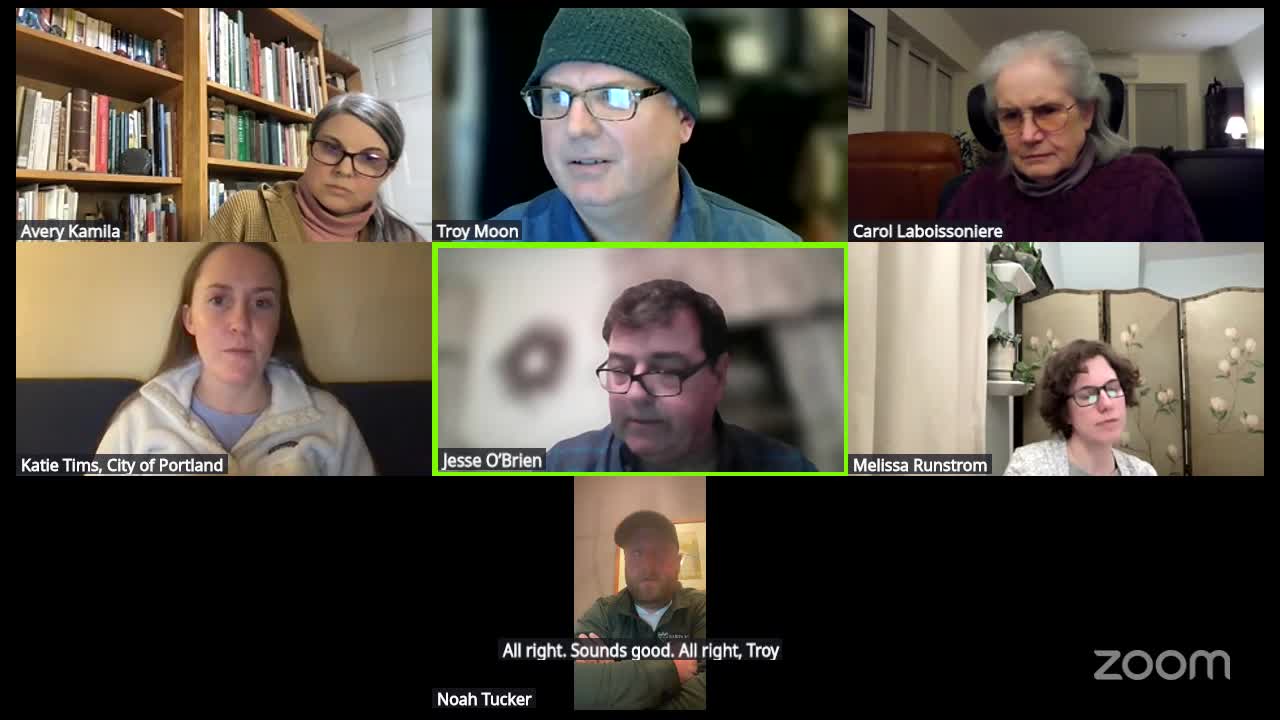
At a virtual meeting of Portland’s Environmental Land Care Advisory Committee (ELMAC), staff presented a proposal to amend the city’s pesticide ordinance (Chapter 34) to allow the reduced‑risk insecticide Acelepryn (active ingredient chlorantraniliprole) for grub control on athletic fields when applied by a licensed applicator according to the product label.
At a virtual meeting of Portland’s Environmental Land Care Advisory Committee (ELMAC), staff presented a proposal to amend the city’s pesticide ordinance (Chapter 34) to allow the reduced‑risk insecticide Acelepryn (active ingredient chlorantraniliprole) for grub control on athletic fields when applied by a licensed applicator according to the product label.
The change drew a detailed presentation from Cheverus High School and its turf contractor, who said persistent grub infestations have left playing surfaces unstable and created a safety risk for student athletes. Michael Komich, senior vice president for finance and operations at Cheverus High School, told the committee that the school had documented “extensive damage to the fields” and was “very concerned about the liability of continued grub infestation,” saying “we feel it's only a matter of time before a serious injury results.” Robert Vickerson, president of SportsFields, Inc., said the product could be applied granularly or as a liquid and that granular application “is also probably the least, scary for the general public.”
Troy (staff) framed the staff recommendation: after reviewing the waiver request and meeting with the city attorney, staff found no effective organic alternative in Maine’s climate for the scale of grub damage Cheverus reported and recommended either amending the ordinance to allow Acelepryn for grub treatment or handling individual cases through the committee’s waiver process. Troy told the committee Acelepryn is listed by EPA as a reduced‑risk pesticide and that his office proposed limiting any change to licensed applicator use according to label directions.
Committee members and members of the public pressed staff and the school on environmental and procedural safeguards. Avery raised EPA label updates and quoted warnings that chlorantraniliprole is “toxic to aquatic invertebrates” and “highly toxic to bees,” and noted recent EPA label language (2023–24) that flags surface‑water and groundwater risks and warns against use near water. Committee members asked about buffer distances from Back Cove and Baxter Boulevard; Cheverus grounds staff said the fenced track and roadbed put more than 100–150 feet between the playing surface and the waterline and the fields are irrigated and intensively managed. The Cheverus team also described cultural practices they have used (aeration, overseeding, organic fertilizers) and said those measures had not solved the grub problem.
Members debated how the city should allow or supervise any use of Acelepryn. Suggestions included: - Permit Acelepryn for grub treatment only after committee review via a waiver process (not a blanket exemption); - Require advance notification to the city sustainability office with site, timing and rate details (similar to notification systems other municipalities use); - Add stricter limits for shoreline or shallow‑soiled sites and require follow‑up reporting; and - Keep any change narrowly tailored to chlorantraniliprole/Acelepryn rather than opening the ordinance to broader broadcast applications or to other synthetic products.
No ordinance amendment was approved at the meeting. The committee did not take a final vote on the staff proposal; members instead asked staff to redraft the proposed language to clarify whether Acelepryn would be eligible only through the waiver process or by a narrowly defined exemption with mandatory notification and reporting. Troy said staff would circulate revised language to the committee by Friday and the group scheduled a follow‑up meeting for the next week to decide whether to move a formal amendment to city council. Committee members repeatedly emphasized they wanted a drafting iteration that preserved strong oversight and clear public notification while addressing the school’s immediate safety concerns.
The meeting also included public comment procedures and technical discussion of application methods; SportsFields, Inc. explained how granular material is typically watered in after application and how droplet size and application equipment affect drift. Several committee members urged rules to limit broadcast or preemptive applications and to require that any broadcast use be specifically justified and reviewed by the committee.
Next steps: staff will circulate revised ordinance language and draft notification/waiver procedures for committee review. The committee scheduled an additional remote meeting to consider the redraft and to determine whether to forward an amendment to Portland City Council. No ordinance change took effect as a result of this meeting.