Get Full Government Meeting Transcripts, Videos, & Alerts Forever!
Get email alerts on the Private Pension Taxation topic
No spam. Unsubscribe anytime.
Committee hears competing bills to reduce or eliminate taxes on private pension income
Summary
Two bills—HB 44 and HB 426—were presented to the committee offering, respectively, an expanded deduction for private pension income and a full exemption; witnesses and members debated fiscal impact and technical qualifications.
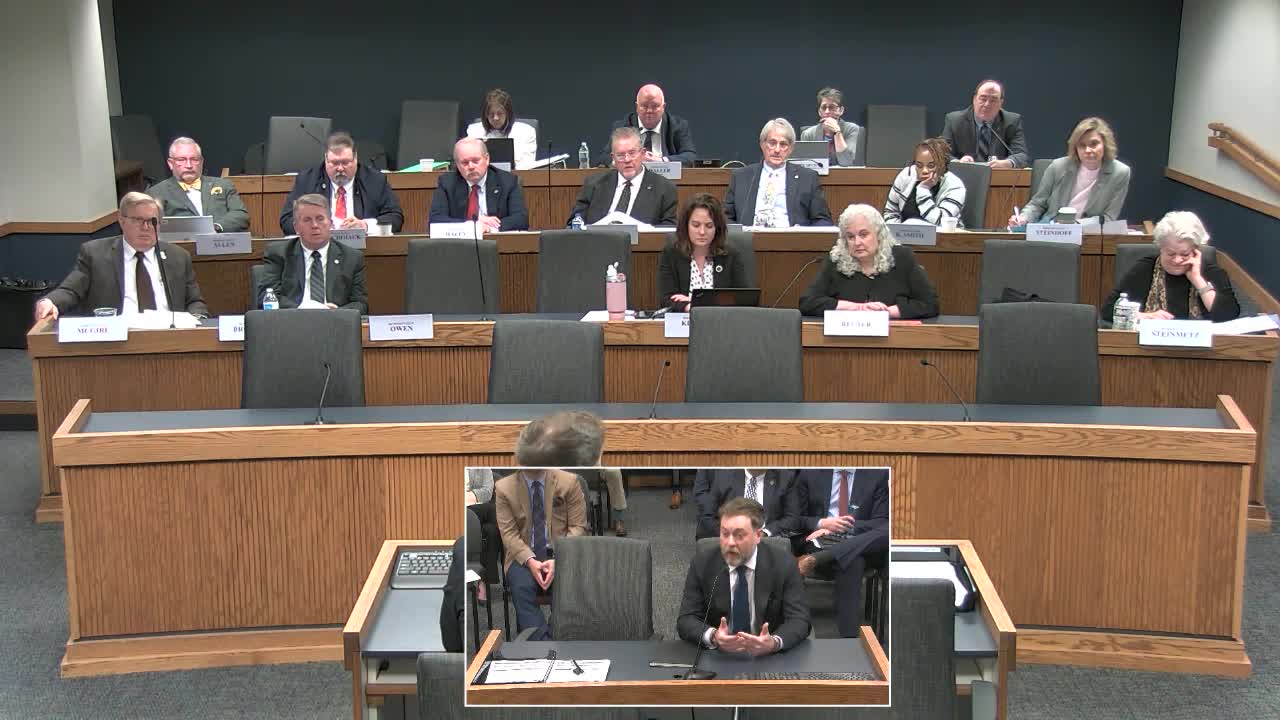
A House committee held a public hearing on HB 44 and HB 426, two proposals aimed at reducing or eliminating state income tax on private pension income.
Representative Mike McGurl (District 118) described HB 44 as extending parity to private pensions that certain public pension recipients already enjoy. According to his presentation, HB 44 would increase the married-filing-joint exclusion to $64,000 and raise the maximum private-pension deduction to $12,000 per filer; the bill's fiscal note for fiscal year 2025 was presented in testimony as $136 million. McGurl said the bill was structured to remain within the fiscal parameters established when the legislature previously adjusted public-pension taxation.
Representative Jeff Vernetti (presenting an alternative) proposed a more expansive measure that would fully exempt private pension income from state income tax. Vernetti said 17 states already exempt private-pension income entirely and argued that removing the tax would encourage retirees to relocate and spend in Missouri; he characterized the fiscal impact as "over a quarter of a billion" dollars and said the change could be phased in through 2027.
Committee members asked a series of budget and technical questions. Representative Jacobs and others pressed on the fiscal note magnitude and the effect on the state budget; Representative Clemens asked for clarity about the two bills' mechanics and confirmed that McGurl's bill caps deductions to match the existing public-pension cap (the transcript cites $46,381 as the statutory cap used in prior legislation). Representative Hovis asked technical questions about which retirement income would qualify (tax-deferred accounts such as 401(k)s and IRAs vs. already-taxed accounts such as taxable CDs). Witnesses acknowledged that tax-deferred distributions would be treated differently from already-taxed income for purposes of the deduction.
Supporters argued the bills would assist seniors and could attract retirees or second-home owners to move permanently to Missouri, increasing local spending. Opponents and skeptical members focused on the state revenue loss and questioned whether exemptions at the upper end were appropriate without offsetting revenue measures. Testimony included observations about neighboring states (Tennessee, Texas, Iowa) that have changed tax treatment for retirees and about early data expected from recent state changes.
No committee vote is recorded on either bill in the transcript excerpt; the hearing concluded with a request from Representative Steinhoff that staff provide an acronyms list and that the committee receive educational materials about the pension statutes and guidance book referenced by members.
Why it matters: Changes to taxation of private-pension income affect retirees' disposable income, state revenue, and state competitiveness in attracting retirement migration. The fiscal notes attached to the bills will be central to legislative deliberations.
Next steps: Committee staff and members signaled a need for additional fiscal detail and educational materials before advancing either proposal.