Get Full Government Meeting Transcripts, Videos, & Alerts Forever!
Get email alerts on the Dnr Budget topic
No spam. Unsubscribe anytime.
DNR FY26 request centers on drinking water loans, Superfund match and flood‑resiliency studies
Summary
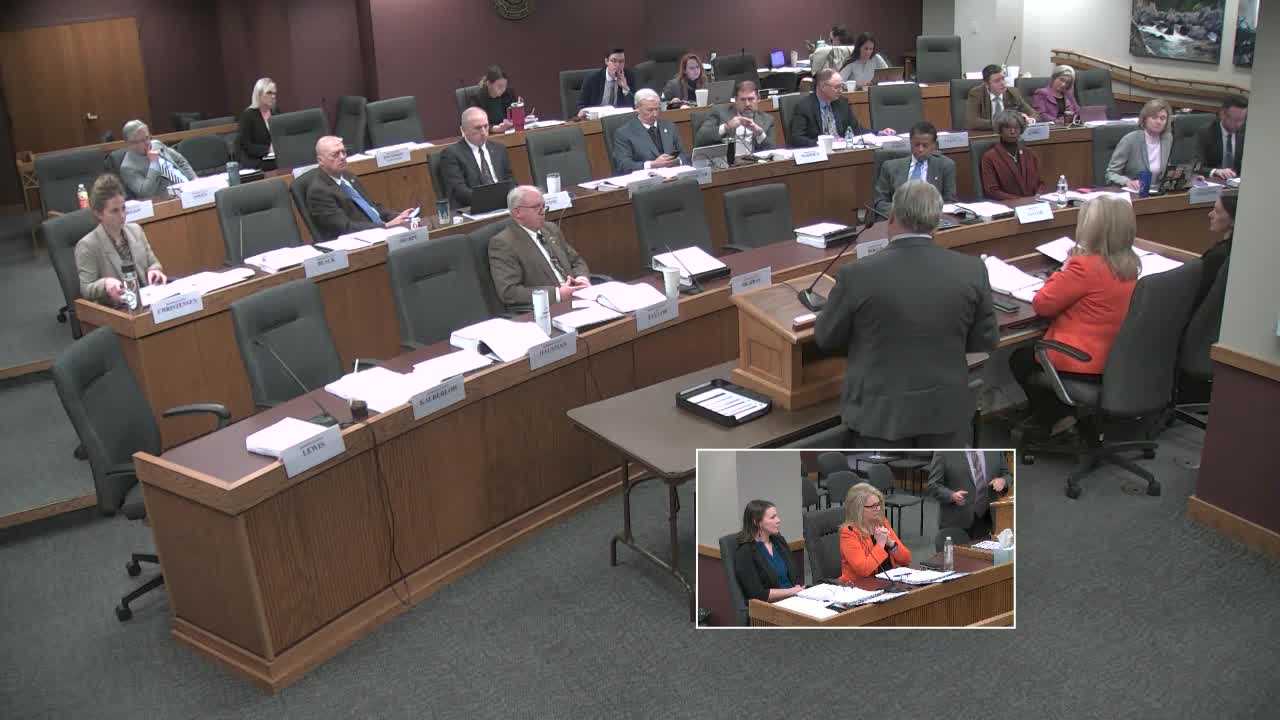
Department of Natural Resources Director Kurt Schaeffer told the House Appropriations Committee the department’s FY26 request centers on high demand for drinking‑water loans, Superfund cost‑share obligations, and readiness for forthcoming PFAS rules from EPA.
Department of Natural Resources Director Kurt Schaeffer told the committee the department’s FY26 budget focuses on drinking‑water and wastewater infrastructure funding, environmental remediation obligations, and energy and park operations.
Schaeffer opened by summarizing the department’s structure and funding mix and said only about 7 percent of the department’s total budget request is general revenue, while about 76 percent is other funds (fees, federal pass‑throughs and program receipts). He told members the approval process must balance fee‑funded program expectations with legislative oversight.
Drinking water loans and encumbrance authority: The division of environmental quality’s Financial Assistance Center manages the state revolving fund (SRF) that provides low‑interest loans and grants for water infrastructure. The department asked for large encumbrance authority to match record demand for projects, explaining projects may span multiple years and the department needs appropriation authority to approve and encumber multi‑year loans. Officials said recent changes to eliminate estimated appropriations (the historical “E” items) make it necessary to set explicit dollar authority large enough to accommodate expected SRF project closings.
Superfund and remedial obligations: The department requested general revenue to meet state cost‑share obligations for EPA remedial actions and to fund operation and maintenance at several cleanup sites. The FY26 request includes a core transfer and a new decision item totaling approximately $1.73 million to cover Missouri’s 10 percent share at eight Superfund sites and to fund ongoing operation and maintenance for a dozen cleanup sites.
PFAS readiness and monitoring: The department told lawmakers it is preparing to implement new EPA drinking‑water and water quality requirements for per‑and polyfluoroalkyl substances. The budget includes items to support sampling and analysis; department witnesses said EPA’s national standards are forthcoming and the state must be ready to administer related permits and testing. Director Schaeffer explained the federal‑state implementation model for Clean Water Act and drinking‑water standards — states implement minimum federal requirements and must maintain delegated programs if they meet federal criteria.
Other highlights: The presentation covered state parks core and capital items, a request to restore certain core reductions moved to appropriation bill 17 (capital reappropriations), and the Division of Energy’s programs including weatherization, municipal utility loan transfers and energy efficiency assistance. Schaeffer said the department houses two related entities (EIERA and the Petroleum Storage Tank Insurance Fund) that present separately and that the department does not budget those authorities directly.
Why it matters: Water infrastructure funding, EPA regulatory changes and Superfund obligations are multi‑year matters with direct impacts on municipalities and brownfield redevelopment. Lawmakers questioned how much encumbrance authority was appropriate and asked for department follow‑up on spending plans for specific projects.
Ending: The department agreed to provide the committee with follow‑up documents containing project lists, anticipated award schedules and the calculations used to request particular encumbrance and transfer amounts.