Get Full Government Meeting Transcripts, Videos, & Alerts Forever!
Lamont budget would adjust volatility cap, seed universal preschool endowment and rebalance tax and bond priorities
Summary
Office of Policy and Management Secretary Beckham presented Governor Lamont’s proposed biennial budget to the Finance, Revenue and Bonding Committee, saying it is ‘‘balanced, albeit narrowly,’’ and includes a one‑time adjustment to the statutory volatility cap threshold, seed funding for a Universal Preschool Endowment, rebasing of the hospital tax base to 2024 and a mix of tax and capital proposals.
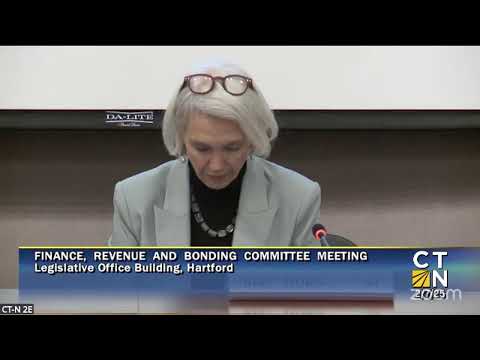
HARTFORD — Office of Policy and Management Secretary Beckham told the Finance, Revenue and Bonding Committee that Governor Lamont’s proposed budget for fiscal 2026–27 is balanced ‘‘albeit narrowly’’ and relies on a one‑time change to the state’s volatility threshold, seed funding for a Universal Preschool Endowment and a mix of tax changes and bond authorizations.
The proposal, presented to the committee on the governor’s behalf, shows recommended spending growth of about 3.8 percent in FY26 and 4.6 percent in FY27 above the current fiscal year. Beckham said the administration assumes a $304 million unappropriated revenue buffer in FY26 and roughly $317.8 million in FY27 and is asking the General Assembly to raise the volatility cap threshold by statute so more revenue becomes available for the general fund.
Why it matters: the administration says the change would free money for priorities such as early childhood, housing and municipal aid while leaving a narrower buffer to protect the budget if volatile revenues fall short. Opponents on the committee warned that changing the guardrails could weaken Connecticut’s recent progress in reducing long‑term liabilities.
Beckham summarized the administration’s approach as balancing relatively healthy near‑term revenue with the constitutional and statutory requirements that govern Connecticut’s spending cap and volatility protections. ‘‘The law that was enacted in 2017 contemplated that it would be raised,’’ Beckham…
Already have an account? Log in
Subscribe to keep reading
Unlock the rest of this article — and every article on Citizen Portal.
- Unlimited articles
- AI-powered breakdowns of topics, speakers, decisions, and budgets
- Instant alerts when your location has a new meeting
- Follow topics and more locations
- 1,000 AI Insights / month, plus AI Chat