Get Full Government Meeting Transcripts, Videos, & Alerts Forever!
Get email alerts on the State Auditor Office topic
No spam. Unsubscribe anytime.
State auditor: staff rebuilt, new whistleblower power used to open municipal audits
Summary
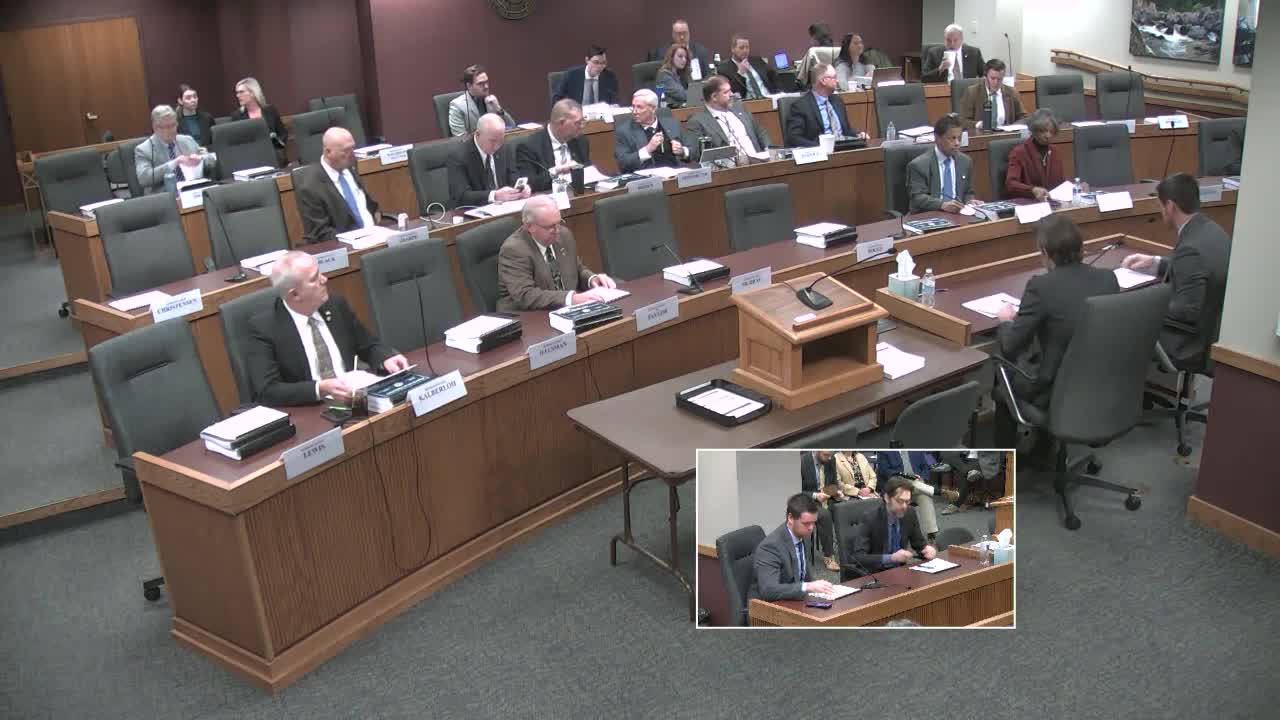
State Auditor Scott Fitzpatrick told the House appropriations committee his office has rebuilt staffing and begun using newly granted whistleblower authority to start municipal audits, including an audit of the city of Arnold and additional work in St. Louis County and Jackson County.
State Auditor Scott Fitzpatrick told the House Appropriations Committee that his office has added auditors and begun exercising new statutory authority to initiate audits after whistleblower investigations.
Fitzpatrick, who introduced himself at the hearing by saying, “I'm Scott Fitzpatrick. I'm the state auditor,” said the office increased staff from about 89 to roughly 115 after a pandemic-era surge in federal funding and related audit work.
The auditor said the new authority from House Bill 21‑11 lets his office begin audits after an investigation finds a complaint credible, without requiring a citizen petition or an invitation from the audited local government. “So 21‑11 gave us the ability to…begin an audit on our own,” Fitzpatrick said, and he told the committee the office has used the power to open an audit of the city of Arnold and is preparing to start an audit in one St. Louis County municipality after wrapping up an investigation there.
Why it matters: The change reduces procedural barriers that previously limited the auditor’s ability to pursue local-government fraud or misuse of public funds when local governments did not invite a review. Fitzpatrick said the change was intended to streamline the whistleblower process and reduce reliance on petitions or local invitations.
Supporting details: Fitzpatrick described the office’s workload and required audits, including the statewide single audit and mandatory annual audits such as the state treasurer’s office and statewide financial statements. He also said the auditor’s office now has about 40 audits in progress and emphasized work on local governments, school districts and ambulance districts that stem from whistleblower tips.
Committee questions focused on staffing and systems. Fitzpatrick said rebuilding staff was a priority and that the office had requested and received funding to increase auditor headcount; he reported an increase “in the high twenties” relative to the prior staffing level. He told members the office uses data from the state’s financial reporting system to support audits and has a small data team that has participated in the state’s MOVERS budgeting system working group.
Auditor examples and follow-up: Fitzpatrick described an ongoing review of Jackson County’s reassessment process that began after a county council request. He said the initial audit work found the county failed to meet notice requirements tied to reassessments that raised valuation by more than 15 percent, and that the auditor’s office released information in December 2023 to advise affected taxpayers about appeals. The office is continuing work on inspection practices and vendor source data and said it may split its Jackson County audit into multiple reports so the county council can act on interim findings.
Ending: Fitzpatrick closed by noting communications tools the office uses and by offering staff contact points for legislators. He urged members to direct constituents who have government concerns to the auditor’s office for potential investigation.