Get Full Government Meeting Transcripts, Videos, & Alerts Forever!
Get email alerts on the Election Administration topic
No spam. Unsubscribe anytime.
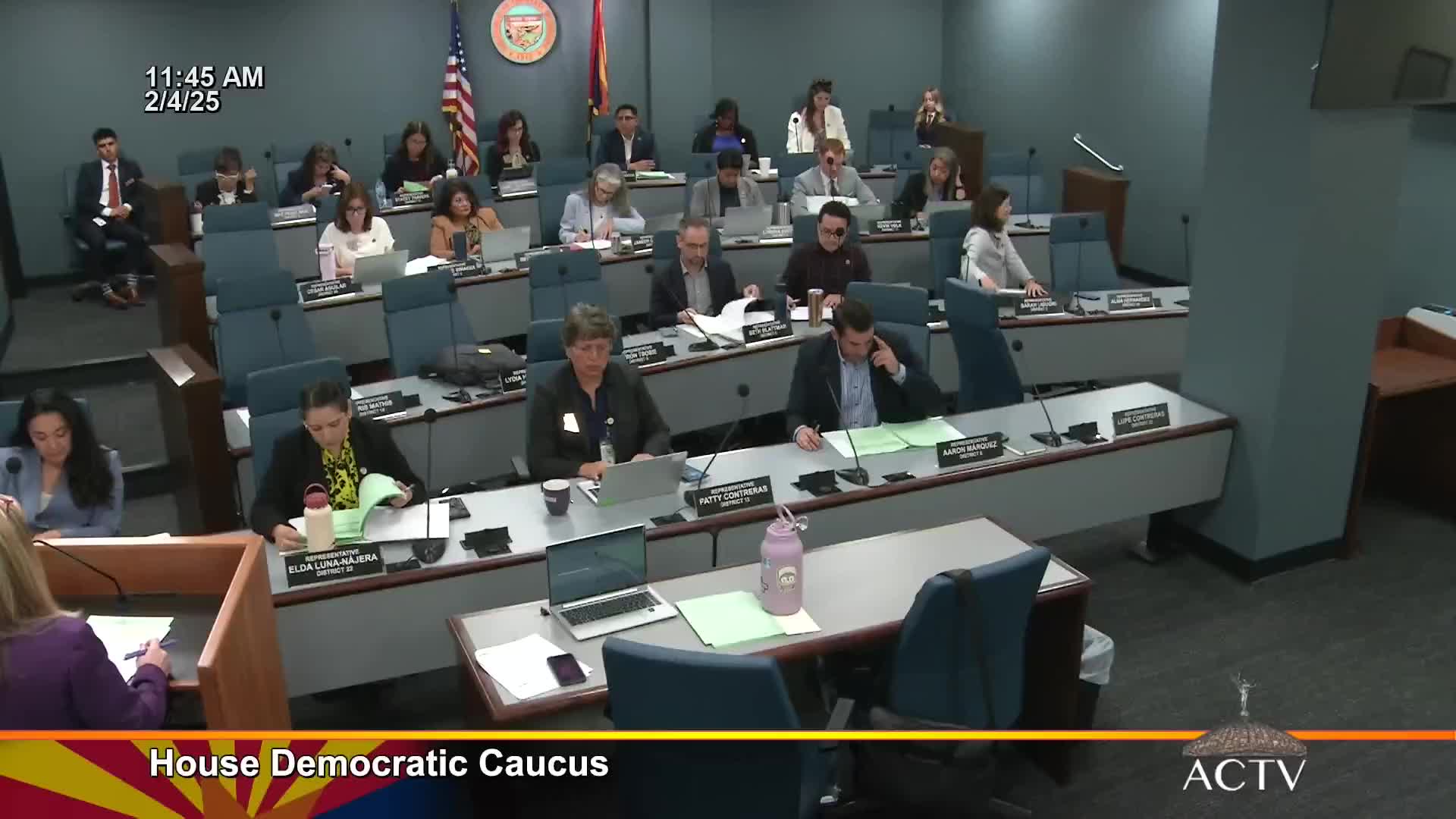
Caucus expresses strong opposition to multiple Republican election bills that would change early‑voting, ballot drop‑off and ballot‑processing rules
Summary
House bills and concurrent resolutions that would limit ballot drop‑off, add address verification and alter early‑voting windows prompted sustained caucus criticism; members and the governor raised concerns about voter access, school safety at polling sites, and potential burdens on counties.
Democratic caucus members discussed a suite of bills and ballot referrals (including House Bills 26‑73 and 27‑03 and House Concurrent Resolutions HCR 20‑13 and HCR 20‑02) that would change early‑voting windows, require periodic address confirmation for active early voters, restrict ballot drop‑off to county recorder offices after a Friday cutoff, and remove a county’s ability to decline to use a school as a polling location.
Representative Rhonda (sponsor) described key elements of the proposed measures, including prohibiting government entities from using donations from foreign governments for elections administration, allowing county recorders to operate on‑site early voting the weekend before election day (but not requiring them to do so), and creating an early‑voter identification number to be used on early ballot affidavits in some drafts. One bill would require active early‑voter address confirmation each cycle (or at two‑ or four‑year intervals depending on county size in some drafts).
Caucus members and ranking members strongly criticized the package. Representative Marquez said the legislation “disenfranchises students and snowbirds” and noted voting rights groups were opposed. Representative Garcia labeled the package “a terrible bill” and said it does not address accessibility and may cherry‑pick precinct coverage that leaves many voters behind. Several members raised specific concerns about schools: one caucus member said last week they had spoken to school superintendents who warned that using school campuses as polling places could create safety and logistical problems, particularly for rural campuses without controlled access.
Representative Rhonda and others noted some bills permit weekend early voting but do not require it; critics said that permissive language could create inconsistent access across counties. The governor’s office publicly opposed one of the measures and signaled a likely veto of a bill sent to the governor’s desk without compromise.
The caucus did not take a formal vote in the meeting; members emphasized voting rights groups’ opposition and asked for coalition and stakeholder organizing.
Ending: Caucus members said they would continue to coordinate with voting rights organizations and county election officials in advance of any committee actions, and referenced the governor’s statement opposing the bills.