Get Full Government Meeting Transcripts, Videos, & Alerts Forever!
Get email alerts on the Education Finance topic
No spam. Unsubscribe anytime.
House caucus debates HB2610 changes for school receivership: removal of boards, superintendent termination and eligibility limits
Summary
Rep. Graess introduced an emergency bill to tighten state receivership powers over financially failing school districts, including forced termination of superintendents and removal of governing board members.
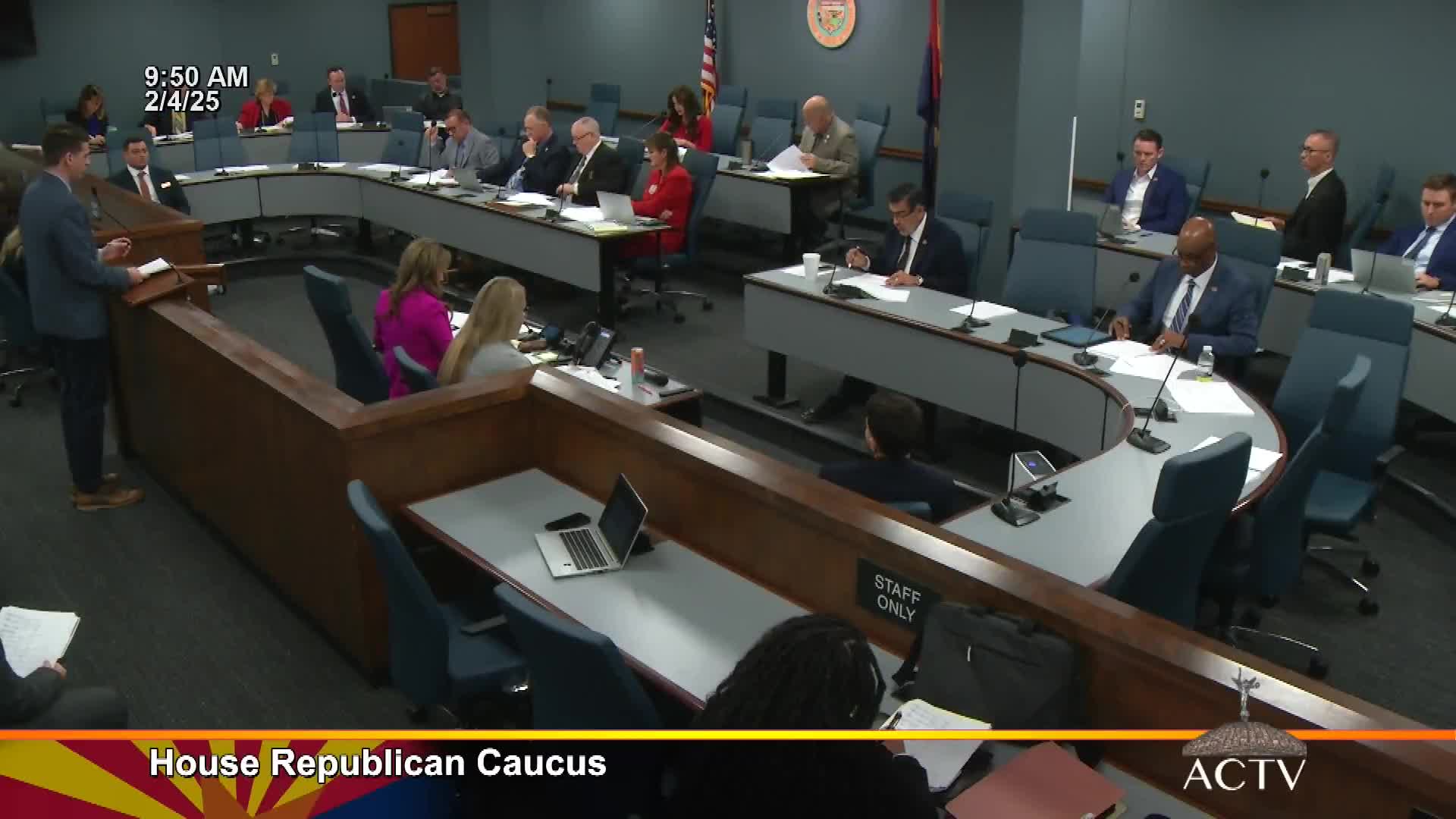
Representative Graess presented House Bill 2610 during caucus on Feb. 4 as an emergency measure intended to strengthen the state response for school districts placed in receivership by the State Board of Education (SBE).
The bill would require a receiver to terminate a district superintendent for cause (with no severance or buyout), permit the superintendent to appeal termination to SBE within 30 days, authorize county school superintendents to remove each governing board member and fill vacancies when SBE places a district in receivership, and make removed board members ineligible to hold elective or appointive state, county or local office in Arizona for specified periods if removed shortly before receivership. The bill also directs county treasurers to register $2.5 million in warrants issued by a district in receivership and states legislative intent that such warrants be funded by basic state aid payments; it includes an emergency clause to make provisions effective on the governor’s signature if two‑thirds majorities are achieved.
Representative Graess said the bill targets districts already in receivership (Antelope Union and Isaac Elementary District) and described the changes as accountability measures for boards and leaders who presided over severe financial decline. Graess said she and staff were preparing amendments to address constitutional questions and to protect school board members who had raised alarms about financial mismanagement; she also said they were working to speed appointment processes with county superintendents.
Representative Livingston in caucus cautioned against broad limits on future elective office for removed individuals, calling such restrictions potentially unconstitutional and prone to litigation; Graess acknowledged rules‑attorney concerns and said staff were drafting fixes. Graess also said she intended to craft an exception and process to shield board members who had raised concerns prior to receivership from the bill’s disqualifying provisions.
Sponsors described additional planned amendments to address loan transactions between districts and a “lockout” provision that restricts removed board members from seeking other offices; Graess said the bill would be revised to protect whistleblowers and to address constitutionality issues before floor action.
The transcript shows extended caucus debate about the fairness of disqualification provisions and the need for procedural safeguards; no final vote was recorded in the caucus excerpt.