Get Full Government Meeting Transcripts, Videos, & Alerts Forever!
Get email alerts on the Veterans Fraud topic
No spam. Unsubscribe anytime.
Rep. Blackman backs state 'stolen valor' law to criminalize impersonating veterans and fraudulently claiming military honors
Summary
Rep. Walt Blackman introduced HB2030 to create state offenses for impersonating veterans and criminalizing false claims of military service or awards when used for tangible benefit; sponsor cited millions lost in fraudulent veteran‑preference claims and endorsements by retired senior officers.
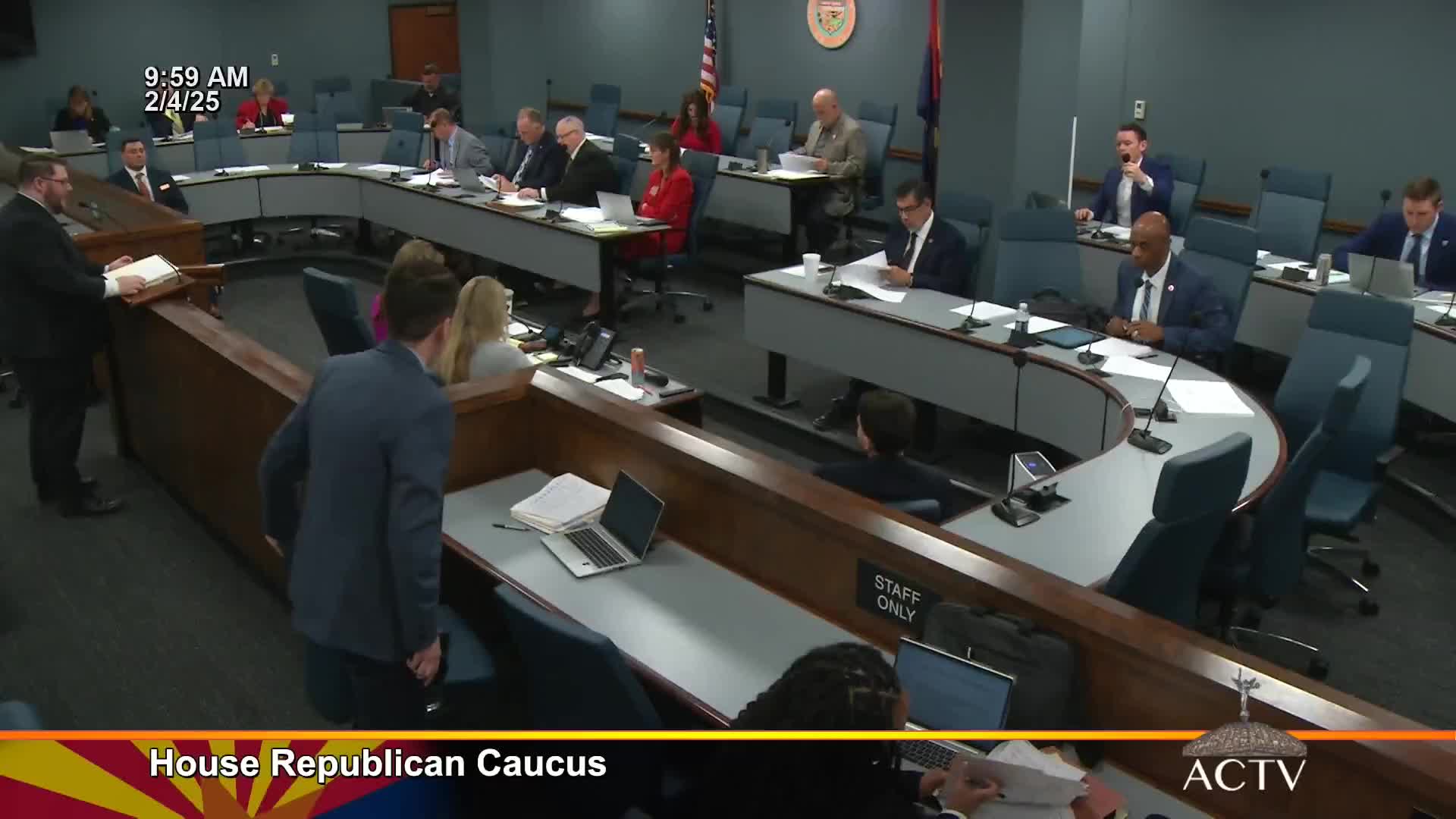
Representative Walt Blackman presented House Bill 2030 in caucus on Feb. 4, urging passage of a state stolen‑valor statute to criminalize impersonation of veterans and the fraudulent use of military honors to gain benefits, donations or contracts.
Blackman argued federal law covers only a narrow list of medals and that Arizona should be able to pursue cases that fall outside the federal statute. He told colleagues the state has documented millions in losses from fraudulent veteran claims and cited examples in which people obtained contracts or donations by falsely representing military service and awards. “The state of Arizona has lost in 2007 dollars $1.4 million in fraudulent claims to folks getting contracts in Arizona using the cut out portion of a veteran,” the sponsor said in committee remarks, and he later summarized broader national figures cited to the caucus.
The bill would make impersonating a veteran a criminal offense, with penalties scaled depending on the circumstances described in the bill text. Blackman said the measure would require removal from office within 10 days for an elected official convicted under the statute if their election benefitted from false veteran claims; he acknowledged there were pending amendments narrowing language and reducing some penalties after committee input. He told the caucus the bill had passed committee 6–1 and that he expected a floor amendment to refine the language.
Blackman noted endorsements from several retired senior military leaders and organizations and described the proposal as both an anti‑fraud measure and an honor‑protection statute. He recounted a personal combat experience and framed the bill as protecting service members and veterans from people who “are walking around saying that they have earned these types of medals and have not even put on a uniform.”
Committee members asked about the total fiscal loss from fraudulent veteran claims; Blackman responded with an aggregate figure he provided to the committee. He also said he planned to circulate a white paper and to offer a floor amendment to restore earlier sponsor language, indicating the bill would be refined before floor action.
The transcript shows a robust sponsor presentation and several supportive remarks; no final vote on the floor was recorded in the caucus excerpt.