Get Full Government Meeting Transcripts, Videos, & Alerts Forever!
Get email alerts on the Property Tax Tools topic
No spam. Unsubscribe anytime.
Senate committee keeps most GPLIT tools but adopts amendment protecting school tax revenue
Summary
The committee adopted an amendment to SB 1050 that removes a proposed shortening of the government property lease excise tax (GPLIT) lease-and-abate term and instead bars abating GPLIT revenue for school districts; Phoenix officials opposed the amended bill, arguing local tools drive central-city redevelopment
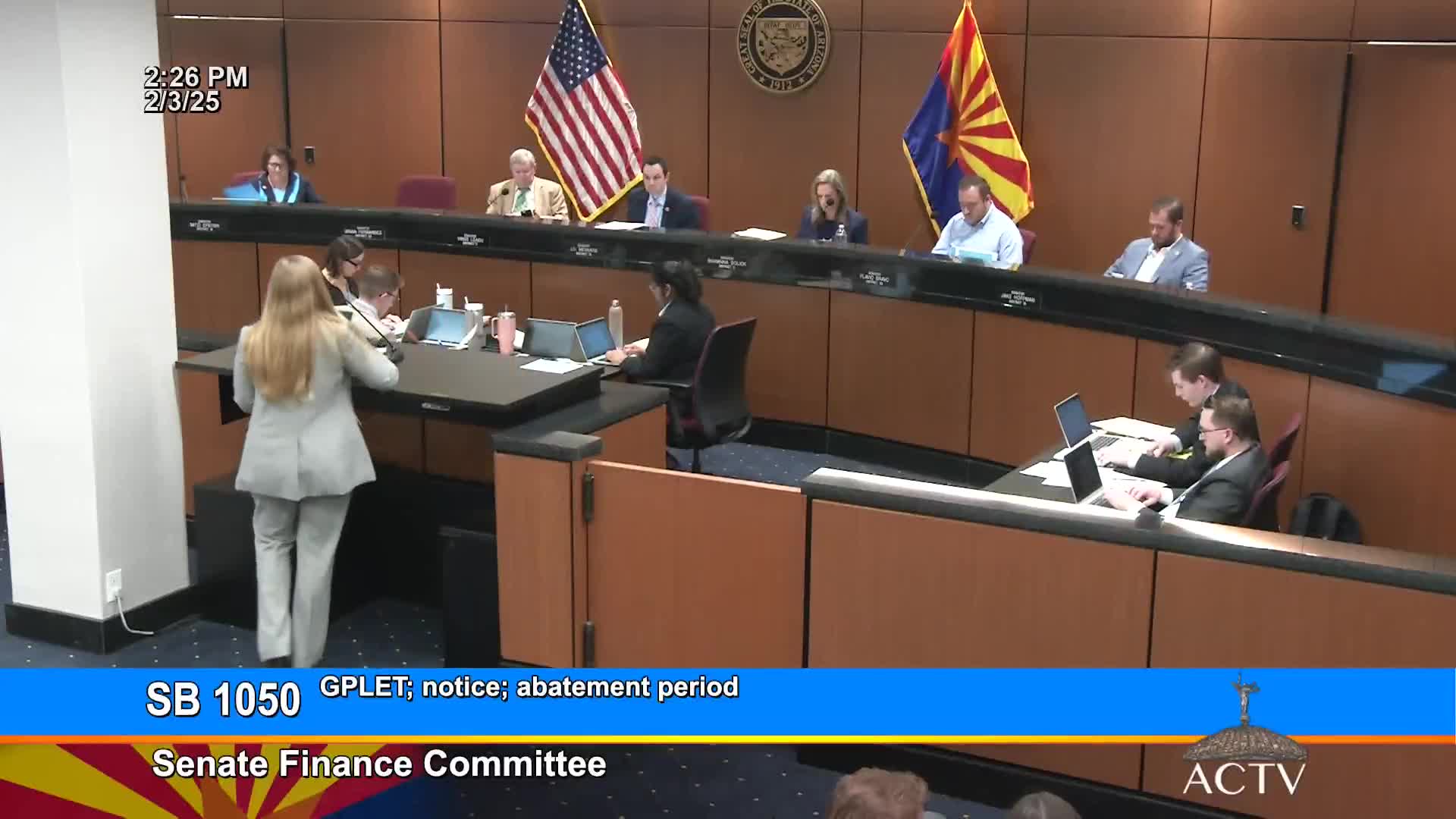
The Senate Commerce & Finance Committee approved an amended version of Senate Bill 1050 that preserves most existing GPLIT authority for local governments while adding a restriction intended to protect school-district tax revenues.
Original language in SB 1050 would have shortened the maximum GPLIT lease-and-abatement period from eight years to four years for agreements entered on or after Jan. 1, 2026, and added new public posting and reporting requirements for GPLIT leases and development agreements. During committee consideration, a 12‑page amendment in Senator Leach’s name removed the four-year reduction and instead prohibited abatement of GPLIT revenue for school districts during any abatement period.
Christine Mackey, director of community and economic development for the City of Phoenix, testified in opposition. Mackey said Phoenix has used the GPLIT tool to spur dense, transit-oriented development and to convert underused single-family lots into higher-density housing. ‘‘By utilizing this program…we now have more than 300 people living on those same two lots,’’ Mackey said, urging the committee to preserve local discretion to use abatement to attract development in central-city areas.
Kevin McCarthy of the Arizona Tax Research Association supported the amendment, saying it would narrow a ‘‘gift’’ to developers and reduce the state’s obligation under school-finance equalization when local jurisdictions abate taxes for private development.
Senators debated legal risks tied to recent court decisions about the state constitution’s gift clause and whether the amendment narrows the gap between what governments give and what they receive. The committee adopted the Leach amendment and passed the bill as amended.
Committee vote: SB 1050 as amended passed out of committee by a 4–3 vote.
What happens next: The bill, now limited by the amendment to preserve most abatement authority while protecting school tax collections from abatement, will proceed to the Senate for possible floor debate. City and school officials urged legislative clarity on how the changes would work with current development agreements.