Get Full Government Meeting Transcripts, Videos, & Alerts Forever!
Get email alerts on the Housing Affordability topic
No spam. Unsubscribe anytime.
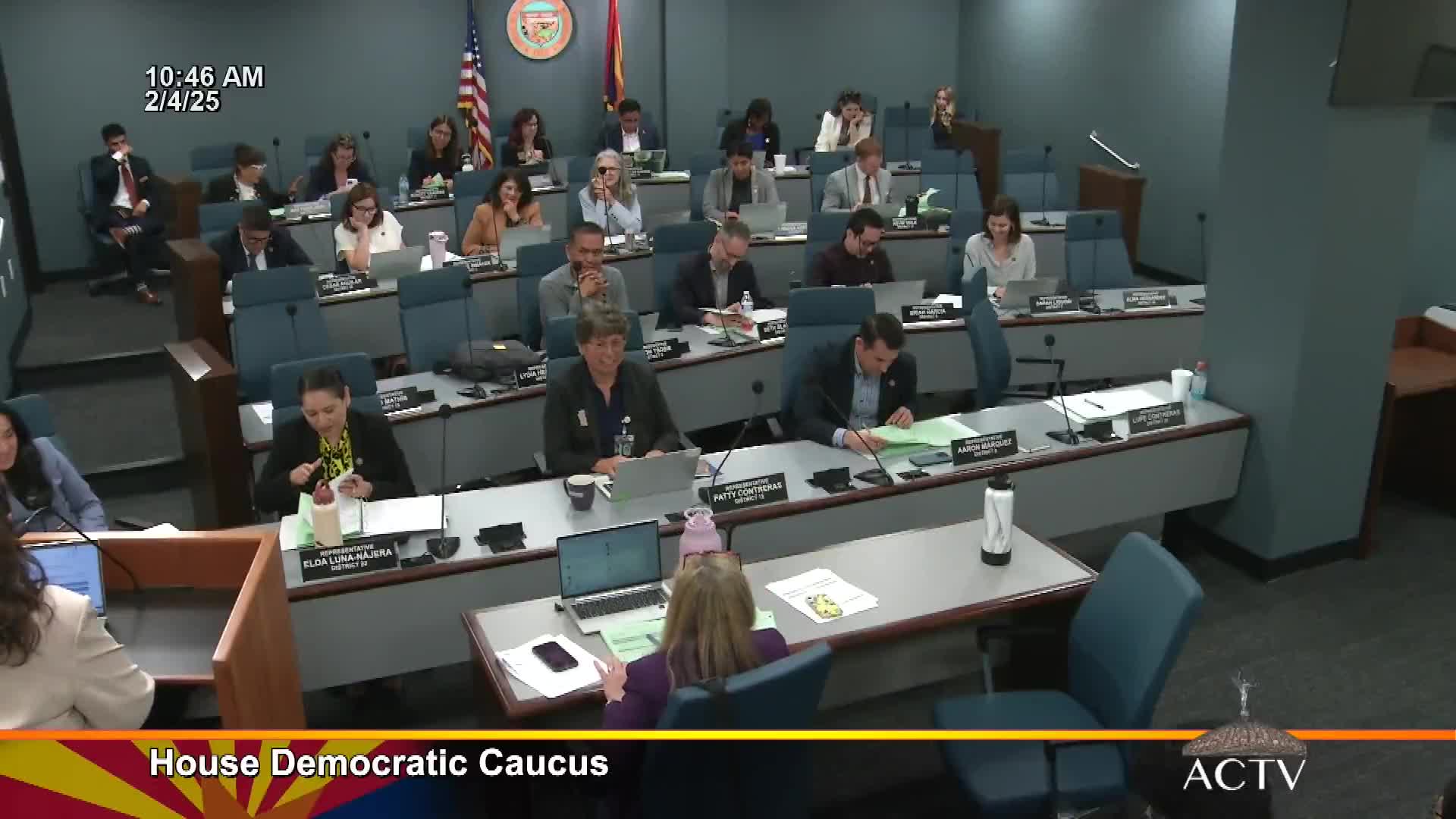
‘Starter Home Act’ draws split reactions in caucus over planning preemption and affordability
Summary
House Bill 2,371 (Starter Home Act) would limit municipal restrictions on residential building materials, features and design to ease construction costs. Caucus members split: sponsors argued the bill could lower single‑family prices; opponents said it preempts local planning and omits concrete affordability measures.
Sponsor Representative Aguilar introduced House Bill 2,371, the Starter Home Act, saying supporters believe the measure "will allow prices" to fall and make it cheaper to build single‑family homes, which could improve affordability. The sponsor described the bill as protecting a home buyer's right to choose home features, amenities, structures, floor plans and interior and exterior designs, and as restricting municipalities from enforcing certain residential zoning rules that limit building materials or design elements.
Several caucus members opposed the bill or said they would vote no. Representative Connolly said she was "concerned about the bill" and that it "flies in the face" of long‑established general planning processes; she said the legislation could undermine municipal planning efforts that take years to develop. Representative Villegas said the bill appears to be a preemption measure and noted it "doesn't talk about housing affordability and how that's going to occur," adding that in his district the city has used zoning tools to encourage affordability that this bill would prevent.
Representative Covero, who voted for the bill in committee, said the bill’s drafting raised issues about definitions — for example an arbitrary population threshold for affordable housing (70,000) — and suggested caucus and committee members hold an offline discussion to refine definitions and address rural needs. Representative Liguori asked for additional data to inform whether the bill would achieve its affordability goals.
Caucus discussion focused on process and scope: opponents emphasized that the bill could preempt local zoning and planning authority without including mechanisms to produce affordable units, and they asked for more concrete affordability metrics and protections for rural communities. Supporters urged further discussion and suggested potential amendments.
No formal vote occurred during the caucus meeting. Members requested additional analysis and an offline caucus discussion to explore technical fixes and empirical evidence on how the bill would affect construction costs in different market contexts.
Ending: Sponsors and critics agreed to continue the conversation off the floor, with members asking staff for modeling or data that compares local planning approaches with the bill’s expected effects on housing costs.