Get Full Government Meeting Transcripts, Videos, & Alerts Forever!
Get email alerts on the Elections Reform topic
No spam. Unsubscribe anytime.
House Republicans discuss 'Florida‑style' elections package: late‑early limits, address verification and on‑site tabulation options
Summary
Republican legislators in caucus debated election reforms that would restrict dropping mail ballots at polling places on Election Day, require periodic voter address verification before mailed ballots are issued, permit on‑site tabulation during early voting weekends and replace signature checks with an early‑voter ID number in some counties.
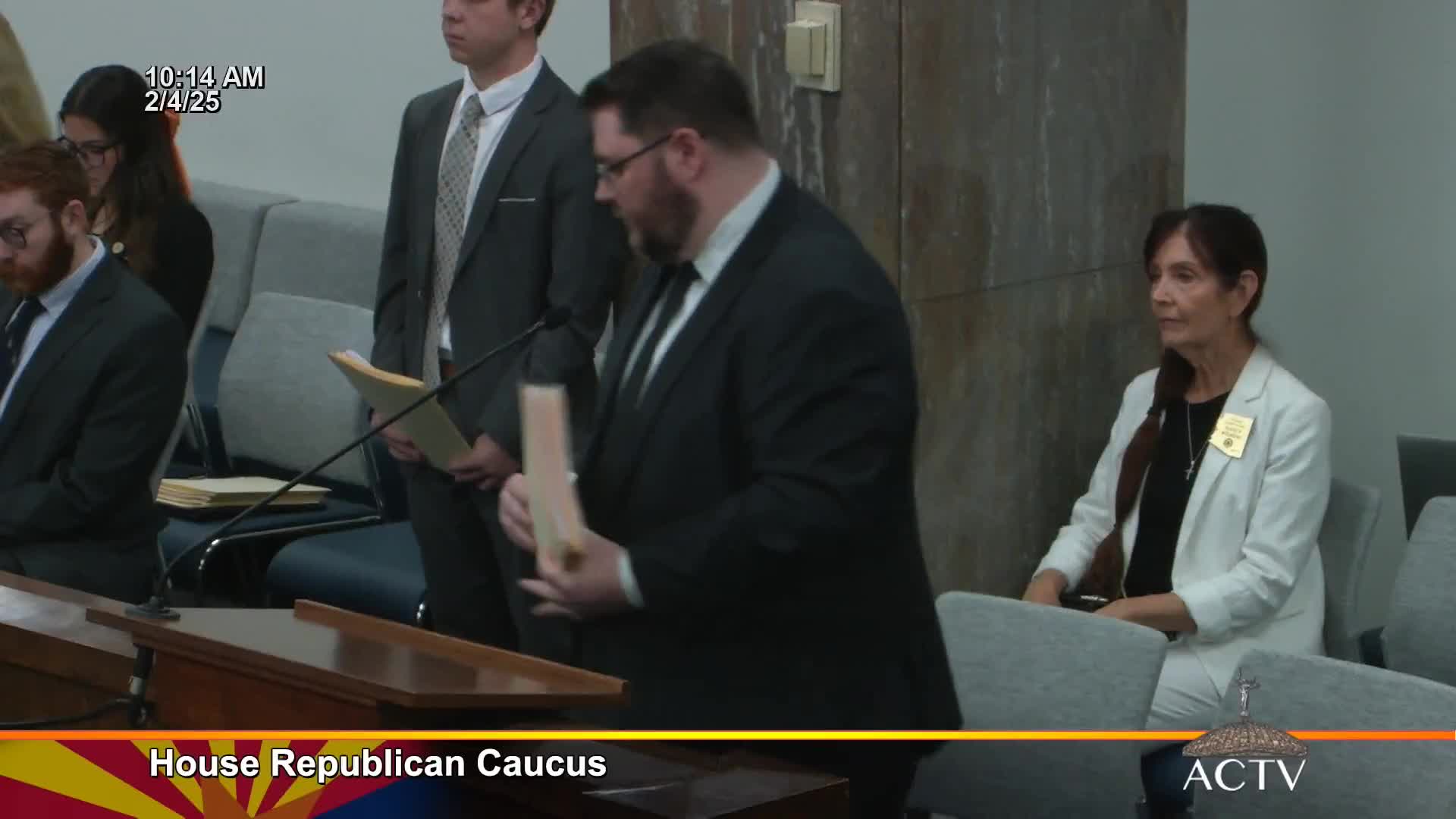
House Republicans spent substantial caucus time on Feb. 4 outlining a multi‑bill elections package modeled in part on reforms enacted in Florida, including limits on returning mailed early ballots, new address verification requirements and optional on‑site tabulation of early ballots on the weekend before an election.
Sponsor Representative Collin described the package as “Florida style reform,” saying the measures “cut off late earlies” (mail‑in ballots brought to polling places on Election Day) by allowing hand‑delivered ballots to be returned only to county elections offices, not to polling‑place staff. Collin said the change was designed to reduce delays caused by late in‑person ballot dropoffs because “when it's walked in, they can't start the signature verification process until election night at the earliest.”
Other components discussed include: routine address verification for voters on the early‑mail list (every cycle in large counties, every two cycles in smaller counties); replacing signature verification with a purpose‑built early‑voter identification number on ballots; authorization (not a mandate) for counties to perform on‑site tabulation during early‑voting weekends; and prohibitions on certain outside funding of elections. Collin said the package was intended to reduce errors, shorten tabulation times and increase voter confidence.
Members of the caucus and several county recorders questioned or sought clarifications on practical effects. Representative Selena Bliss (LD 1) said her jurisdiction opposed weekend on‑site tabulation and preferred a uniform early‑voting close time. Collin replied that on‑site tabulation was an option and not a requirement. County recorder representatives discussed tradeoffs between convenience and processing time, and raised resource concerns for smaller counties.
The package was presented in multiple, related bills (including HB2673, HB2703, HB2673/2703 language variants and companion HCR/HB versions that address early‑voter ID numbers). Sponsors repeatedly said they were negotiating language with county recorders and the Arizona League of Cities to address local concerns and the governor’s prior objections to related measures. A staff summary noted implementation timing differences across components; one provision cited in committee language begins in 2027.
Representative Collin said the reforms seek to reduce circumstances that produce “stray ballots” and to make the chain of custody from voter to tabulation device shorter when on‑site tabulation is used. County election officials and some members urged caution about mandating on‑site tabulation or weekend operations because of machine availability and costs.
No final votes or enactments were recorded in the caucus transcript excerpt; sponsors said they were still negotiating amendments and outreach to county recorders and the Ninth‑Floor (governor’s office) staff.