Get AI Briefings, Transcripts & Alerts on Local & National Government Meetings — Forever.
Appropriations committee advances controversial bill to cut lump‑sum court funding; supporters cite accountability, critics warn of collateral impacts
Loading...
Summary
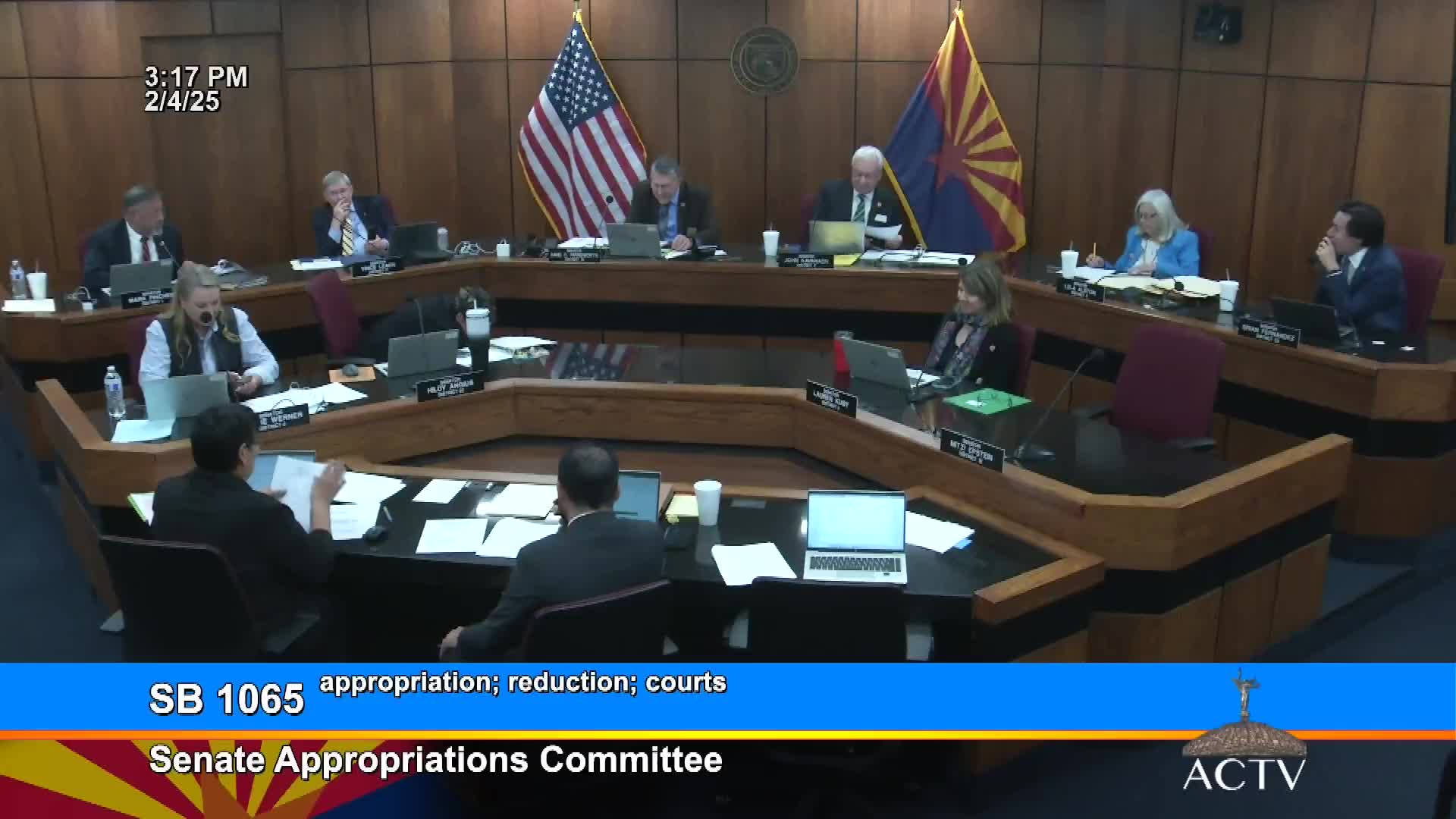
Senate Bill 10 65, a proposal to reduce lump‑sum appropriations to the Arizona Supreme Court, Court of Appeals and superior courts, moved out of the Senate Appropriations Committee after contentious debate about judicial accountability and potential collateral effects on specialty court programs.
Senate Bill 10 65, a measure to increase the lump‑sum reduction to several judicial appropriations (reducing funding for the Supreme Court, Court of Appeals and superior courts by substantial sums for the current fiscal year), drew partisan and public testimony and passed the committee on a recorded vote.
Sponsor remarks indicated the bill was intended to command the courts’ attention and push for better responsiveness; sponsor said the reduction was chosen to send a message about the judiciary’s performance. Michael Infanson, speaking on behalf of veteran advocacy and court‑diversion interests, urged opposition, saying cuts would “drastically impact veterans treatment courts.” He cited national analyses and state data indicating treatment courts yield large public‑safety and fiscal returns and warned that reductions could increase incarceration and costs.
Several senators explained their votes on the floor: some voted to advance the bill to give the sponsor time to work on amendments; others said they opposed the magnitude of the cuts but supported moving the bill for further consideration. One senator who spoke in opposition called the proposal a ‘‘33‑million dollar cut’’ that would cripple the court system statewide. Committee members recorded a final tally reported in committee of 6 ayes, 3 noes and 1 not voting. Committee discussion noted the courts were not represented at the hearing and several senators said that absence factored into their support for advancing the bill to elicit a response.
No agency representatives from the judicial branch spoke during the hearing. The committee record shows the bill was advanced with a due‑pass recommendation to allow sponsors to seek amendments and further floor consideration.