Get Full Government Meeting Transcripts, Videos, & Alerts Forever!
Get email alerts on the Student Representatives topic
No spam. Unsubscribe anytime.
Student reps describe mentorship model, push for clearer recruitment and accountability
Summary
Student representatives told the Issaquah board that the two-year mentee–mentor model is working but recommended clearer timelines, broader recruitment and more opportunities for deep-dive internships; the board asked staff to begin recruitment in March.
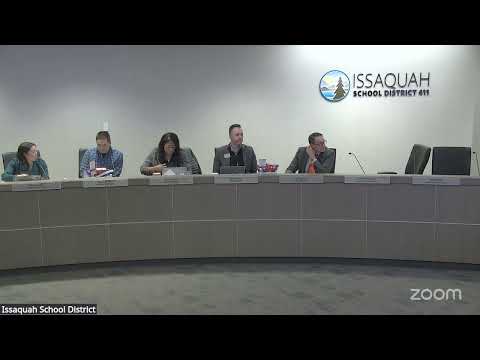
Student representatives and board members spent a substantial portion of the meeting reviewing GC‑12, the district governance policy that sets the student representative program, praising the program’s growth and debating detail changes for recruitment and accountability.
Why it matters: The student representative program gives high school students a formal channel to bring student voice to the board. The program’s advisers and current student reps argued that a two‑year mentor–mentee structure strengthens continuity and helps newer reps learn board procedures and policy language.
Program features and concerns: Students described operational challenges that affect reporting timelines—survey fatigue, winter breaks and short windows for data collection—and said earlier notice of reporting topics would improve participation and the quality of student input. Several student reps recommended more proactive recruitment communications (beyond Canvas posts) and suggested a short “day in the boardroom” video to show prospective applicants what the role entails.
Accountability and advisory vote: Board members and staff said the program includes attendance and preparation expectations; students asked for those standards to be stated clearly in recruitment materials or procedures so applicants know the threshold up front. Students and staff supported an advisory‑vote mechanism introduced this year as a lever to increase responsibility and attendance among representatives.
Development opportunities: Students proposed more exposure to district operations—finance, communications or facilities—for reps interested in deeper learning. The board and staff signaled openness to matching students to specific project work or internships where feasible.
Next steps: Staff said recruitment will begin in March and encouraged current student reps to help craft outreach materials. The board asked staff to refine language in GC‑12 on timelines and reporting expectations before the next recruitment cycle.
Ending: Board members praised the student reps’ professionalism and said the program would continue to evolve with student and staff input.