Get Full Government Meeting Transcripts, Videos, & Alerts Forever!
Get email alerts on the Blind Services topic
No spam. Unsubscribe anytime.
Senate committee backs $1 million for older blind independent-living program
Summary
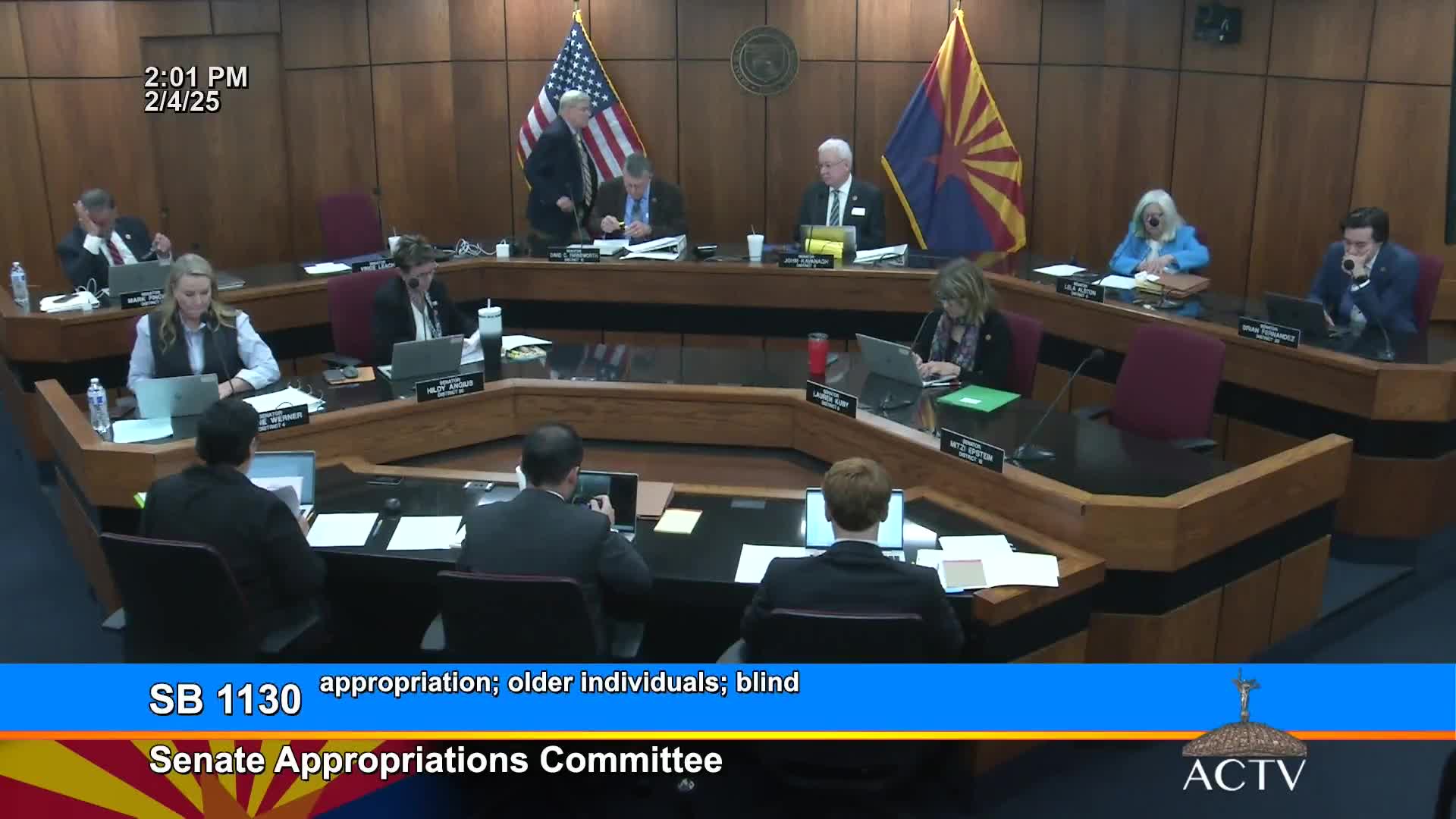
The Senate Appropriations Committee gave a due-pass recommendation to Senate Bill 11‑30, approving a $1,000,000 general-fund appropriation to the Department of Economic Security for the Older Individuals Who Are Blind independent-living program after testimony from beneficiaries and the National Federation of the Blind.
Senate Appropriations Committee members voted to give Senate Bill 11 30 a due‑pass recommendation, sending a $1,000,000 fiscal‑year 2026 appropriation from the state general fund to the Department of Economic Security for the Older Individuals Who Are Blind independent‑living program.
The bill’s sponsor was not present; the committee heard testimony from advocates and program beneficiaries explaining how the DES program teaches blind and low‑vision seniors to use assistive tools and remain independent.
Ted Vogt, representing the National Federation of the Blind for Arizona, told the committee, “The bill is very straightforward. It's a a $1,000,000 appropriation to the independent living older blind program that DES operates.” Kimberly Fetterman, identified as “the president for the seniors division of the National Federation of the Blind,” described frequently heard concerns: “I can't read anymore. I can't read.” Testimony from beneficiaries detailed skills training they receive, from smartphone use to braille and daily‑living techniques.
Danny Roberts, who said he was told he was legally blind in 2011, said the program helped him learn screen‑reading software and iPhone features and reduced his need for family assistance. Another beneficiary described learning to garden and read to grandchildren after receiving training and equipment.
A roll call produced an outcome reported by the secretary: 8 ayes, 1 nay, 1 not voting. One senator explained a protest nay vote was due to a separate frustration with an unnumbered Department of Economic Security budget document, not a judgment on the program’s merits.
The committee record shows the matter advanced with a due‑pass recommendation to the next stage. No statutory citations were raised during the hearing and no amendment was recorded.
Votes at a glance: SB 11 30 — Motion: due pass recommendation; tally: 8 ayes, 1 no, 1 not voting; outcome: approved for further consideration.