Get Full Government Meeting Transcripts, Videos, & Alerts Forever!
Get email alerts on the Cpa Licensure topic
No spam. Unsubscribe anytime.
Subcommittee advances House Bill 148 to add alternative CPA licensure pathways
Summary
A Georgia House subcommittee voted to advance House Bill 148, which would create alternative pathways to Certified Public Accountant licensure by allowing a bachelor’s degree plus two years’ experience or a master’s plus one year, and would expand mobility for out-of-state CPAs to perform work in Georgia.
A House regulatory subcommittee on Monday voted to advance House Bill 148, a measure that creates alternate pathways for CPA licensure in Georgia by allowing either a bachelor’s degree with a concentration in accounting plus two years of supervised experience, or a master’s degree plus one year of experience, in addition to passing the uniform CPA exam.
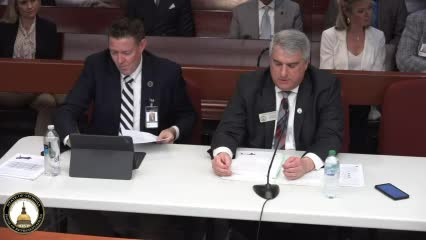
Supporters said the change aims to address a shrinking pipeline of new CPAs and make assurance and audit services more available across the state. “What this House Bill 148 does is goes back to those old requirements … provide for an alternate pathway … such that someone can still get a 5 year degree or a master of accountancy … or get a 4 year undergrad degree with a concentration in accounting … and also 2 years of experience and obviously pass the CPA exam,” a bill presenter said during the hearing.
The bill revises current licensure pathways that typically require 150 semester hours (commonly a master’s-level course load) and one year of experience. Proponents described two explicit pathways in the proposal: a master’s (or 150 hours) plus one year of experience, or a bachelor’s degree with an accounting concentration plus two years of experience.
Boyd Search, president and CEO of the Georgia Society of CPAs, told the committee the profession’s organizations have coalesced behind the change: “I have not seen the profession both in the state of Georgia and across over 30 other states coalesce together this quickly over statutory changes to accountancy law.” Catherine Fletcher, quality-control partner at her public accounting firm and chair of the Georgia Society of CPAs board, said the bill “helps address this issue while preserving the high standards of education, experience, and ethics that define our profession.”
The measure also updates mobility standards to allow CPAs licensed in other states to provide more than just tax services for Georgia clients, supporters said. Don Cook, head of legislative affairs for the Georgia Society of CPAs, said reciprocity under the mobility provisions would require an out-of-state practitioner to hold “a license in good standing from their home state” and to have passed the uniform CPA exam; the bill would point to board rule to define any additional education requirements.
Support for the proposal was described in testimony as bipartisan and broad: the Georgia Society of CPAs, the Georgia State Board of Accountancy and several large national accounting firms were listed as supporters. Advocates said the changes mirror policies in about 35 other states and are intended in part to ease recruitment in rural Georgia, where local governments and small firms compete with larger metropolitan employers.
The subcommittee approved advancing the bill by voice vote; the transcript records a motion, a second and a voice vote but does not record a numeric roll-call tally.
The bill will go to the full committee for further consideration.