Get Full Government Meeting Transcripts, Videos, & Alerts Forever!
Get email alerts on the County Finance topic
No spam. Unsubscribe anytime.
Committee advances trio of bills tightening audits, records access and training for county treasurers
Summary
Lawmakers advanced three related bills aimed at increasing oversight of county treasurer offices: giving the Auditor General statutory access to financial-institution records, authorizing procedural reviews of treasurer offices, and requiring continuing education for treasurers and boards of supervisors.
The House Judiciary Committee advanced a package of bills intended to increase oversight and professionalization of county treasurers’ offices after testimony from multiple county treasurers and fiscal officers.
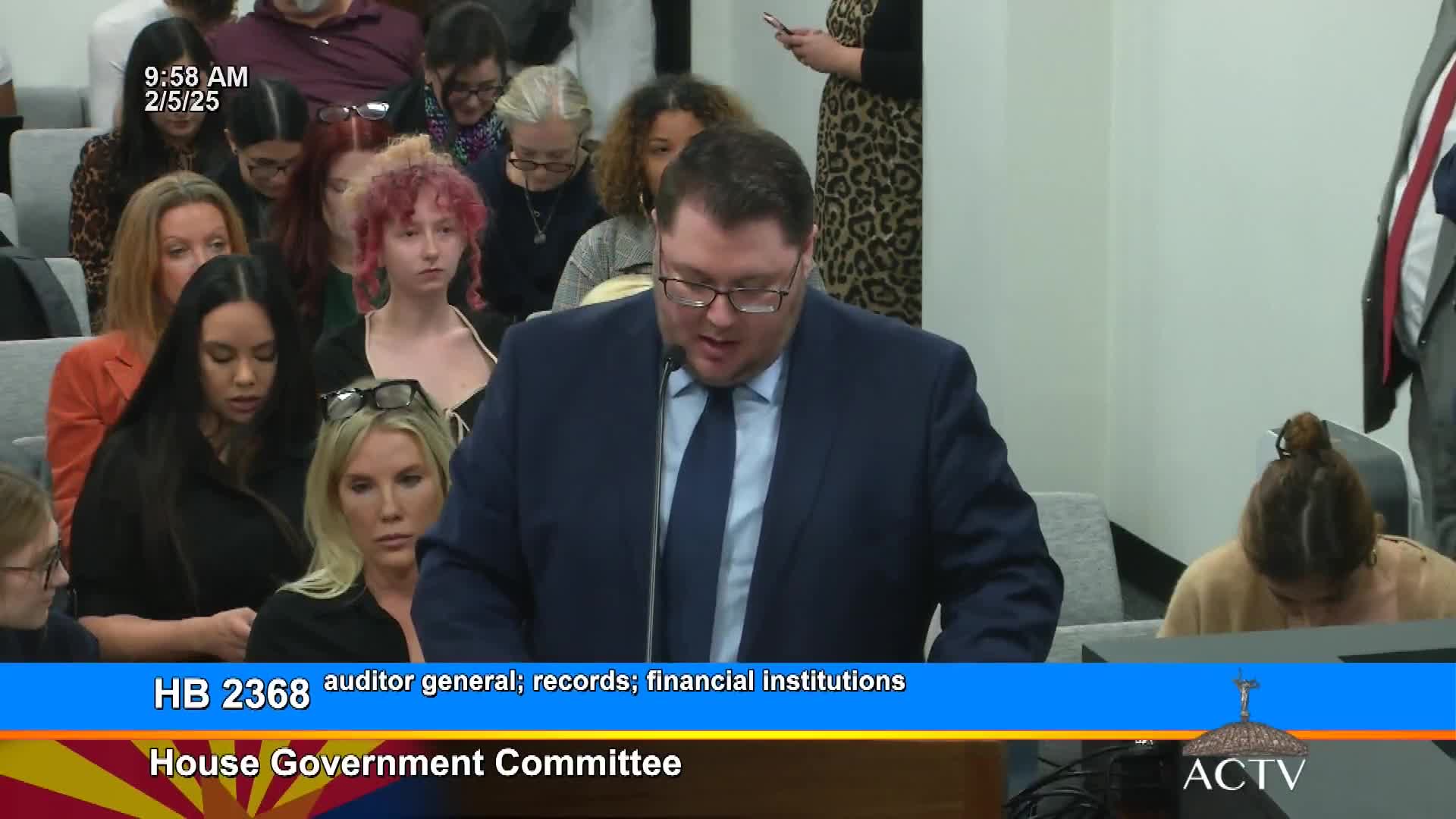
Representative Matt Gress explained the package grew from reviews of the Santa Cruz County Treasurer criminal indictment. House Bill 23-68 (as amended) would require financial institutions to provide specified information to the Auditor General on request; the amendment requires the Auditor General to notify the county treasurer before inspecting a financial institution’s records. Treasurer witnesses, including Sarah Benatar (Coconino County), Michael McCord (Pinal County) and Maricopa County Treasurer John Allen, supported access for transparency. Committee discussion emphasized the Auditor General’s need to “open the hood” on treasurer offices.
House Bill 23-69 (as amended) directs the Auditor General to perform procedural reviews of treasurer offices and requires a county treasurer under review to notify the Auditor General whether they accept findings or will implement recommendations. Representative Gress said the amendment reflected feedback from county treasurers and created a response opportunity similar to audits of state agencies.
House Bill 24-33 would require county treasurers and chief deputies to complete a specified minimum of continuing education (10 hours annually) on topics including investment strategies and cash management, with at least one hour on waste, fraud and abuse; the amendment added six hours annually for boards of supervisors and allowed national or state financial organizations to provide the training. Sponsors and treasurers said many counties already fund professional development; the County Supervisors Association asked for clearer program definitions and cost estimates.
Committee members heard from multiple county treasurers who said the bills would increase transparency and confidence in county offices; some raised concerns about cost for small counties and about prescription vs. voluntary training. Maricopa County Treasurer John Allen urged voluntary, resourced training rather than statutory mandates, but supported other oversight measures. The committee adopted amendments requested by treasurers and advanced each bill with recorded votes.
Ending: The committee gave due-pass recommendations to HB 23-68 (as amended), HB 23-69 (as amended) and HB 24-33 (as amended), and directed continued stakeholder conversations about training specifics and fiscal impacts.