Get Full Government Meeting Transcripts, Videos, & Alerts Forever!
Get email alerts on the Bioscience Health Innovation topic
No spam. Unsubscribe anytime.
Arizona biotech leaders tell committee state research and diagnostics are expanding but access remains a barrier
Summary
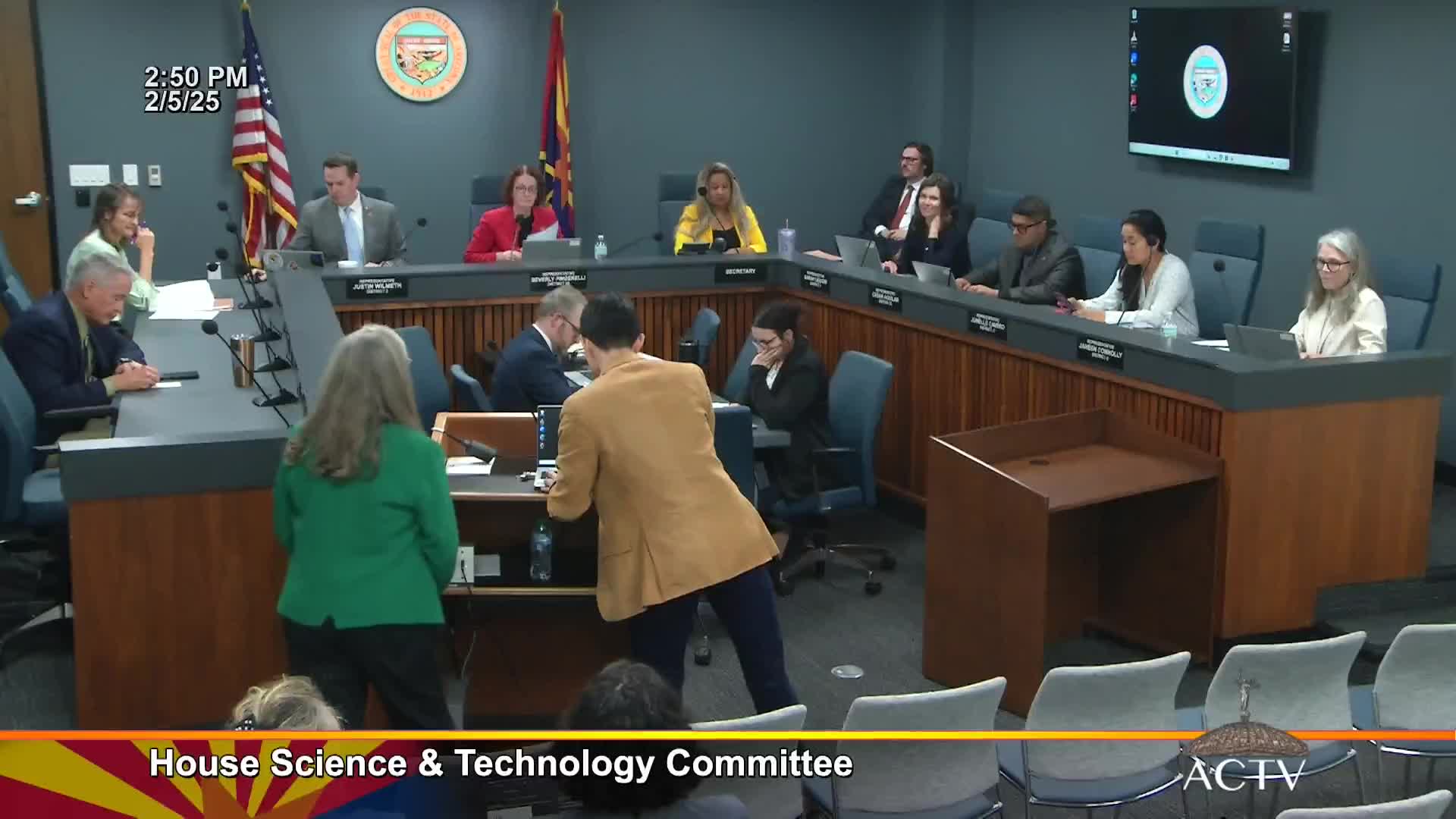
Leaders from the Arizona Bioindustry Association told the House Science and Technology Committee that the state's bioscience sector is growing—driven by university research funding, diagnostics and device manufacturers—but panelists warned rural and underinsured Arizonans may not benefit equally from those advances.
Joan Kerber Walker, president and CEO of the Arizona Bioindustry Association, told the House Science and Technology Committee that Arizona’s life‑science sector has expanded in recent decades and now supports hundreds of thousands of workers.
"I am 1 of over 365,000 Arizonans who are working on science and technology right now," Kerber Walker said, describing growth in diagnostics, medical devices and clinical trials across the state.
The presentation outlined several drivers of that growth: Proposition 301 and the Technology Research Initiative Fund (TRIF), university research capacity at the state’s three public research universities, and private firms that develop diagnostics and medical devices in Oro Valley, Tempe and Tucson. Kerber Walker cited TRIF funding totals and legislative support as a catalyst, noting "over $1,800,000,000 of TRIF funds" and an estimated nearly "$200,000,000" available through designated TRIF allocations this year to support university research.
Committee members asked about specific technologies and patient access. Kerber Walker described phase 0 clinical trials as a near "n of 1" approach that can microdose a patient and rapidly test whether an investigational therapy produces benefit. She also said Arizona ranks ninth nationally for clinical trials and highlighted companies developing multivariant cancer diagnostics and cardiac devices built in the state.
On equity and access, Kerber Walker said the chief challenges are access to insurance and medical resources, and workforce demographics. "If you live in a rural community where the pharmacist may be the only medical professional in town, if you don't have access... you fall," she said, arguing that technology alone cannot help patients who cannot reach or afford care.
Kerber Walker also described the Arizona Health Innovation Trust Fund as a perpetual fund intended to support health innovation and workforce development in the state, and she noted state legislative measures—identified in her remarks as recent "biomarker legislation"—have increased Arizonans' access to certain diagnostics.
The committee's discussion ranged from technical questions about diagnostics and AI applications in pathology to broader concerns about prevention, obesity and the long‑term cost of care. Kerber Walker stressed that diagnostics and clinical trials expand patient options but that cost and geographic access will determine who actually benefits.
Kerber Walker ended by pointing to near‑term developments, including firms testing diagnostics in animals as a pathway to human trials and new downtown Phoenix research institutes focused on chronic autoimmune diseases. She offered to answer follow‑up questions and meet with members interested in specific research projects.
The presentation occupied the committee's opening segment; no formal motion or committee action resulted from the discussion.