Get Full Government Meeting Transcripts, Videos, & Alerts Forever!
Get email alerts on the Election‑law topic
No spam. Unsubscribe anytime.
Committee advances bill shielding supervisors who refuse to certify on "good‑faith" basis
Summary
HB 2440 would bar the Attorney General from bringing criminal or civil action against a county board of supervisors member who declines to certify an election based on a good‑faith belief of irregularities; the bill passed committee after public testimony both for and against.
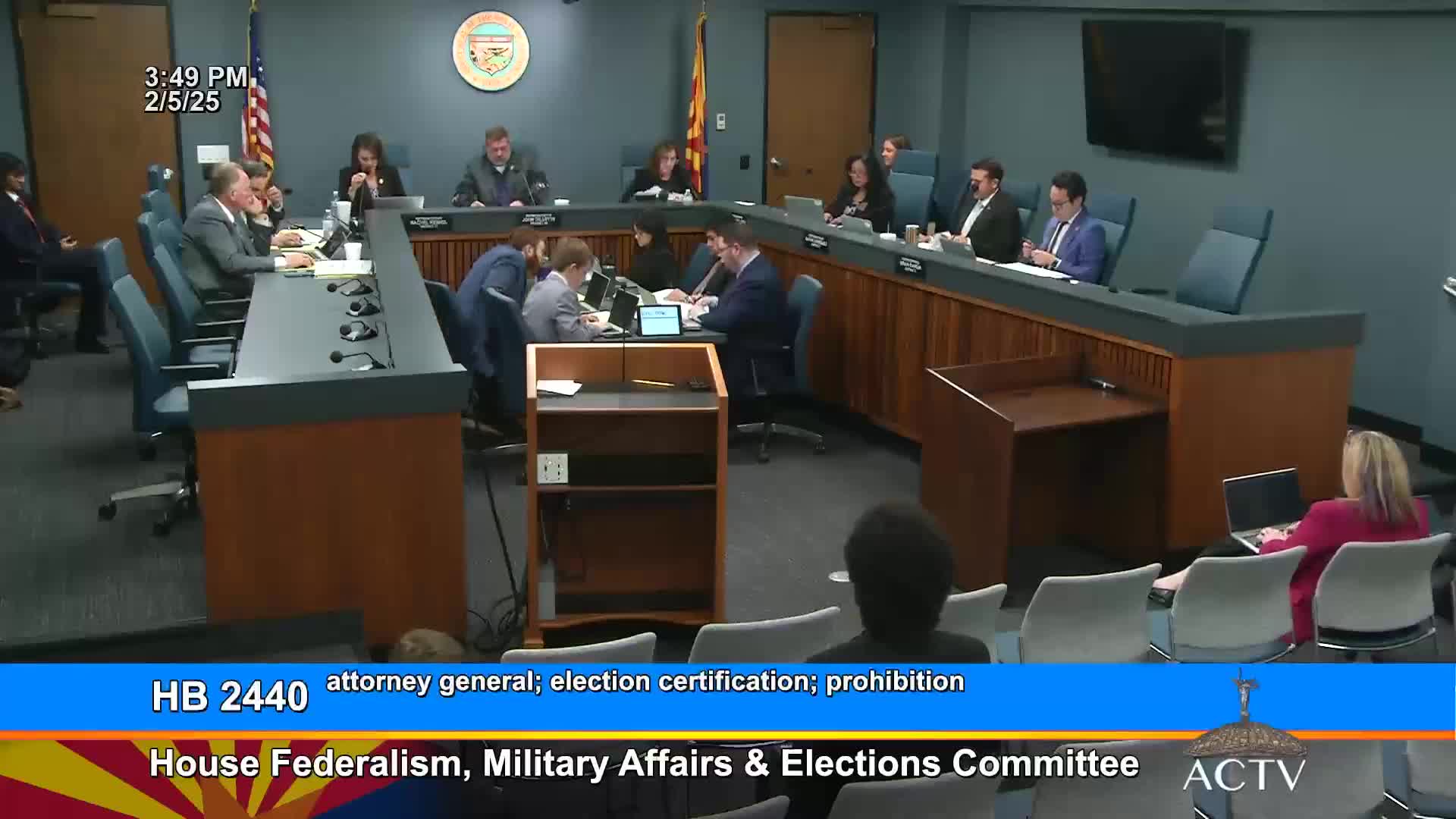
The committee returned House Bill 2440 with a due‑pass recommendation by a recorded 4‑to‑3 vote after a lengthy public exchange during which speakers debated whether county supervisors should face potential criminal or civil exposure for declining to certify an election.
As written, HB 2440 would prohibit the Attorney General from taking civil or criminal action against a member of a county board of supervisors who does not certify an election when the member acts on a "good‑faith belief or evidence that there has been election irregularities or errors." Committee staff summarized the bill and sponsors said the measure is intended to protect elected supervisors who raise concerns about election integrity.
Public testimony included strong opposition from an 18‑year‑old voter, Vincent Peterson, who said the bill would undermine the rule of law and create a path for partisan actors to subvert elections. "This bill undermines that duty by allowing county officials to refuse certification based of a vague subjective good faith belief," Peterson told the committee and urged members to vote no.
Supporters including a committee witness argued that county supervisors must be free to vote their conscience and present evidence to the courts without facing immediate criminal threats. Proponents described cases in which supervisors brought concerns to their attention and then faced legal threats; one sponsor said the bill protects supervisors acting on evidence from being criminally prosecuted for refusing to certify.
After public testimony and questions from members the committee recorded four ayes and three nays and returned HB 2440 with a due‑pass recommendation.