Get Full Government Meeting Transcripts, Videos, & Alerts Forever!
Get email alerts on the Snap Work Requirements topic
No spam. Unsubscribe anytime.
House committee advances bill to require some SNAP recipients to participate in employment and training; advocates warn of rural, tribal impact
Summary
The House Appropriations Committee advanced House Bill 2121, which would make participation in a SNAP employment and training program mandatory for many able‑bodied adults without dependents, after hours of testimony that split supporters and tribal, anti‑hunger and policy groups.
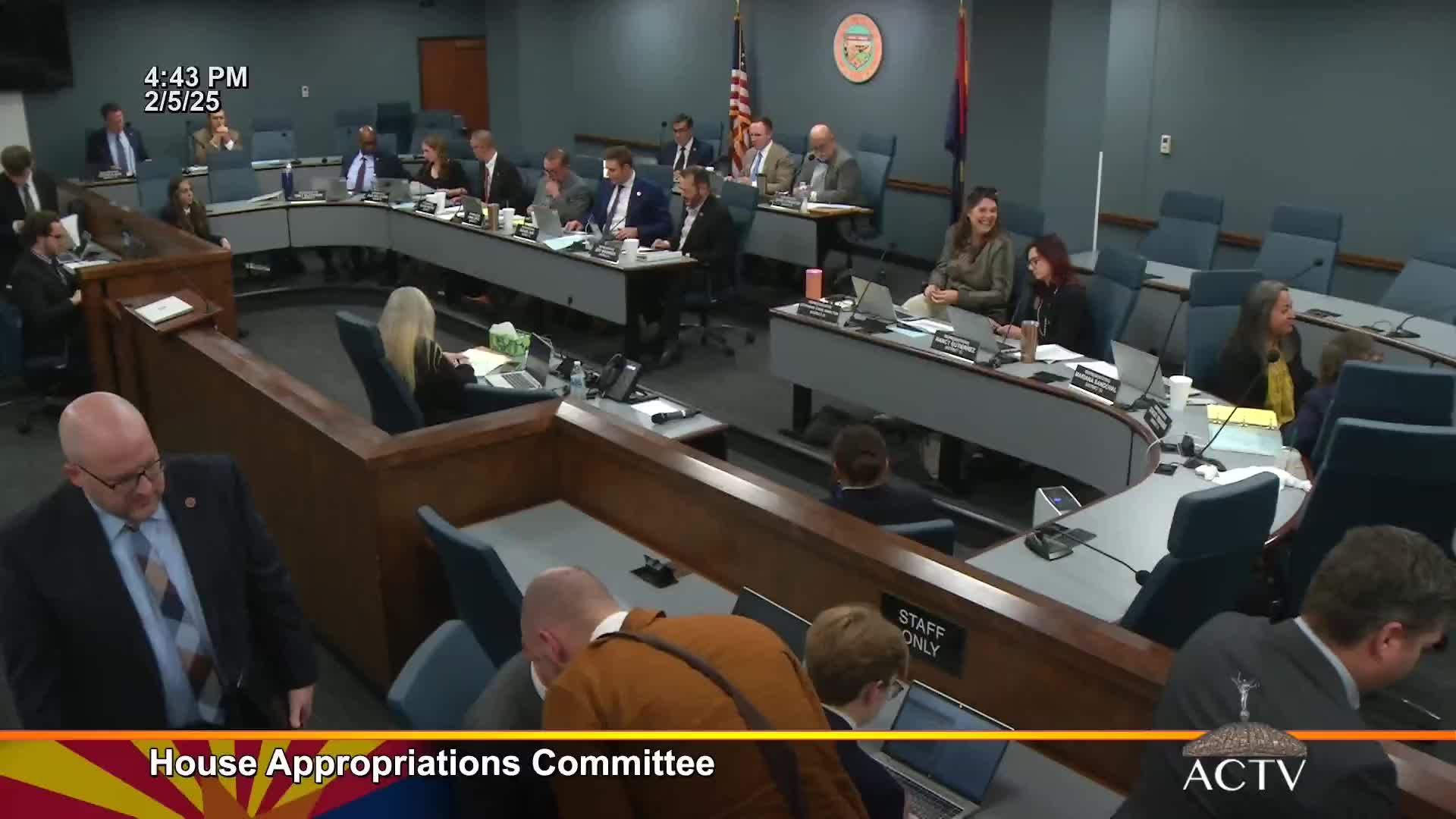
The House Appropriations Committee voted Feb. 5 to give House Bill 2121 a due‑pass recommendation after testimony and debate on a bill that would require able-bodied adults without dependents who receive SNAP benefits to participate in a state employment and training (E&T) program unless they qualify for listed exemptions.
Sponsor Representative (title given in transcript as) Willoughby framed the bill as an effort to connect able‑bodied recipients to work. “We have to make sure that state aid does not become a complete crutch,” she said, adding the bill is targeted and contains exemptions for those already working or otherwise exempt. Proponents in the hearing cited outcomes in other states; the sponsor referenced results in Utah and Idaho, saying participants there found employment in the quarters after completion.
Opponents included legal aid and anti‑hunger organizations, tribal representatives and food‑bank leaders. MJ Simpson of the William E. Morris Institute for Justice said SNAP is the most effective anti‑hunger program in the country and warned HB 2121 expands mandatory participation to an older age range than some testimony suggested; Simpson noted the bill’s reach went to age 60 in the text read at the hearing and asked members to vote no. "SNAP is the most effective anti hunger program in the country," Simpson told the committee.
Tribal and rural witnesses argued the bill could reduce access in areas with limited job opportunities, poor transportation networks and other barriers. A Navajo Nation representative (read into the record) told the committee that waivers and flexible rules matter because long travel distances and poor road conditions make E&T participation difficult on tribal lands; Flagstaff Family Food Center and other food banks said local deliveries and emergency responses depend on federal flexibility.
Economic analysts and the Arizona Food Bank Network argued an effective E&T program requires funding for training, transportation and supportive services. Witnesses cited a study estimating that about $1,800 per participant would be required to provide meaningful services that lead to sustained employment; food‑bank leaders and policy analysts said the state’s SNAP E&T currently serves a small fraction of the population in need and that scaling to a mandatory program without statutory funding would likely overload providers and create risk of benefit loss for vulnerable families.
After public testimony the committee voted 11–6–1 to give HB 2121 a due‑pass recommendation. Committee discussion included multiple requests for stakeholder engagement; several members said they wanted the sponsor to consult tribal nations and food‑bank networks to refine the bill before floor action.
Why this matters: HB 2121 would change how the state enforces and administers SNAP work requirements for a subset of recipients and could shift program administration costs and caseloads between state and federal programs. The committee advanced the bill, but lawmakers and advocates flagged implementation and funding issues that could limit its effect and potentially increase hunger risk in rural and tribal areas if not addressed.