Get Full Government Meeting Transcripts, Videos, & Alerts Forever!
Get email alerts on the Emergency Shelter Assistance topic
No spam. Unsubscribe anytime.
House passes $425 million supplemental for emergency shelters with new verification, limits and cap
Summary
The Massachusetts House voted to pass House Bill 57, a $425 million supplemental appropriation for fiscal 2025 that adds intake verification, expanded criminal-record checks, a six-month length-of-stay limit, and a temporary system cap of 4,000 families for the emergency shelter assistance program.
The Massachusetts House on Feb. 3 voted to pass House Bill 57, a supplemental appropriation of $425,000,000 for fiscal year 2025 that funds the state's emergency shelter assistance program and adds new eligibility, verification and safety measures, lawmakers said.
The bill includes a requirement that the Executive Office of Housing and Livable Communities verify residency at intake rather than waiting 30 days; mandatory CORI checks and disclosure of prior convictions (excluding sealed or expunged convictions); a reduction in the maximum consecutive stay in Emergency Assistance shelters from nine months to six months (with existing hardship waivers retained); temporary use of respite (overflow) sites for up to 30 days while verification is completed; and a temporary system cap of 4,000 families by the end of calendar year 2025, the bill text and floor remarks show.
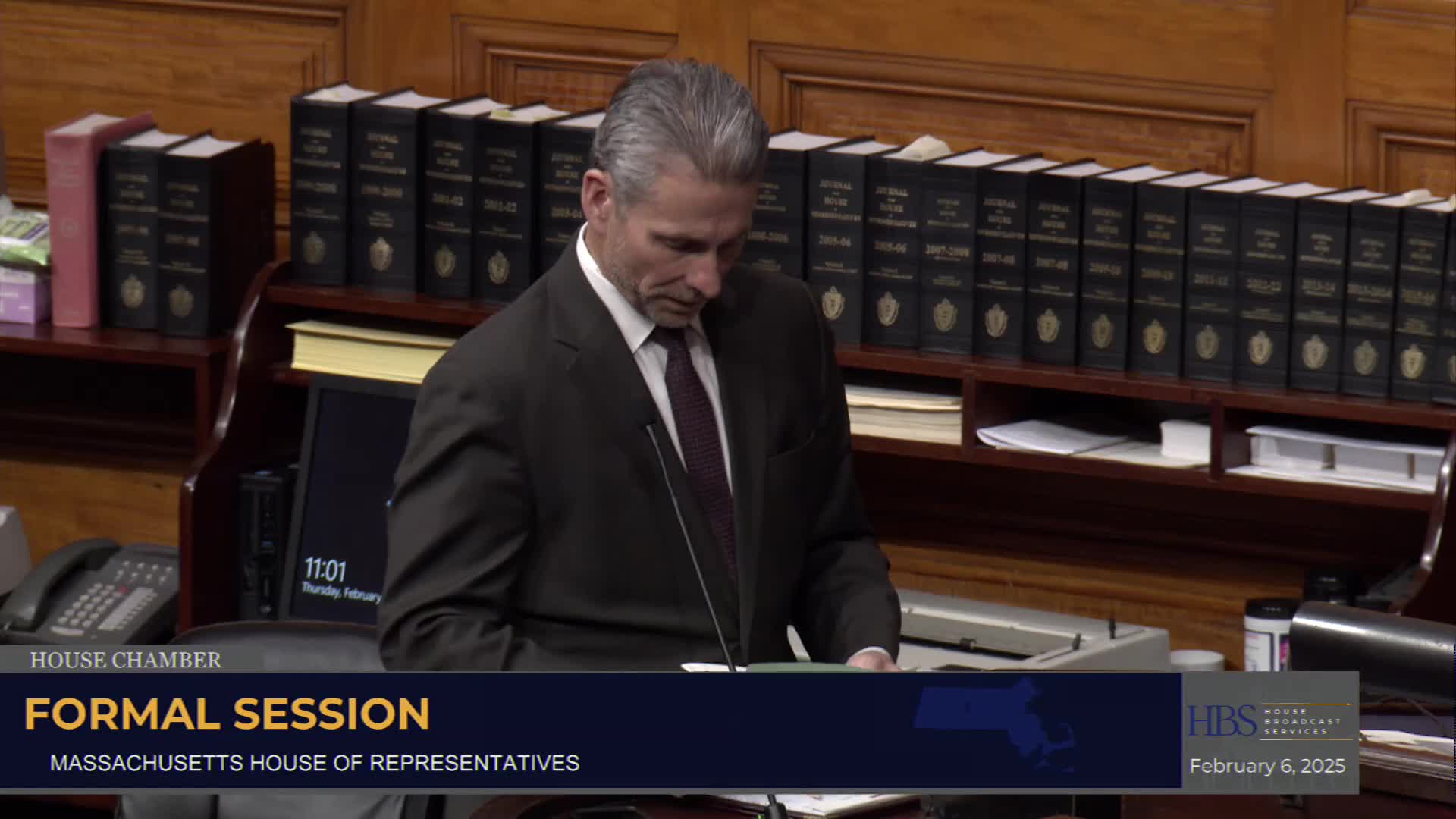
Representative Michael Wits of Boston, speaking on behalf of the bill's sponsors, said the measure was intended to preserve the Commonwealth's "right to shelter" while making the program fiscally sustainable. "This bill proposes spending $425,000,000 on the shelter program to fund it for the remainder of the fiscal year," Michael Wits said. He described new intake verification and eligibility language and said the bill authorizes the Executive Office to allow case-specific waivers "for acute circumstances," including qualified veterans or victims of domestic violence.
Supporters framed the bill as a necessary short-term course correction amid sharply higher shelter demand. The bill text and sponsor remarks note that the program had roughly 6,100 families in the system at the end of January 2025, down from a peak of about 7,700 families the previous year; the bill would temporarily cap total capacity at 4,000 families by the end of 2025.
Opponents urged more extensive checks or argued proposed eligibility changes would create new barriers for vulnerable families. "I don't feel comfortable relying on [self-attestation]," said Mr. Jones of North Reading while urging broader, cross-jurisdictional background checks. Representative Day of Stoneham warned that more intrusive requirements could function as a "backdoor" way to limit the right to shelter and urged rejection of measures that he called unrelated to providing emergency shelter to families with young children.
Several proposed amendments to the bill were debated and rejected on the floor, including motions that would have (a) expanded background-check requirements beyond the bill's standard checks, (b) reduced the supplemental appropriation from $425,000,000 to $200,000,000, and (c) imposed a one-year Massachusetts residency requirement for eligibility. Other amendments were adopted to extend protections: the House approved a redrafted amendment to prioritize presumptive eligibility and extensions for families with very young children and later adopted an amendment to allow disability-related extensions and supports for people transitioning to supportive housing.
The House ordered the bill to a third reading and ultimately passed the measure "to be engrossed" on a roll-call vote; the clerk recorded 126 members in the affirmative and 26 in the negative on the engrossment vote, and the bill was passed to be engrossed. The measure will proceed through the remaining legislative steps required before final enactment.
House action focused on short-term funding and operational changes while preserving statutory hardship waivers and some existing protections. Floor debate repeatedly returned to the balance lawmakers said they must strike between sustaining the right to shelter, ensuring resident safety in congregate settings, and managing mounting fiscal pressures.
Votes at a glance
- House Bill 57 (Supplemental appropriation and EA program reforms): Passed to be engrossed (clerk tally on engrossment vote: 126 affirmative, 26 negative) - Amendment (expanded background checks beyond bill language): Not adopted (floor vote) - Amendment (reduce appropriation to $200,000,000): Not adopted (floor vote) - Amendment (one-year Massachusetts residency requirement): Not adopted (floor vote) - Amendment (redrafted to add presumptive eligibility/extensions for young children): Adopted (floor vote) - Amendment (disability-related extension/supports for those transitioning to supportive housing): Adopted (floor vote)
What to watch next
The bill will be engrossed and follow the Legislature's remaining steps before potential enactment. Lawmakers noted they expect further budget debate in April during the FY'6 budget process and said the administration will implement the verification and waiver procedures outlined in the bill while answers from federal partners remain uncertain.