Get Full Government Meeting Transcripts, Videos, & Alerts Forever!
Get email alerts on the School Funding topic
No spam. Unsubscribe anytime.
Rural superintendents warn declining enrollment and rising insurance costs are squeezing small Florida districts
Summary
Superintendents representing small counties told the Senate committee that student losses to homeschool and voucher programs, volatile insurance premiums and tight FEFP forecasting are forcing staff reductions and heavier reliance on consortia for cost control.
Superintendents from multiple small Florida counties told the Senate Committee on Education Pre-K through 12 that falling enrollment, rising property and health insurance costs and the state funding model are straining already tight rural school budgets.
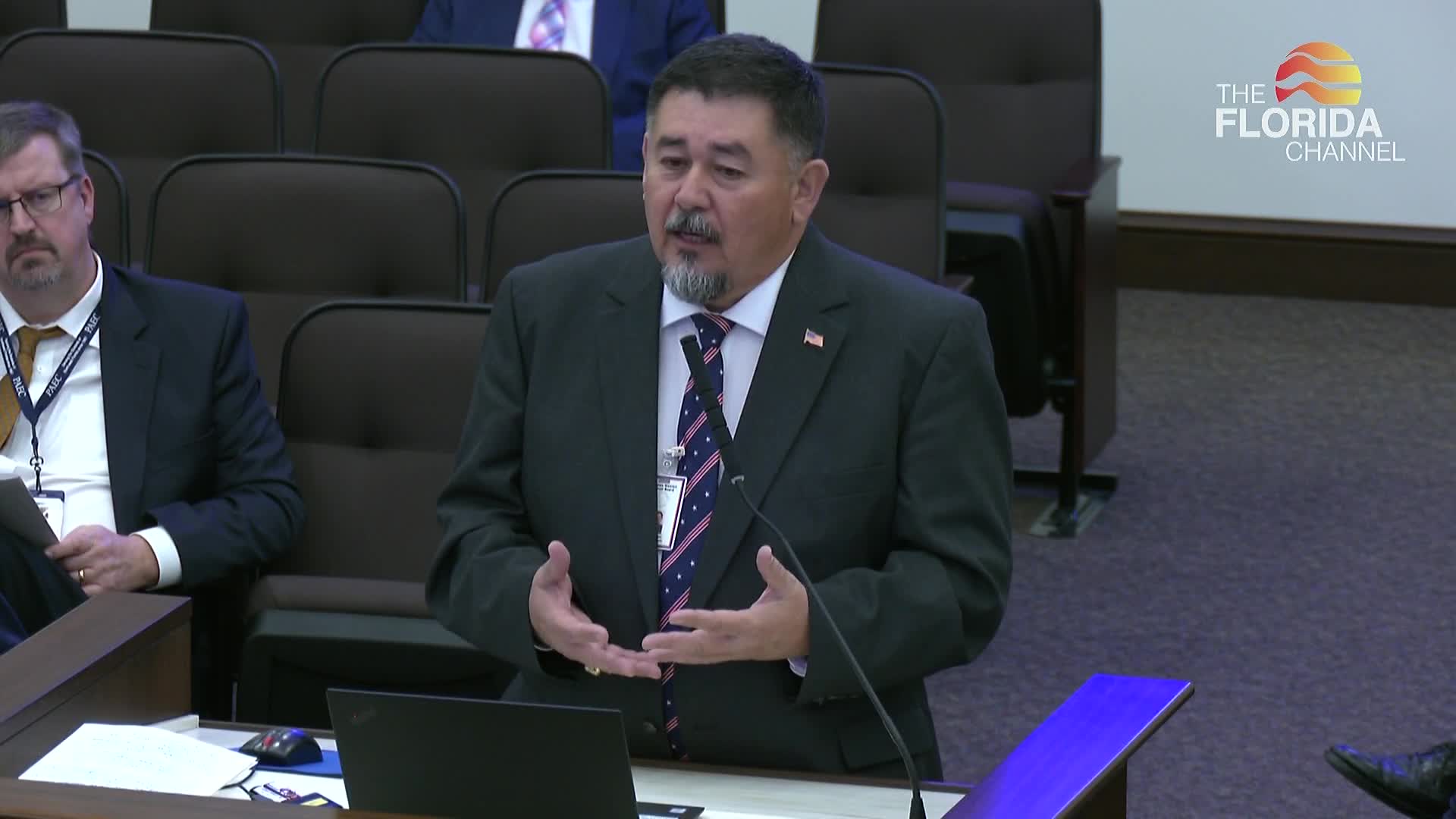
Holmes County Superintendent Buddy Brown said his district lost about 200 students in the last 14 months, a drop he said already forced personnel cuts and threatens further reductions. "I've lost in the last 14 months 200 students from my hallways," Brown said, adding that he had reduced staff by 20 positions the prior year and might need to cut as many as 30 more.
Why it matters: Florida districts are funded based on reported full-time-equivalent (FTE) students and local revenue; sudden midyear losses to homeschooling, scholarship programs or private schools reduce future funding and leave small districts with fixed staffing obligations. Several superintendents told the committee that the FEFP forecasting and reconciliation process makes it difficult to respond quickly when students leave after the fiscal year begins.
Key details - Enrollment and budgeting: Witnesses described a budgeting process that begins 18 to 24 months ahead of the school year and said current forecasting tools do not fully account for recent shifts in school choice and homeschooling. That timing lag, they said, forces districts to either carry unneeded staff or to make midyear cuts when funding is adjusted. - Insurance exposure: Superintendents described steep, sometimes double-digit increases in health and property insurance. One superintendent said his district currently spends more than $1 million a year on insurance; Daryl Taylor described consortium-level property coverage of $65 million with a 2% deductible capped at $5 million and said navigating claims and renewals required consortium support after Hurricane Michael. - Shared services as mitigation: Witnesses and consortium leaders identified cooperative purchasing, pooled insurance/risk-management arrangements and shared IT/finance services as key tools for reducing per-district costs. Senators and presenters discussed expanding shared payroll, MIS and finance back-office options as a potential savings strategy.
Examples from testimony - Calhoun County (Daryl Taylor) reported extensive storm damage after Hurricane Michael and credited the consortium with handling claims and renewals. - Holmes County (Buddy Brown) described household-level tax-base limits and said his districtwhich has a low property-value basecannot compete on teacher pay with adjacent counties; he tied that gap to both recruitment challenges and potential staff reductions.
Policy questions raised Senators asked about targeted FEFP adjustments (transportation funding and local effort options), and presenters suggested additional state support for property and health insurance pooling, more flexible categoricals and help stabilizing revenue for small, rural districts.
Ending Superintendents asked lawmakers to examine how the FEFP and state policies account for rapid changes in enrollment and to consider targeted interventions to ease insurance and transportation costs for small rural districts. No committee vote was taken during the hearing.