Get Full Government Meeting Transcripts, Videos, & Alerts Forever!
Get email alerts on the Black History Presentation topic
No spam. Unsubscribe anytime.
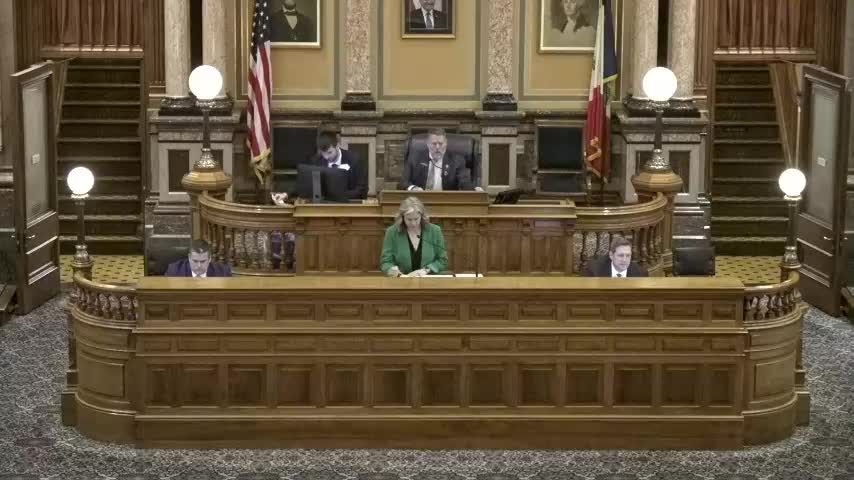
Rep. Henderson honors Paul Robeson in Black History Month presentation to the House
Summary
Representative Henderson delivered a Black History Month presentation recounting Paul Robeson's life as an athlete, scholar, performer and activist, calling Robeson "one of my personal heroes."
Representative Henderson of Woodbury delivered a Black History Month presentation on the House floor, recounting the life and career of Paul Robeson and calling him "one of my personal heroes." Henderson said he first learned about Robeson from his third-grade teacher and described Robeson's accomplishments in athletics, academics, the arts and political activism.
Why it matters: The floor presentation highlighted the multifaceted legacy of a historical figure who, according to the presentation, combined achievement in sports and law with a career in performance and activism. Members use Black History Month observances to put historical context before the chamber and to note contributions of Black Americans to public life.
What Henderson said: Henderson recounted that Robeson was born in Philadelphia in April 1898, moved to New Jersey, and grew up as the son of an African Methodist Episcopal minister in Somerville, New Jersey. Henderson said Robeson "graduated from Somerville High School" where he excelled in multiple sports and performed on stage, won a statewide academic contest that brought him to Rutgers College in 1915, and was "the third African American student" on campus. Henderson described Robeson's academic honors including Phi Beta Kappa and his subsequent law degree, saying Robeson attended New York University School of Law and graduated from Columbia Law School in 1922 while playing professional football for the Akron Pros and Milwaukee Badgers.
Henderson also summarized Robeson's performing career and political activism: he referenced Robeson's stage roles and recordings, cited Robeson's involvement with unemployed workers and anti-imperialist movements in the 1930s, support for the Republican cause in the Spanish Civil War, and continued advocacy during and after World War II. Henderson said he "remember[s] watching him marching alongside Martin Luther King in Birmingham," and concluded by calling Robeson a "great American, and one of my heroes." Henderson closed the presentation with personal reflections on Robeson's influence on his own life as a teacher, coach and legislator.
Context and limits: The remarks were a floor presentation and not a policy debate; no motions, votes or legislative actions followed from the presentation during the session.