Get Full Government Meeting Transcripts, Videos, & Alerts Forever!
Get email alerts on the Wildfire Preparedness topic
No spam. Unsubscribe anytime.
Windsor‑Severance Fire Rescue reviews California wildfire lessons, outlines local readiness
Summary
Windsor‑Severance Fire Rescue officials briefed the Severance Town Council on wildfire response, resources and community preparedness during the council’s Jan. 28 work session.
Windsor‑Severance Fire Rescue officials briefed the Severance Town Council on wildfire response, resources and community preparedness during the council’s Jan. 28 work session.
The presentation summarized why recent catastrophic fires in California outpaced municipal systems and described the fire district’s current local capabilities, mutual‑aid arrangements, deployment practices and community programs intended to reduce risk.
Fire leadership told the council that the scale and wind conditions at the Palisade/California incidents made suppression extraordinarily difficult and that even large jurisdictions lack the water and engine resources needed for that event. Division Chief Andy Fredrickson said many of the California losses were driven by embers and “inside‑out” house ignitions rather than external exposure, and that sprinklers and defensible space reduce the chance a single home fire will spread. Fredrickson said, “A lot, not all, but a lot of the fires that happened in California were actually inside out fires. ... If you have a fire within a home that a sprinkler then puts out, it doesn't get out.”
Why it matters: Severance lies inside the Windsor‑Severance Fire District and shares mutual‑aid agreements across the Front Range. Council members asked whether local water systems or residential sprinkler requirements would mitigate the risk and how residents should respond if they see smoke.
Key takeaways
- Mutual aid and deployments: The district participates in state and interstate mutual‑aid; it sends crews and apparatus to large incidents and receives help in return. Staff said deployments are reimbursed by state or federal authorities and that deployments typically send three personnel—usually one engine boss and two firefighters—per team. The district averages two to three out‑of‑district deployments per year but may do more in severe seasons.
- Local apparatus and capacity: Officials described the district’s fleet: four brush trucks (about 300 gallons each), two deployable tactical tenders (about 2,000 gallons each) and an incoming Type‑3 apparatus (~500 gallons). Staff said they maintain local coverage when units deploy, and that the district can send one or two deployment teams without leaving the community without front‑line resources.
- Water, sprinklers and defensible space: Speakers said building residential water systems to match the demand of a multi‑town firestorm would be financially impractical. Fredrickson emphasized that defensible space and fire‑resistant construction reduce structure‑to‑structure ignition. Council members pressed whether local sprinkler rules would require increased water‑system capacity; fire staff said the effect depends on system design and whether many systems operate simultaneously.
- State code, Firewise and local enforcement: Staff described the Colorado Wildfire Resiliency Code Board and a 2023 state bill that requires jurisdictions to adopt wildfire‑resiliency code elements. Officials said the state board’s timeline expects a published model code by July and local adoption of aspects by Oct. 1, with an effective date of Jan. 1 (per the presentation). Fire staff also recommended community programs such as Firewise landscaping, defensible‑space work, home‑surveys and evacuation planning.
- Community outreach and programs: The district’s public educator will focus on fall prevention and senior safety in 2025. Crews carry spare smoke and CO alarms and batteries and will install them when they encounter missing or failing devices during calls. Staff said they run home‑safety visits, battery‑replacement efforts and education at senior facilities.
- Emergency response scope: Fire leadership reviewed the district’s all‑hazard role—medical response, technical rescue, hazardous‑materials response and typical structure fire suppression—pointing out that emergency medical services make up the majority of daily calls.
What officials said
Andy Fredrickson, Fire Marshal and Emergency Manager, Windsor‑Severance Fire Rescue: “A lot, not all, but a lot of the fires that happened in California were actually inside out fires. ... If you have a fire within a home that a sprinkler then puts out, it doesn't get out.”
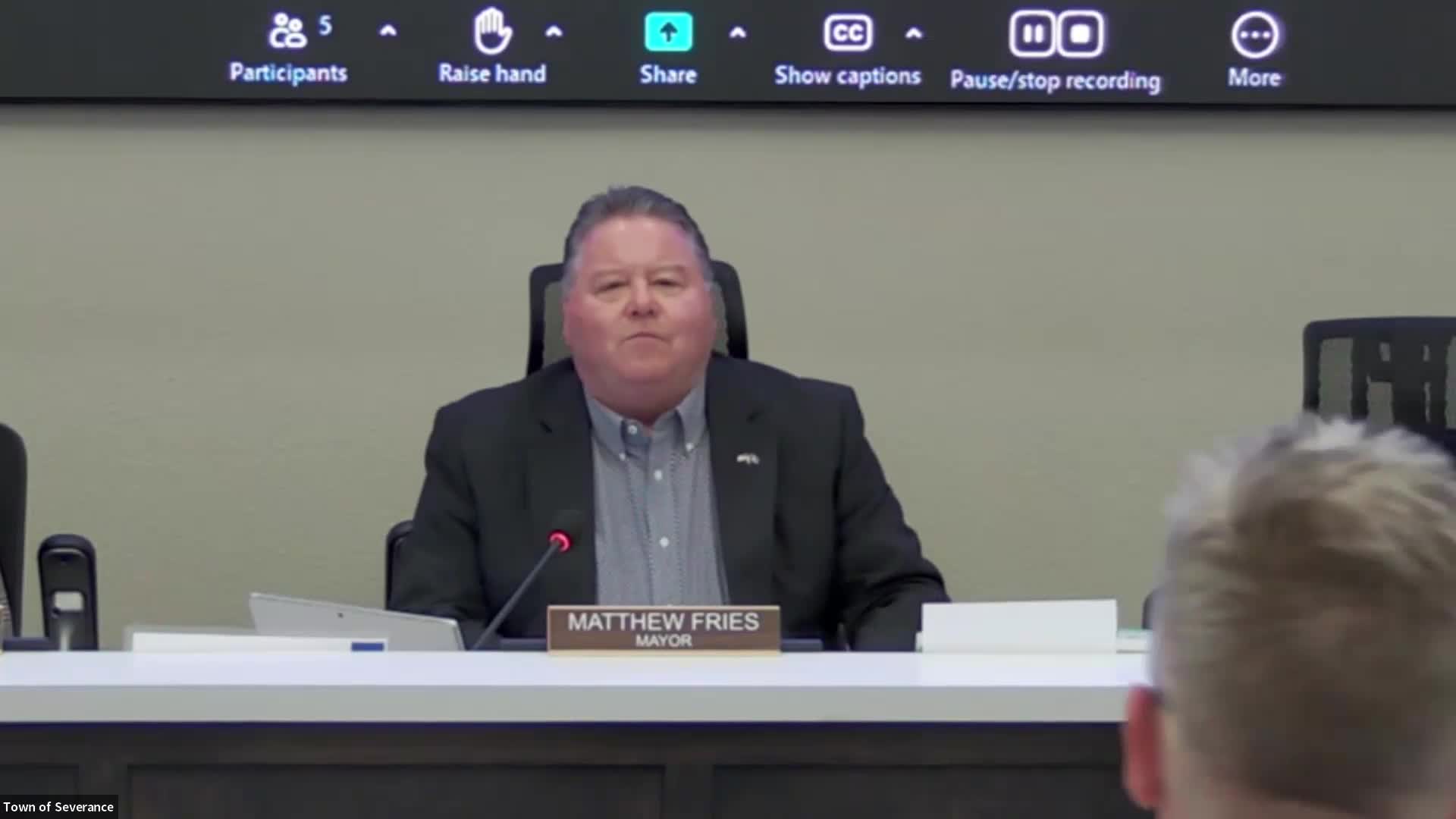
Mayor John Friess (Mayor): “The good that comes out of that is the education process back to the community.”
Context and limits
- No new local ordinances were proposed or adopted at the Jan. 28 session. Staff framed the presentation as education and Q&A following a major regional incident.
- Officials noted reimbursement rules: deployments are typically paid for by state or federal incident funds; the district said sending personnel and vehicles for mutual aid does not create an ongoing local cost for those deployments.
Ending
Council members thanked district staff and asked for ongoing public education and prepared materials for residents; staff said they will continue outreach, update the council as the state resiliency code work proceeds and provide materials for social media and the town website.