Get Full Government Meeting Transcripts, Videos, & Alerts Forever!
Get email alerts on the Annexation topic
No spam. Unsubscribe anytime.
Severance council directs staff to contact seven non‑annexed properties after sidewalks, services gap identified
Summary
Council looked at seven properties inside Severance’s built area that are still in Weld County, identified sewer, water and service gaps and directed staff to begin owner outreach about voluntary annexation and right‑of‑way for sidewalks to complete the town’s safe‑passage network.
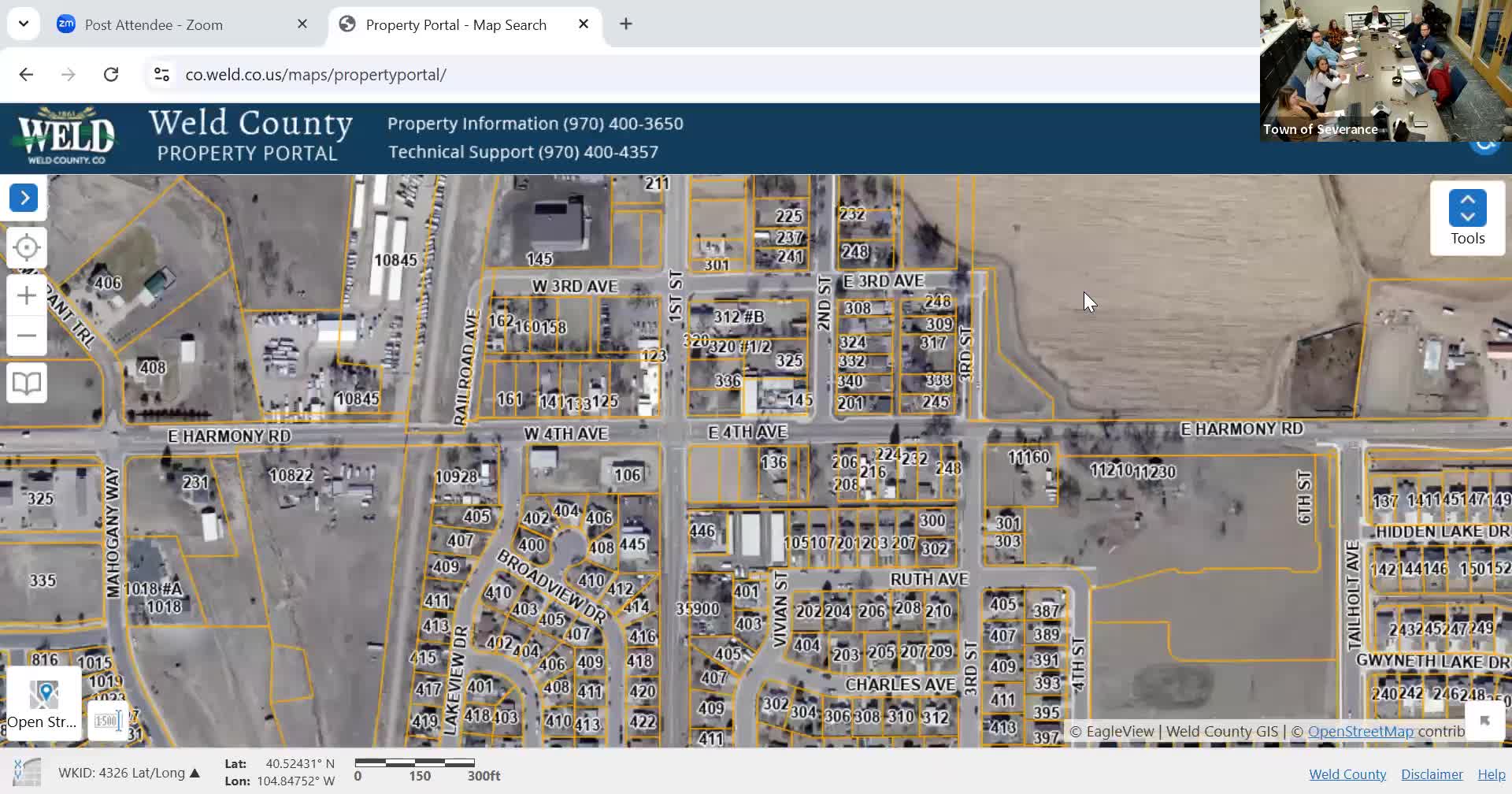
Town of Severance leaders spent much of a work‑session discussion on Jan. 14 examining seven properties inside the town’s developed area that remain unannexed and lack sidewalks, complicating the town’s goal of continuous “safe passageways.” The council directed staff to contact each property owner and report back on interest in voluntary annexation or granting right‑of‑way so the town can complete sidewalk connections.
Town Manager Nick Wharton told council staff had mapped seven parcels that sit amid Severance development but remain in Weld County. “Each, every one of the seven properties at least has one of our utilities,” Wharton said, noting some parcels are on town water but still rely on septic systems and therefore are outside town sewer service.
The issue combines transportation and public‑health concerns: incomplete sidewalks break planned pedestrian networks and several parcels remain on septic systems that town and county officials said are a potential health concern if they fail. Police and emergency services also respond to incidents at those addresses; Chief Chavez told council the town’s public safety staff frequently responds first because of proximity, even though some addresses are county jurisdiction.
Mayor Friese said the council’s immediate goal is not revenue. “I don’t want people thinking, ‘oh, we’re just going out, snatching, and grabbing, so some grab some revenue,’” Friese said. “That’s not it.” The mayor framed the effort as seeking property owners’ buy‑in so everyone in the surrounding neighborhood follows the same standards for code compliance and sidewalk access.
Council members discussed three broad approaches: 1) ask owners to voluntarily annex and work with the town on right‑of‑way easements and code compliance; 2) negotiate easements or agreements that allow sidewalks while leaving the property in the county; or 3) as a last resort, pursue involuntary or forced annexation under state law (a step council members said they prefer to avoid). Several council members also signaled they expect mixed responses and recommended staff approach owners individually.
Town staff described the likely next steps: confirm which utilities and fees (water, transportation, stormwater) appear on existing bills, check whether properties already pay any town transportation fee, confirm sewer service boundaries, and begin owner outreach. Wharton said he would start conversations with individual owners and with Weld County on permitting and septic enforcement where needed.
Councilmembers pressed staff to report back with a recommended outreach plan and timeline. Wharton said he would begin owner outreach and return with options, including proposed easement language or voluntary annexation terms.
If owners refuse and the town later determines sidewalks are necessary for public safety and connectivity, council members said they would revisit more forceful options, but emphasized an initial effort to secure voluntary agreements.
Ending: The council left the issue open for staff follow‑up, asking for a report to return to council with owner responses and recommended next steps for securing sidewalks and addressing septic and service gaps.