Get Full Government Meeting Transcripts, Videos, & Alerts Forever!
Get email alerts on the Downtown Development topic
No spam. Unsubscribe anytime.
Castle Rock council reclaims final say on large downtown projects; asks staff to expand neighborhood notice radius
Summary
The Town Council voted to make the Downtown Design Review Board advisory for projects of 10,000 square feet and larger and directed staff to return a draft ordinance. Council also asked staff to study expanding neighborhood notice from 500 to 2,500 feet for larger developments.
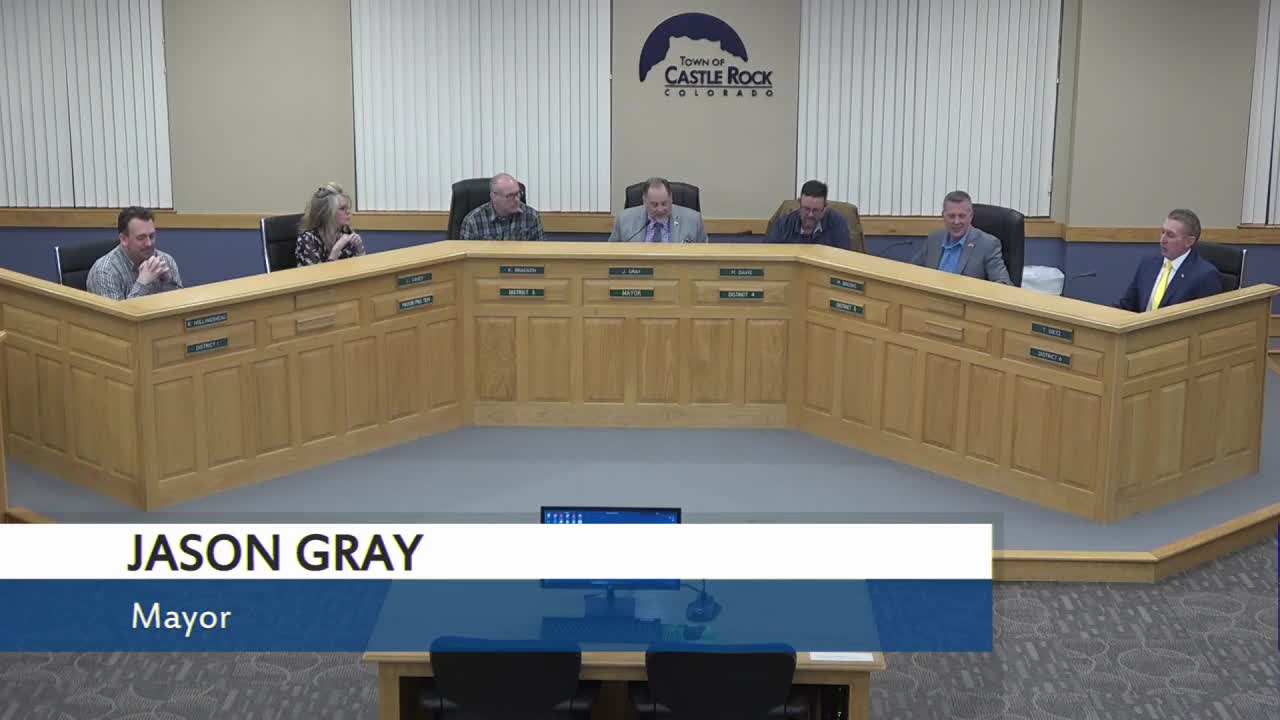
Town of Castle Rock Councilmembers voted unanimously to require that future downtown development site plans of 10,000 square feet or larger be advisory-only decisions by the Design Review Board (DRB) and return final decisions to the elected town council.
The move, made by Councilmember Tim Dietz, directs town staff to draft an ordinance changing the DRB’s decision-making role in the Downtown Overlay District so that site development plans at or above the 10,000-square-foot threshold will be recommendations only, with council making the final approval.
Dietz said he has raised the issue for years and framed the change as restoring elected representation on larger projects: “All design and development shall be decided by the elected town council,” he said during his motion. Mayor Pro Tem Kavey and several councilmembers described the action as a compromise intended to preserve the DRB’s design expertise while giving council a formal vote on major projects.
Town attorney and planning staff told the council the change requires amending the municipal code and will follow a two-reading ordinance process; staff said they will prepare the background information and an ordinance for first reading at a subsequent meeting.
Separately, Mayor Pro Tem Kavey asked staff to evaluate expanding neighborhood notice for larger developments from the current 500-foot radius to 2,500 feet. Council voted unanimously to send that request to staff for a recommendation — including cost and applicability thresholds — with councilmembers signaling they expect a proposed policy that would exempt small-scale work such as accessory-dwelling units.
Why it matters: the revisions change how large-scale design decisions in the downtown will be decided and enlarge the group of residents alerted about major projects. The council emphasized it intends to keep financial review and tax-increment financing issues separate from the DRB design changes.
What happens next: staff will draft an ordinance to implement the DRB change (two readings required) and return with options and cost estimates for revising the neighborhood notice radius.