Get Full Government Meeting Transcripts, Videos, & Alerts Forever!
Get email alerts on the Budget Funding topic
No spam. Unsubscribe anytime.
RTD leaders warn of federal funding uncertainty but say local revenues keep 2025 budget intact
Summary
RTD officials told the committee federal policy changes could affect discretionary grants (including some planning and alternative‑fuel programs) but said the district's 2025 budget is based on stable sales and use taxes and approved grants; RTD said roughly 75% of revenue comes from sales taxes, 20% federal and 5% fares.
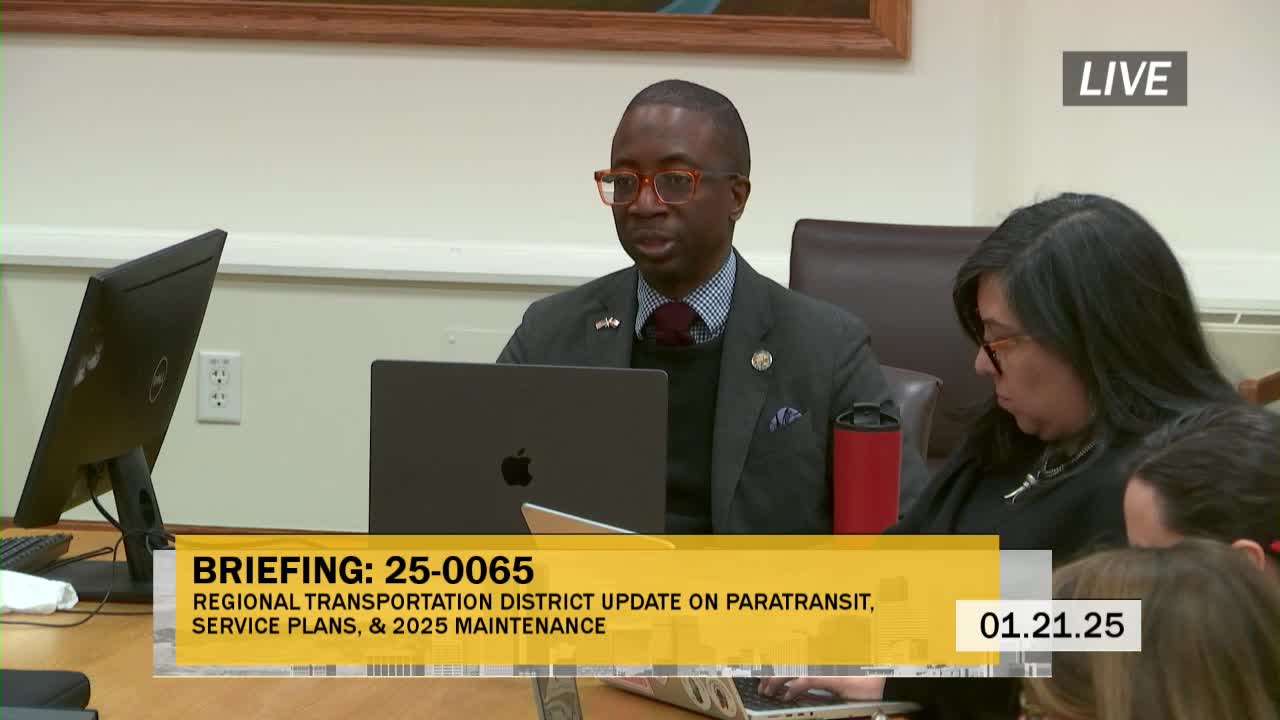
Denver ' Regional Transportation District officials told Denver's Land Use, Transportation and Infrastructure Committee on Jan. 21 that federal policy changes could affect some discretionary grant programs but that RTD's 2025 budget was already adopted using known revenue streams.
CEO Deborah Johnson said recent executive actions at the federal level require agencies to review allocations for certain discretionary programs, including some alternative‑fuel and planning grants. She said that while formula funding flows as law specifies, discretionary grants such as RAISE or other notice‑of‑funding‑opportunity programs could be delayed or restructured pending federal review and changes.
Director Michael Guzman and Johnson said RTD's 2025 budget has been adopted and was built on confirmed receipts: roughly three‑quarters of RTD revenue comes from sales and use taxes, about 20% from federal sources, and roughly 5% from farebox revenue. "For right now, for the first year of this new administration, we have a solid plan in place and the finances are in order to be able to continue providing service," Guzman told council members.
RTD leaders said they are monitoring federal developments, including service reauthorization and continuing resolutions that could affect timing of drawdowns for grants. They urged council members that while RTD will watch federal changes closely, the agency has reserve and local revenue structures that lower near‑term vulnerability to federal discretionary adjustments.
Ending: RTD said it would inform the committee if discretionary funds are altered and will continue to rely primarily on local sales taxes and identified grants for near‑term budgeting.