Get Full Government Meeting Transcripts, Videos, & Alerts Forever!
Get email alerts on the Oil And Gas Regulation topic
No spam. Unsubscribe anytime.
Loveland council hears industry and legal experts as staff seeks direction on local oil and gas rules
Summary
City staff presented draft oil and gas regulations ahead of a moratorium deadline and invited technical input from industry and counsel. The panel and council focused on setbacks, permitting tracks, monitoring requirements and how local rules should relate to state (ECMC/CDPHE) standards.
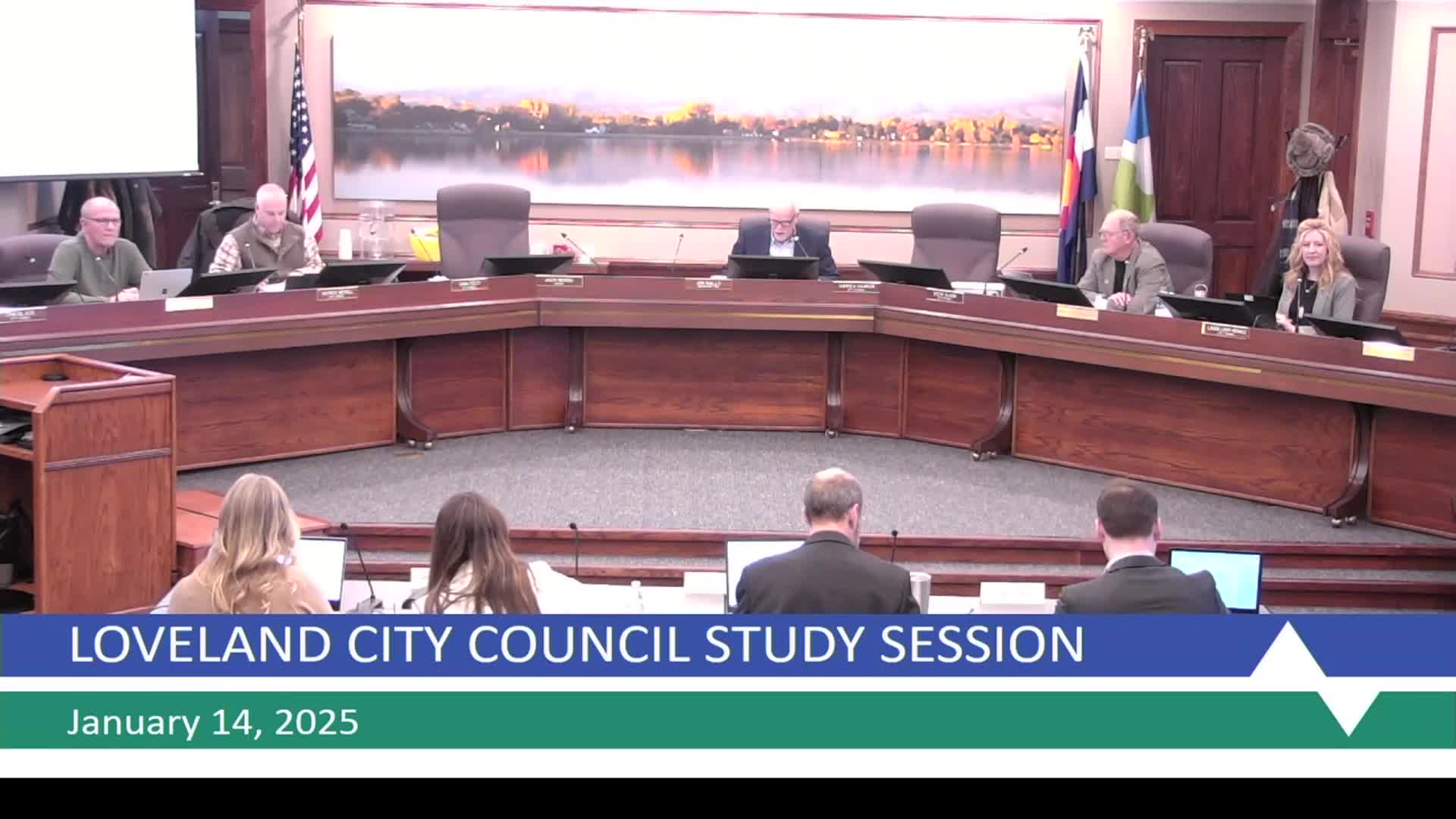
City of Loveland staff on Tuesday presented draft oil and gas regulations and asked council for guidance ahead of a moratorium that staff said will expire in early March 2025. The discussion paired technical briefings from industry representatives with a review of proposed local rules drafted by the city’s special counsel.
The matter matters because Loveland must decide whether to adopt locally tailored time-, place- and manner-style rules that would sit alongside state oversight by the Energy and Carbon Management Commission (ECMC) and CDPHE. Councilors asked whether local rules would add protection for residents, duplicate state rules, or expose the city to legal challenge.
Brett Stewart, assistant to the city manager, outlined the schedule and intent, saying staff hoped to return the draft for council first reading in late January and a second reading in February if council provided direction. Stewart said the city has been operating under an administrative decision model and that the draft would shift more decisions into a public, planning-commission/city-council review path: “we are considering an additional public hearing process… and then ultimately, the decision would fall with the planning commission.”
Industry and counsel presented technical and legal context. Tricia Fanning, president of Ardor Environmental LLC and executive director of the Colorado OG Society, urged caution about local changes and argued the state regulatory framework already imposes stringent protections. “The rules being proposed by the city of Loveland are duplicative, unnecessary, unreasonable, and designed for 1 simple purpose, to ban oil and gas within the city,” Fanning said, urging reliance on state rules and permitting tracks used in prior local permits.
Kate Schwartz of the American Petroleum Institute Colorado noted recent state rulemakings and urged the city to allow the new state rules to take effect before imposing additional local requirements: “We don’t have to choose between revenues from oil and gas and, being in the community and being clean and protective. We can do both,” she said, highlighting local tax revenue that industry provides to school districts.
Matt Sura, the city’s special counsel on oil and gas, reviewed the statute (referred to in the presentations as SB 19 1 81) that expanded local regulatory authority and summarized core elements of the draft: zoning limits on where wells and production facilities could be permitted, a 1,000-foot presumptive setback from existing platted residences with the state 2,000-foot “presumptive” setback from certain sensitive uses as a reference point, and a public review track for siting decisions. Sura explained the rationale for a local decision-maker: “you have the ability to regulate every industry that could come into your jurisdiction and now after 2019, you have the ability to regulate for the first time the oil and gas industry.”
Councilors pressed staff and the panel on specifics: how many active sites exist in Loveland (staff said one active site had been pre‑approved and drilling was in progress at a pad outside current city limits), how setbacks would affect vacant developable parcels (maps in the packet showed much of some business/industrial zones would be excluded by a 1,000-foot residential setback), and whether technical advances such as closed-loop drilling and electrification reduce modeled short‑term risks. Sura noted the draft requires three years of continuous emissions monitoring at wellheads post‑drilling — longer than state minimums — and a complaint response requirement to address noise within 24 hours.
Several councilors voiced concern about the potential legal and staffing costs of going beyond state minimums. Councilor Olson asked whether the city could avoid extra administration by incorporating ECMC rules directly; staff confirmed following state rules would automatically adopt state updates. Others, including Councilor Lyte Kovacs and Councilor Black, said they wanted stronger local protections and asked to see the draft returned for a formal vote with modifications; Councilor McFall and others argued Loveland’s limited oil and gas potential and the current state regime made stricter local rules unnecessary now.
City staff offered options: bring the draft back on scheduled ordinance reading dates, delay for further refinements, or not proceed. No formal vote or ordinance was recorded at the study session; staff requested direction and additional council feedback. Brett Stewart summarized the procedural options for the council and asked which path the council preferred.
The study session included a sizeable public Q&A and speakers who raised health and environmental concerns and urged stricter local regulation; others urged reliance on the state framework and noted industry measures and revenue. The council did not adopt an ordinance at the meeting and directed staff to return the item for further consideration.
Ending: The council’s next steps were left open: staff said it would return the draft on the city’s published ordinance schedule if council wanted that route, otherwise staff would pause or continue revisions. Any formal action will be reflected in future agenda materials and meeting minutes.