Get Full Government Meeting Transcripts, Videos, & Alerts Forever!
Get email alerts on the Paratransit Services topic
No spam. Unsubscribe anytime.
RTD says paratransit demand unsustainable; proposes fare, trip‑cap and program changes
Summary
RTD told Denver's Land Use, Transportation and Infrastructure Committee that its Access on Demand paratransit program has grown from about $85,000 monthly to roughly $1.2 million monthly and that the agency is considering fare, trip‑cap and eligibility changes to make the program sustainable.
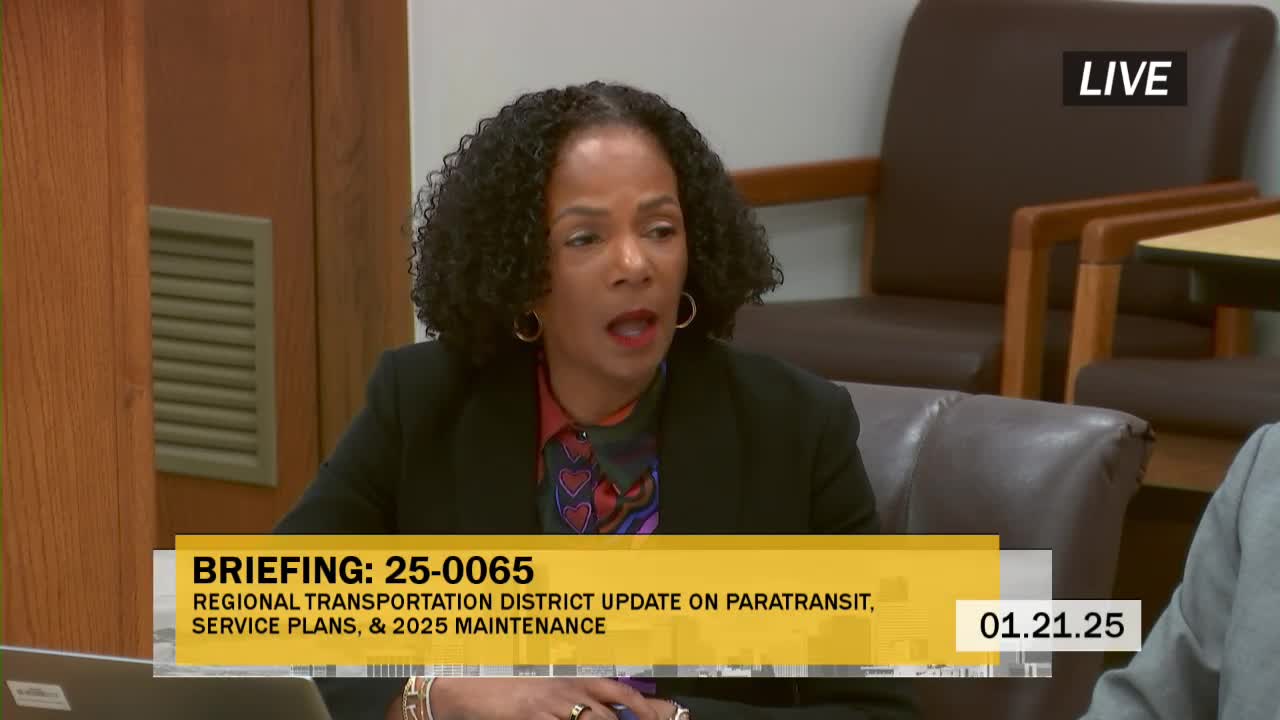
Denver ' The Regional Transportation District told Denver's Land Use, Transportation and Infrastructure Committee on Jan. 21 that its supplemental paratransit program, called Access on Demand, has grown quickly and is not financially sustainable in its current form.
Fred Worthen, RTD assistant general manager for bus operations, said the Access on Demand pilot began as a small test and expanded across RTD's service area; costs rose from roughly $85,000 per month to about $1,200,000 per month in approximately two years. Worthen said RTD asked the American Public Transportation Association to conduct a peer review, which produced recommendations that RTD is now vetting with riders and stakeholders.
Worthen described initial recommendations RTD brought to its board last fall: implementing a base fare for Access on Demand equal to the AccessRide paratransit fare (currently $4.50 per trip), offering a reduced fare for low‑income riders ($2.25), and reducing an initial 60‑trip monthly cap to a lower number. Worthen and CEO Deborah Johnson told the committee that the board may receive a revised set of recommendations for consideration in March, with final recommendations likely in April and implementation work over the summer and fall.
RTD emphasized the Access on Demand program is intended to supplement, not replace, federally mandated AccessRide service required under the Americans with Disabilities Act of 1990. Johnson and Worthen said they are also considering aligning Access on Demand's service area to mirror AccessRide (the ADA requires paratransit within three‑quarters of a mile of fixed routes and major rail stations), tightening eligibility pathways (for example, requiring a period of registered AccessRide usage before enrolling in Access on Demand), and strengthening recertification and suspension policies.
Worthen said the agency is studying a mixed‑fleet pilot (smaller sedans or wheelchair‑accessible minivans alongside larger cutaway vehicles) to reduce operating cost and improve rider comfort. He also said software and scheduling changes are planned: moving from pickup‑only on‑time performance metrics to measures that capture drop‑off timeliness, adding a customer portal, providing real‑time vehicle information and exploring same‑day trip availability when capacity exists.
Council members voiced concerns and offered lived experience: Council member Hines described the difficulty of booking AccessRide under earlier systems and stressed the importance of reliable trips for work and medical appointments. RTD officials said they have improved operational performance since new management took over; Worthen reported on‑time pickup performance for paratransit rose from about 70% last year to approximately 90% this year, while acknowledging drop‑offs still need improvement.
RTD said it is compiling public feedback from surveys, stakeholder meetings and open comment and will provide updated proposals to the board in the coming months. The agency did not release final fare or cap figures on Jan. 21 and warned that initial reduction scenarios discussed in board briefings were part of a broader public feedback process.