Get Full Government Meeting Transcripts, Videos, & Alerts Forever!
Get email alerts on the Natural Medicine Regulation topic
No spam. Unsubscribe anytime.
Denver committee advances local licensing proposal for natural medicine healing centers; would repeal 2019 psilocybin decriminalization ordinance
Summary
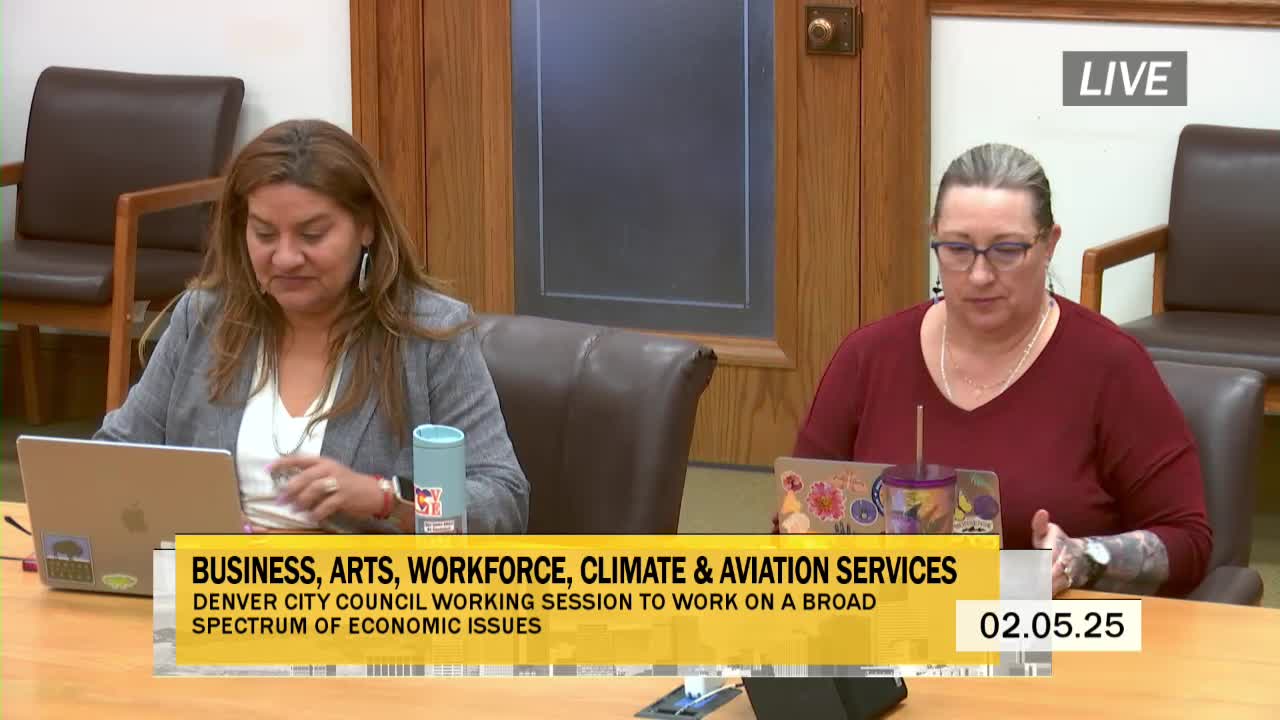
The Business, Arts, Workforce, Climate and Aviation Services Committee on Feb. 5 heard a proposal from Excise and Licenses to require Denver licenses for healing centers offering state‑licensed natural medicine services and to repeal initiated ordinance 301 (Denver’s 2019 psilocybin decriminalization measure).
The Business, Arts, Workforce, Climate and Aviation Services Committee on Feb. 5 heard an Excise and Licenses presentation and public comment on a proposed local ordinance that would require Denver‑level licenses for healing centers offering state‑licensed natural medicine services and repeal initiated ordinance 301, the 2019 Denver psilocybin decriminalization measure.
The committee was presented with the city’s design for a narrow, local licensing tier limited to healing centers — not cultivation, manufacturing or testing facilities — together with location, advertising and operational provisions intended to address neighborhood impacts while preserving access and equity.
City staff said Denver cannot prohibit state‑licensed natural medicine businesses but may regulate their time, place and manner. Under the state framework created after Proposition 122, the Colorado Department of Regulatory Agencies (DORA) and the Department of Revenue (DOR) license individual facilitators and a range of facility types. The city’s proposal relies on those state licenses for cultivation, manufacturing and testing facilities, and adds a Denver healing‑center license to address local concerns about venues that operate more like social or retreat spaces.
The proposed local rules and exemptions
Excise and Licenses staff described four main pieces of the ordinance: (1) require a Denver license for healing centers (with specified exemptions); (2) adopt location and operational requirements for healing centers; (3) ban outdoor advertising similar to the city’s marijuana rules; and (4) repeal initiated ordinance 301 (the 2019 Denver Psilocybin Mushroom Initiative) because the state legalization and regulatory framework has superseded portions of that local measure.
Staff said the local healing‑center license would not apply to: (a) bonafide religious, cultural or spiritual ceremonies performed by members of federally recognized tribes provided those ceremonies are not commercial and participants are informed the leader is not a licensed facilitator; or (b) facilities that operate only with clinical facilitators (professionals who hold an active Colorado medical/behavioral health license), because those clinical settings are more clinical than social in nature.
What a healing center is under the proposal
City staff summarized the state model used by DORA/DOR: participants undergo screening and a preparation session; a licensed facilitator or clinical facilitator administers the natural medicine at a licensed healing center and supervises the participant during the administration session; participants may not take natural medicine off‑site and unused product must be destroyed or returned to secure storage. Administration sessions have state minimum durations tied to dose (commonly three to five hours for standard administrations). DORA is also poised to permit microdosing sessions with a minimum one‑hour duration for up to 2 milligrams of psilocybin.
Staff noted DORA rules allow group sessions (up to 64 people) but require facilitator‑to‑participant ratios (typically 1:4, or 1:8 for microdosing). Those potential group models are a reason the city proposes a local license so Denver can address community impacts from higher‑density or social‑venue models.
Location, advertising, hours and zoning
The ordinance would align with state proximity requirements by prohibiting healing centers within 1,000 feet of a school or childcare facility. Staff surveyed zoning and prepared a map showing eligible and ineligible land under the proposed rules; planners said many residential and protected low‑density zones would remain ineligible under existing zone uses. The city would not set a general hours‑of‑operation limit for healing centers because staff told the committee a fixed closing time could create safety risks for participants still under effect; however, the city retains authority to impose license‑specific restrictions if investigations show neighborhood harms.
The proposal would prohibit outdoor advertising for natural medicine businesses, mirroring Denver marijuana advertising rules; staff said the goal is to reduce commercialization and prevent marketing that could reach minors.
Fees and state costs
Excise and Licenses proposed a low local fee structure — a $100 initial application fee and $100 annual renewal — to keep barriers low and support equity goals. Staff contrasted that with state healing‑center fees: DOR’s fees are differentiated by on‑site inventory (for 2025 staff cited $2,000 for a micro healing center and up to $5,000 for a standard healing center, with increases contemplated in 2026). Staff said city fees are limited to actual administrative cost recovery and the department expects to absorb initial workload within current staffing.
Stakeholder feedback and public comment
Staff described an extensive public‑engagement process that included a year of work group meetings with elders, Native and Indigenous representatives, medical and behavioral health professionals, industry representatives and mushroom growers to inform the draft. During the committee’s allotted public‑comment period, speakers urged measures to protect youth and limit commercialization. Key points raised by public commenters included requests to: ban edible forms (gummies and chocolates) that may appeal to children; maintain the 1,000‑foot school/childcare setback; limit the initial number of licenses while the program launches; and avoid zoning or setback rules that would concentrate healing centers in certain neighborhoods.
Practitioners who spoke urged that setbacks and zoning not unduly increase costs or prevent clinically oriented providers from offering services. One speaker who said he is an acupuncturist and facilitator in training said finding an available leased space that also meets a 1,000‑foot setback would be “extraordinarily difficult” and could limit access for patients.
Council questions and next steps
Committee members asked staff to provide additional zoning layers and to model a 500‑foot setback for comparison; Denver planning staff said the underlying zone uses (which limit many residential districts) interact with the proximity buffer in ways that concentrate eligible sites into industrial and mixed‑use corridors. Committee members also asked for clarification on the state versus city fee structures and on how tribal or cultural exemptions would work for open‑space ceremonies. Staff said clinical facilitators operating at existing licensed medical offices would be exempt from the local healing‑center license requirement (they would still need state facilitator or clinical‑facilitator licensing).
Formal action
During the meeting a member asked for a motion and a second on the proposal; the transcript records a request for a motion and a second but does not include a recorded roll‑call or final committee vote in the transcript supplied. (Motion/second requested; outcome and vote tally not recorded in the provided transcript.)
Why this matters
City staff and multiple speakers framed the proposal as an attempt to balance access, equity and public safety: Denver cannot ban state‑licensed natural medicine operations but can tailor time, place and manner rules to local neighborhoods. The committee’s questions and public comments focused on protecting youth, ensuring clinical access and avoiding unintended patterns that would concentrate services in specific communities.
Staff said they will continue monitoring state rulemaking and data trends as the program launches and are prepared to adjust local rules if community experience suggests additional controls are needed.
Ending
The committee requested additional zoning and map detail and staff said they will continue stakeholder work, training and public education as the state program and local licensing process move forward.