Get Full Government Meeting Transcripts, Videos, & Alerts Forever!
Get email alerts on the Shelter Conditions topic
No spam. Unsubscribe anytime.
Hotel‑site survey by House Keys Action Network finds maintenance, case‑management and guest‑policy shortfalls
Summary
An outreach survey of 175 hotel‑site shelter residents identified broken water access, pests, delayed maintenance, limited case‑management contact, food quality concerns and the guest‑policy as a leading cause of evictions. Organizers urged more staff training and standardized grievance procedures.
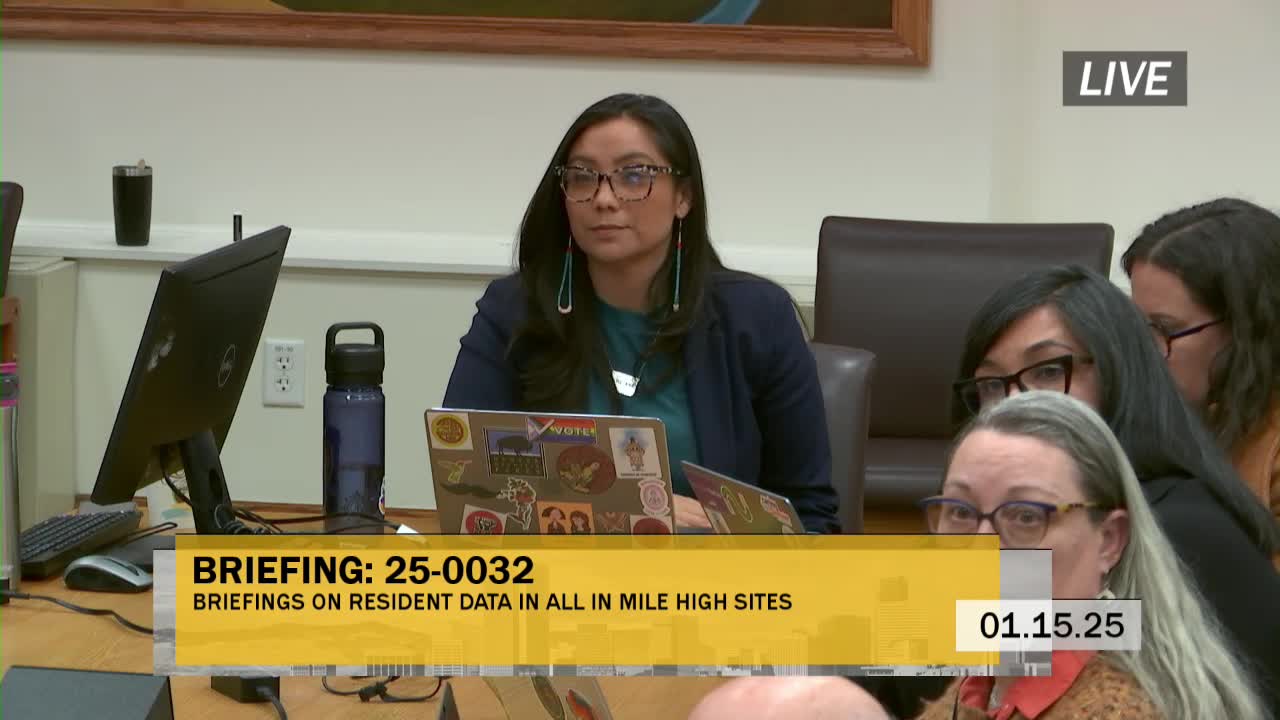
House Keys Action Network Denver presented findings from outreach surveys and interviews with residents at hotel‑based shelter sites during the committee’s Jan. 15 meeting, reporting responses from 175 survey participants and interviews conducted by outreach workers with lived experience.
Vee Reebbs and Anna, organizers with House Keys Action Network, said teams documented recurring maintenance and safety problems including extended periods without water at some sites (the DoubleTree was described as having no water access for months and requiring a shower truck), pest infestations and flooding at others. Reebbs read a maintenance complaint submitted by a resident describing suspected mice nesting behind a refrigerator and damaged wiring, and said residents had photographed mold, flooding and nonworking laundry machines.
Survey respondents reported slow maintenance response times in roughly 30–40 percent of cases and identified water and bathroom access as essential needs that remained inconsistent across sites. Reebbs said transportation barriers limited residents’ employment and service access and that many residents told outreach workers they wanted cooking access and culturally appropriate food; some residents had been part of a migrant family encampment that briefly ran cooking stations and later asked for the city to restore cooking options in shelter sites.
Case management emerged as a central concern. The presenters said some residents reported waiting 120 days without contact from a case manager. Organizers said case managers are necessary for housing applications and that 90 days commonly allotted at some sites is not sufficient time for many people to secure housing. Survey results showed many residents did not feel they could obtain stable housing within three months.
A recurring complaint was the guest‑policy, which organizers said led to evictions when residents hosted family or visitors; in open‑ended responses the guest policy was the single most commonly contested rule. Reebbs said many residents asked for a regulated visitor policy that would allow children and family visits rather than blanket prohibitions.
On safety, respondents reported mixed results: overall about half of respondents said they felt safe at their site, but the presenters said staff conduct and uneven security infrastructure — nonworking cameras, doors that do not lock automatically and inconsistent incident follow‑up — contributed to residents’ fears. Organizers recommended better staff training on de‑escalation and trauma‑informed practices, standardized grievance procedures that residents could use when denied services or facing eviction, and improved security infrastructure.
Why it matters: the survey represents a resident‑centered account of shelter conditions at multiple hotel‑site locations and raises operational concerns the committee could address through contract oversight, staff training, and standardization of rules and grievance processes. Organizers called for ongoing resident feedback loops and routine convenings with operators, stakeholders and people with lived experience to improve conditions.
Organizers asked the council to continue stakeholder convenings, ensure training for shelter staff, and adopt standardized grievance and visitor policies that prioritize resident safety and dignity.