Get Full Government Meeting Transcripts, Videos, & Alerts Forever!
Get email alerts on the Behavioral Health topic
No spam. Unsubscribe anytime.
Denver’s Behavioral Health Solutions Center provides crisis care, but lacks on‑site medical detox; city and provider outline access and referral changes
Summary
Denver’s Behavioral Health Solutions Center offers triage, short‑term stabilization and transitional shelter. Presenters and council members discussed capacity, who is eligible, new referral partners added in 2024, and limits on on‑site medically managed detox, including an upcoming Medicaid policy change affecting ASAM 3.2 services.
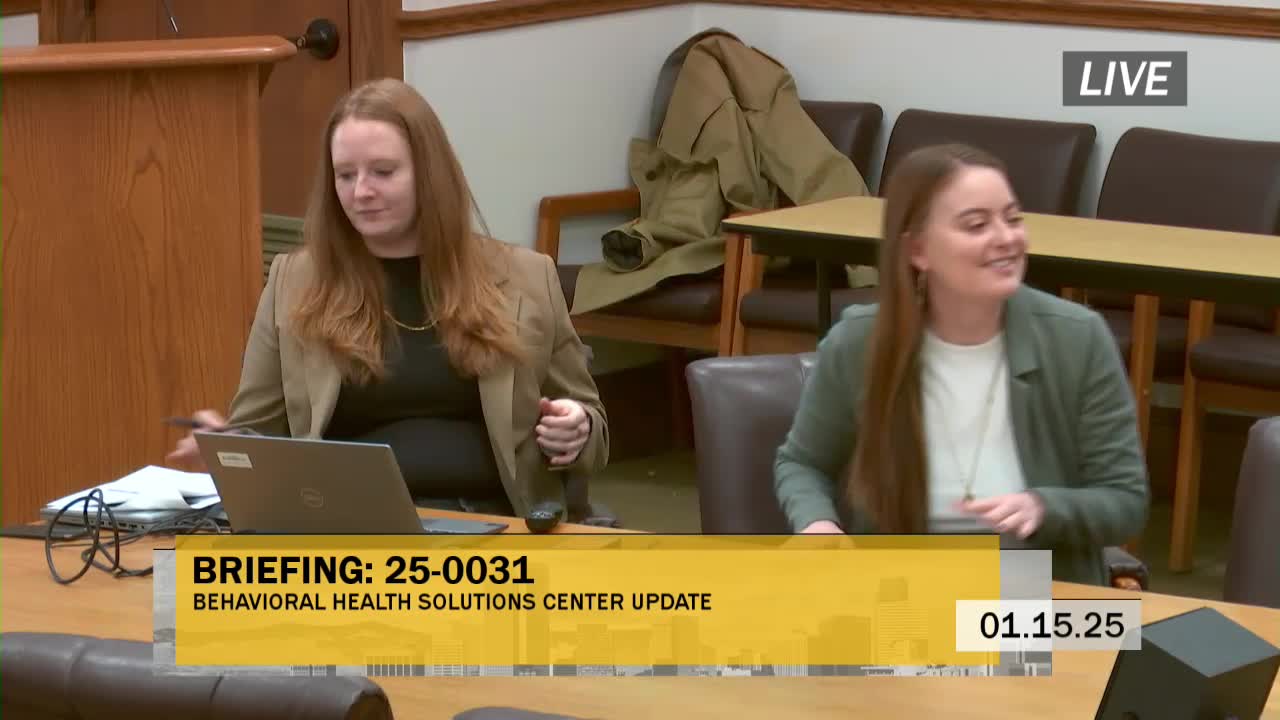
The Denver Department of Public Health & Environment and the center operator WellPower briefed the Safety, Housing, Education and Homelessness Committee on Jan. 15 about the Behavioral Health Solutions Center, a city‑operated crisis facility that provides triage, short‑term stabilization and transitional shelter for adults experiencing behavioral health crises.
The center, at 10th Avenue and Federal Boulevard in west Denver, opened in May 2021 in a Department of Human Services‑owned building and is operated by WellPower, Cassie Williams, behavioral health section manager at DDPHE, told the committee. “The Solutions Center provides crisis triage, crisis stabilization treatment, transitional sheltering, ongoing assistance for mental health and substance use, and assistance in transitioning back to the community,” Williams said.
Williams and Marian Roark, access to care manager for behavioral health at DDPHE, described three components of the center: a six‑room drop‑off center for initial peer support, nursing assessment and clinician triage (patients may stay up to 23 hours, 59 minutes); a 16‑bed crisis stabilization clinic with an average length of stay of four to five days for people who meet medical necessity; and a 30‑room transitional shelter for people without a safe discharge plan. Kevin, a program manager at the center introduced in the briefing, said census levels vary by component: the transitional shelter is typically near capacity, the drop‑off area usually has four to five of six rooms in use, and the stabilization clinic often houses about 12 of 16 beds due to short turnover.
The presenters said the center is voluntary and intended to divert people from emergency rooms and jails when treatment and support are the appropriate response. The center accepts adults who are “connected to Denver services” or who are found or responded to within Denver; DDPHE staff said referral eligibility is limited to individuals with significant interactions with designated first responders or other approved partners. Committee members asked whether people from outside Denver can be served; DDPHE answered that the center is not accepting clients from outside the city.
Presenters reviewed client data and demographics for 2024 (projected through end of quarter 3): the presentation reported 43 percent of people were housed at intake and 57 percent unhoused, comparable to an earlier cumulative figure. Gender intake in 2024 was reported as 56 percent male, 34 percent female, 4 percent nonbinary and 7 percent not identified. Racial and ethnic breakdowns were presented as comparisons to prior years, with shifts noted but described as modest. The presenters said they improved reporting systems in 2023–24 to view trends over time rather than cumulative aggregates.
DDPHE and WellPower detailed expanded referral partners added in 2024 to reach people who might not encounter traditional first responders. Presenters said the new access points include Denver Park Rangers, the Roads to Recovery program, outreach therapists with the Colorado Coalition for the Homeless, WellPower outpatient teams, Denver Cares and East Metro Detox; DDPHE staff said referrals from community partners are approved collaboratively with WellPower.
On substance use and detox, the committee was told the Solutions Center does not provide medically managed withdrawal care on site. Ellen Todd, associate director of crisis services for WellPower, said the center will accept people who have substances in their system so long as their medical presentation is manageable on site. “If it would be life‑threatening for them to withdraw from a substance at the Solution Center, then they would need to go to a medical facility that can facilitate that withdrawal and then come back,” Todd said. The presenters described coordination with detox partners — for example, sending clients to Denver Cares or East Metro Detox with a letter and phone referral and requesting that those partners return clients to the center after detox so they can engage in stabilization services.
Committee members asked about levels of detox care and an announced change affecting ASAM 3.2 social detox services. Speakers explained ASAM (American Society of Addiction Medicine) levels of care and said some 3.2 social‑detox capacity may be phased out; presenters reported that Medicaid and some insurers are expected to stop paying for ASAM 3.2 treatment beginning in July 2026, a change the presenters said they are tracking with state Behavioral Health Administration and other stakeholders. The presenters described ongoing conversations about whether the center’s facility and licensing could support additional withdrawal management services in the future but said licensing, building infrastructure and staffing would be required.
Committee members also asked for outreach and utilization details. Presenters reported a 10–12 percent return rate for people who use the center more than once, and said the facility evaluates people based on current presentation rather than limiting repeat access. The presentation did not include a full breakdown of the percentage of referrals accepted versus not accepted; DDPHE staff said they would provide that figure as a follow‑up.
Why it matters: the Solutions Center is a key part of Denver’s strategy to provide alternatives to hospital and jail stays for people in behavioral health crisis. The briefing provided council members with updated utilization data, a list of additional referral partners intended to expand access, and the limits and risks tied to onsite withdrawal management.
The committee requested additional data and follow‑ups: staff agreed to provide the percentage of people who are screened but not accepted and to continue reporting trend data as the new referral pathways are implemented. The presentation also prompted continued coordination with state-level partners on the policy and payment changes affecting withdrawal management.